80 Years On from the Pilbara Strike: “Give Us the Right to Mine Our Own Lands”
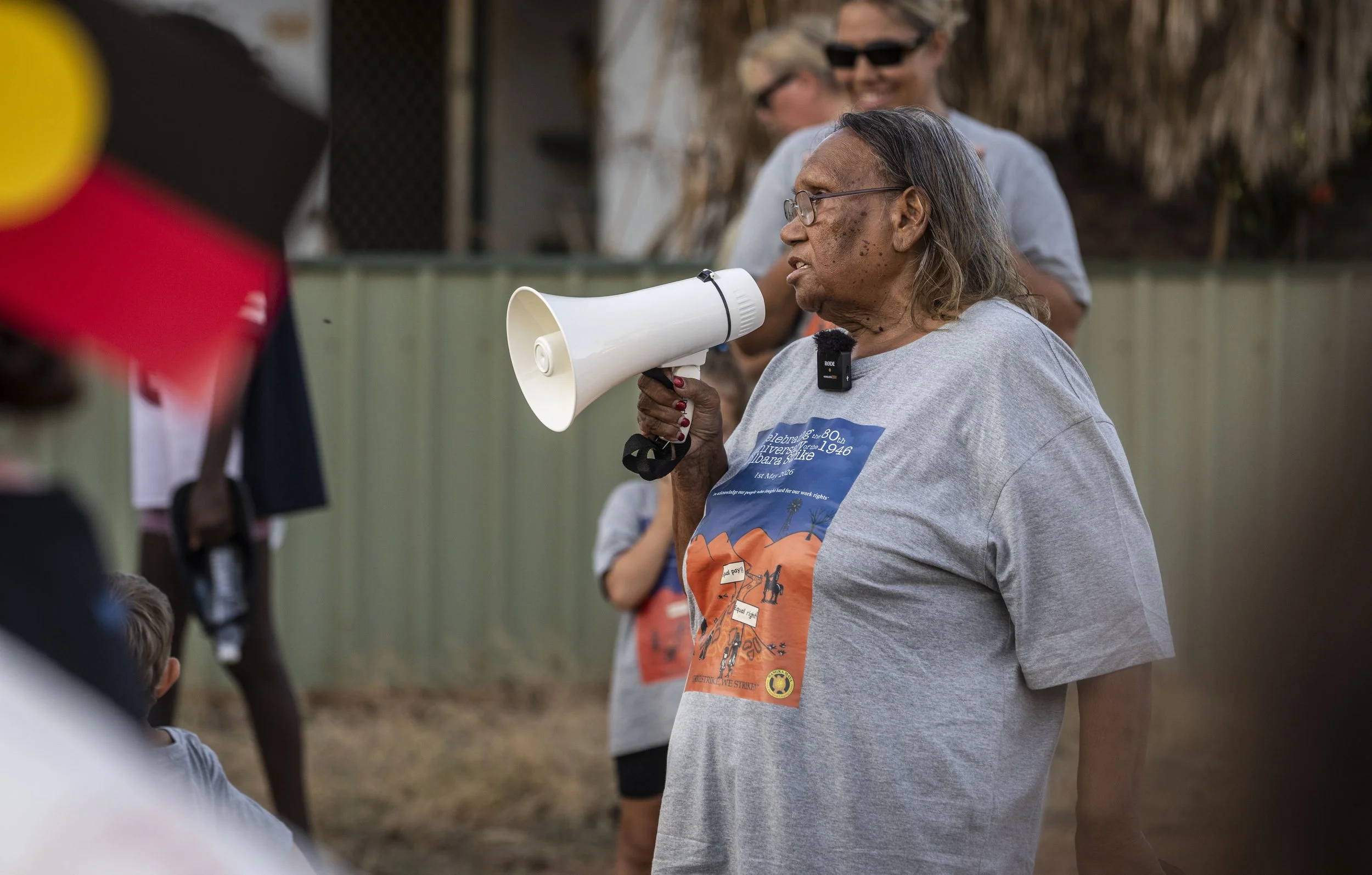
Nyamal and Nyangumarta Elder, Doris Eaton. Photo: Samara Diaz
By Samara Diaz
In Port Hedland, Western Australia, communities gathered on Friday, May 1st to commemorate 80 years since the Pilbara Strike, one of the most significant, yet often overlooked events in Australian history.
In 1946, hundreds of Aboriginal pastoral workers across the Pilbara made a historic decision: to walk off the stations and refuse to return under conditions that denied them dignity, fair pay, and basic human rights. Many were not paid wages at all, but instead received rations such as tobacco, sugar, and flour in exchange for their labour.
What began as a protest against exploitation became one of the longest strikes in Australia’s history, lasting several years and growing into a powerful movement for justice, land rights, and self-determination. Led by Aboriginal leaders and supported by strong community networks, the strike challenged a system that had long profited from the dispossession and marginalisation of First Nations peoples.
Eighty years on, the legacy of that resistance continues to resonate, but so do many of the challenges that gave rise to it.
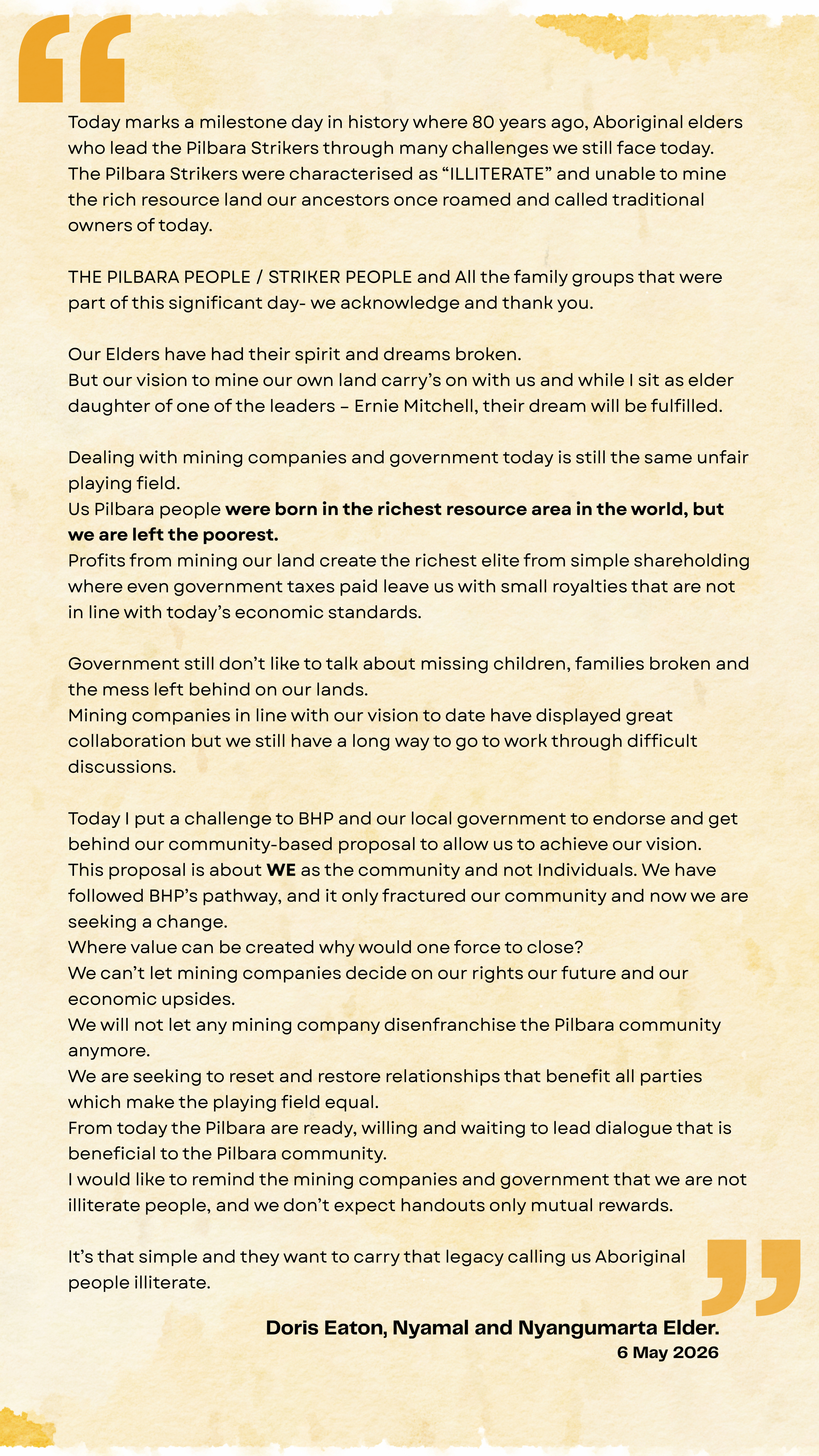
During the 80th anniversary commemoration in Port Hedland, Nyamal and Nyangumarta elder Doris Eaton delivered a powerful statement reflecting on both the past and the present. As the daughter of Ernie Mitchell, one of the key leaders of the strike, her words carry the weight of lived history and intergenerational memory.
She honoured the courage and determination of the Elders who led the movement, acknowledging the sacrifices they made and the vision they carried for future generations. But she also made it clear that, despite decades of change, the playing field remains far from equal.
“We were born in one of the richest resource regions in the world,” she said, “yet our people remain among the poorest.”
Eaton spoke about the ongoing imbalance in relationships between mining companies, government, and local communities, an imbalance that continues to shape the economic realities of the Pilbara today. While the land generates immense wealth through resource extraction, many Aboriginal communities still receive limited benefits, often in the form of royalties that do not reflect the true value of what is taken.
She also pointed to the deeper social impacts that remain unaddressed: broken families, missing children, and the long-term consequences of decisions made without community control.
While acknowledging that some mining companies have shown willingness to collaborate, Eaton emphasised that these efforts are not enough without meaningful structural change. She called for a shift away from systems that prioritise individual gain toward models that centre community-led development and collective benefit.
“This is about community, not individuals. We are seeking a reset, relationships that benefit all parties and create a level playing field” she said.
At the heart of her message was a clear and urgent call for self-determination. For Eaton, this means more than consultation, it means real power, real ownership, and the right to participate fully in the economic opportunities generated on ancestral lands.
“Give us the right to mine on our own lands,” she urged. “Let’s partner.”
Her words echo the spirit of the 1946 strikers, who refused to accept exploitation and instead imagined a different future,one grounded in dignity, fairness, and autonomy.
Eighty years later, that vision remains unfinished.
As the Pilbara reflects on this historic milestone, Aunty Doris Eaton’s statement stands as both a tribute to those who came before and a call to action for those who hold power today. It is a reminder that the struggle for justice did not end with the strike, and that its legacy continues to demand recognition, accountability, and change.
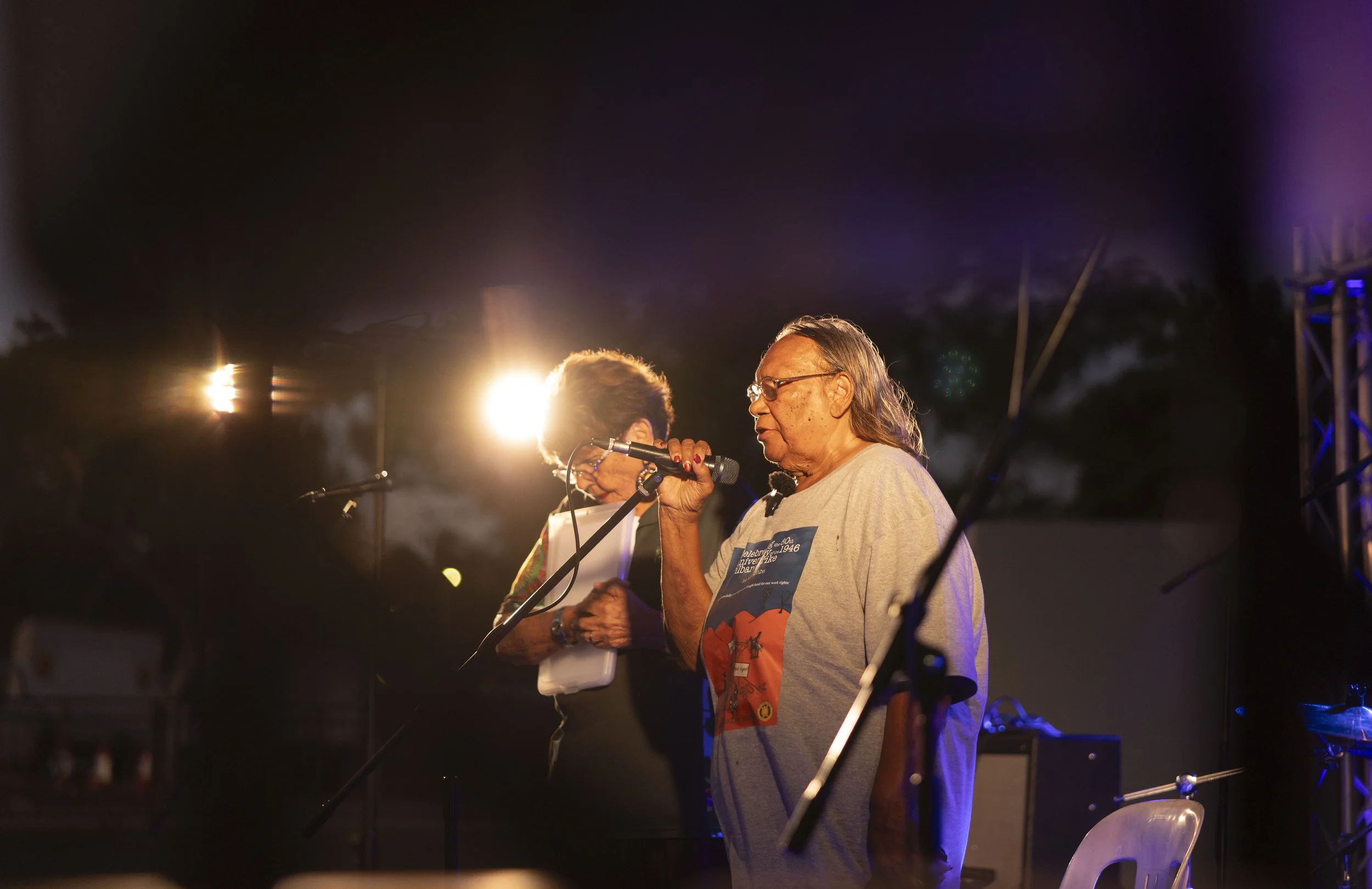
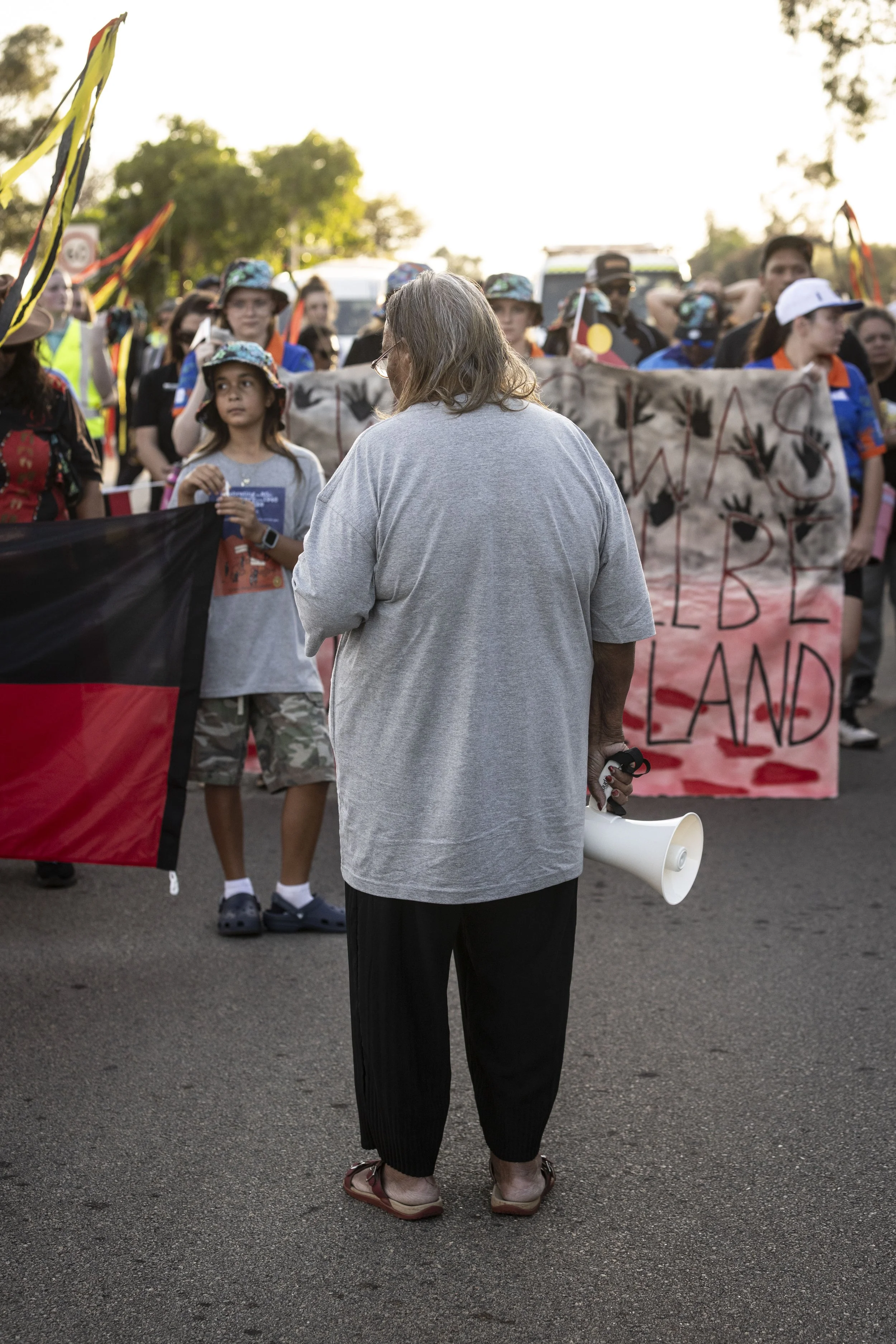
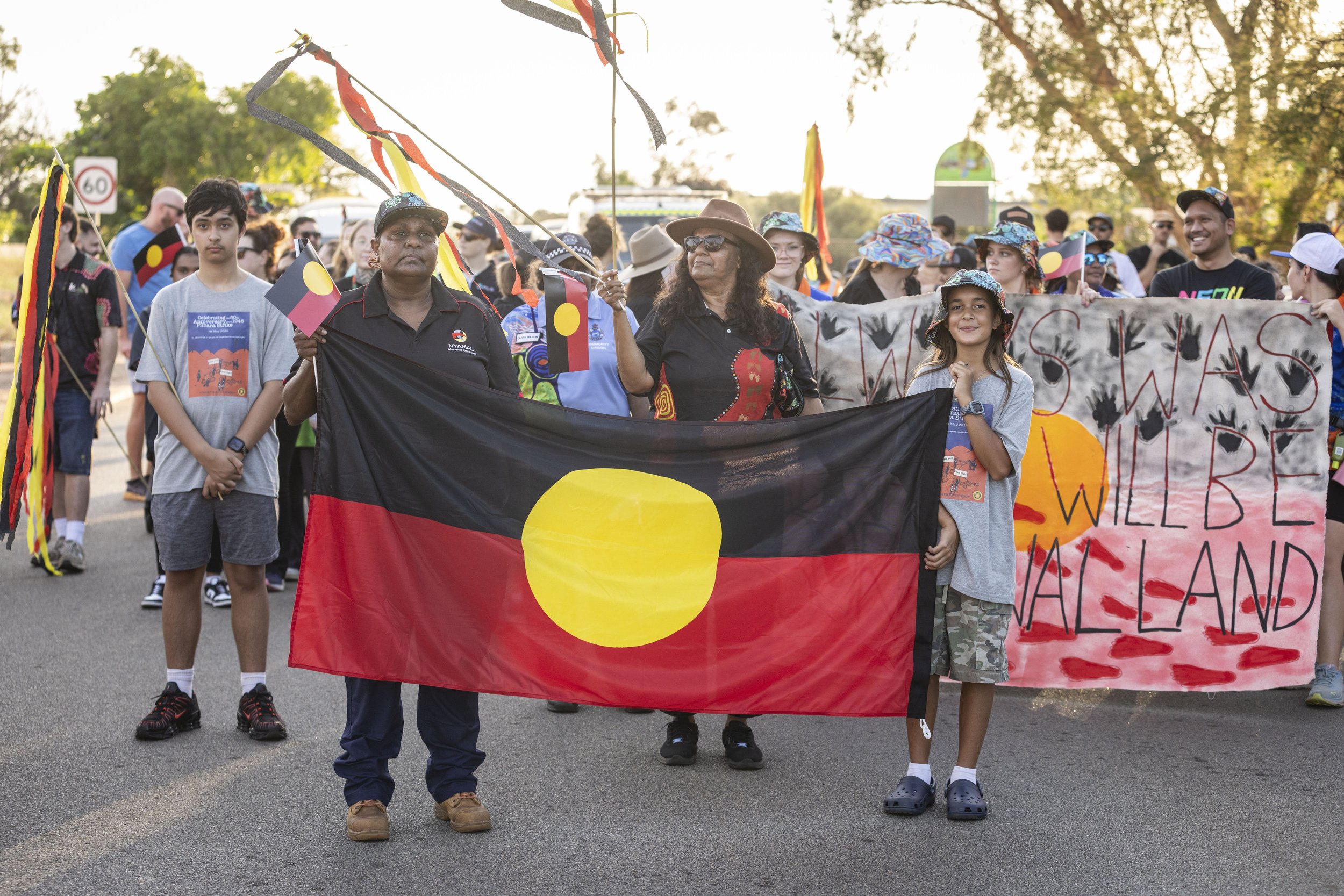
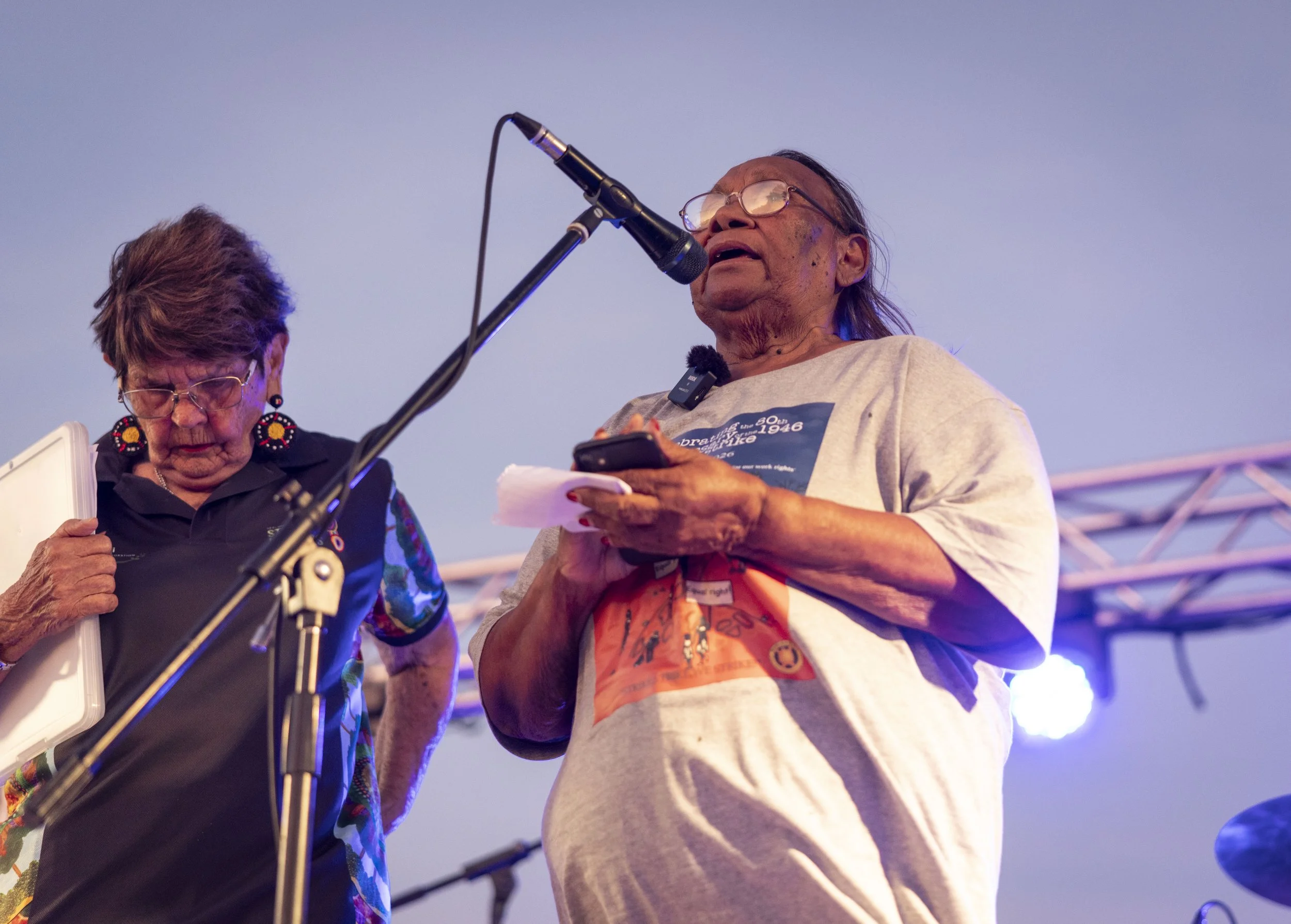
Photos taken by Samra Diaz and Javier Diaz in the Pilbara Strike 80th Anniversary Event, Port Headland, WA.
Below is the full statement provided by Nyamal and Nyangumarta Elder Doris Eaton, shared with Ngaarda Media: