
AI TECHNOLOGY COULD PREVENT DIABETES-RELATED AMPUTATIONS IN REMOTE AUSTRALIA
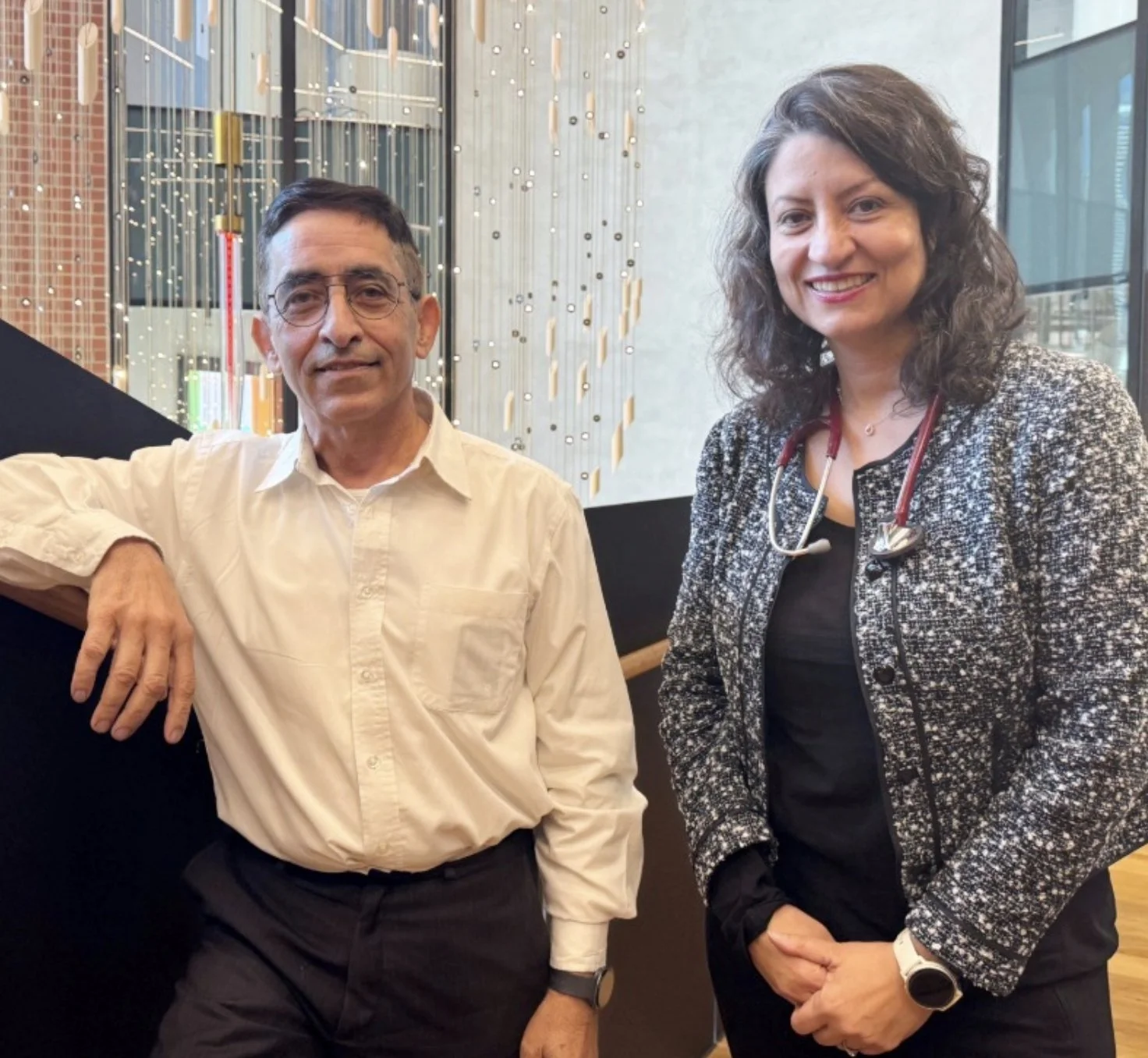
RMIT’s Professor Dinesh Kumar with Endocrinologist Professor Elif Ekinci
Image source: RMIT Australia
Australian researchers have developed an artificial intelligence tool that could help doctors identify diabetic foot ulcers at risk of not healing, potentially reducing serious infections, hospitalisations and amputations.
The smartphone-based technology, called THERMUL, uses thermal imaging to detect heat patterns in wounds and predict whether they are likely to heal within 12 weeks.
Developed by researchers at RMIT University and the University of Melbourne, the tool could provide an early warning during a patient's first appointment, rather than waiting several weeks to assess their progress.
RMIT University Professor Dinesh Kumar told Ngaarda Media the device is expected to cost $1000 and could be particularly valuable in regional and remote communities, including the Pilbara and Kimberley, where access to specialist diabetes services can be limited.
Diabetes affects more than 500 million people worldwide, with approximately one-third expected to develop a foot ulcer during their lifetime. Without effective treatment, these wounds can lead to serious infections, hospitalisation and amputation.
Professor Kumar, who led the development of THERMUL alongside University of Melbourne endocrinologist Professor Elif Ekinci, said earlier identification of high-risk wounds could improve treatment decisions.
"These patterns may provide an early indication of a wound's likely healing trajectory, potentially allowing clinicians to identify people who might benefit from earlier intervention or escalation of care," Professor Kumar said.
Speaking to Ngaarda Media, Professor Kumar explained how the technology could also reduce the number of appointments needed to identify a wound that was not healing.
"Instead of the patient going five times to the clinic to determine that their ulcer is going to have a problem, on the first visit in itself, within a few seconds of the visit, [it] would tell the doctor that this ulcer is not going to heal in 12 weeks," he said.
The research, published in the Journal of Diabetes Science and Technology, involved 110 patients receiving treatment for diabetic foot ulcers at Austin Health and St Vincent's Hospital in Melbourne.
Researchers captured thermal images during patients' initial appointments, followed by further images at two and four weeks. At 12 weeks, clinicians assessed whether the wounds had healed.
The results were used to train the AI system to recognise temperature patterns associated with different healing outcomes.
While the initial findings are promising, further clinical testing is required before the technology can be used routinely in healthcare.
EARLY DETECTION
Accessing specialist diabetes care can be challenging for people living in remote parts of Western Australia, where appointments may require long-distance travel.
Described as a pportable, non-contact tool, THERMUL has the potential to bring specialist-level decision support closer to where people live and receive care, according to the RMIT researchers.
Professor Kumar says “We now were able to detect that the ulcers are not going to heal on the first visit itself in real time. So, instead of the patient going five times to the clinic to determine that their ulcer is going to have a problem, THERMUL on the first visit in itself, within a few seconds of the visit, would tell the clinician looking at the foot that this ulcer is not going to heal in 12 weeks”.
The technology could eventually support remote healthcare workers, Aboriginal medical services and regional hospitals in identifying patients who need urgent specialist attention.
Diabetes-related foot disease costs Australia's healthcare system an estimated $875 million annually. Beyond the financial costs, serious foot complications can affect a person's independence, mobility and quality of life.
FURTHER TESTING PLANNED FOR REGIONAL AND REMOTE AUSTRALIA
The project involves RMIT University, the University of Melbourne, Bolton Clarke, Austin Health, St Vincent's Hospital Melbourne and the Royal Flying Doctor Service Victoria.
The research team has secured more than $540,000 in additional funding to improve the technology and expand clinical testing and THERMUL is currently progressing through TGA approval.
However, researchers still need to establish its effectiveness across different populations and healthcare settings.
Professor Kumar told Ngaarda Media, the researchers would like to speak to new partners who can see benefits to the community and the team is also seeking the participation of First Nations people living with diabetes in remote Australia.
“We are seeking partners in regional and remote parts of the country, and especially we're focused on the first nation people so that we can validate the device for them and ensure that the devices can later be rolled out for their benefit.” said Professor Kumar. He welcomed being contacted by email about THERMUL by interested First Nations people/organisations - dinesh.kumar@rmit.edu.au.