
AusAlert warning highlights risks for First Nations women experiencing family violence
By Katherine Glass
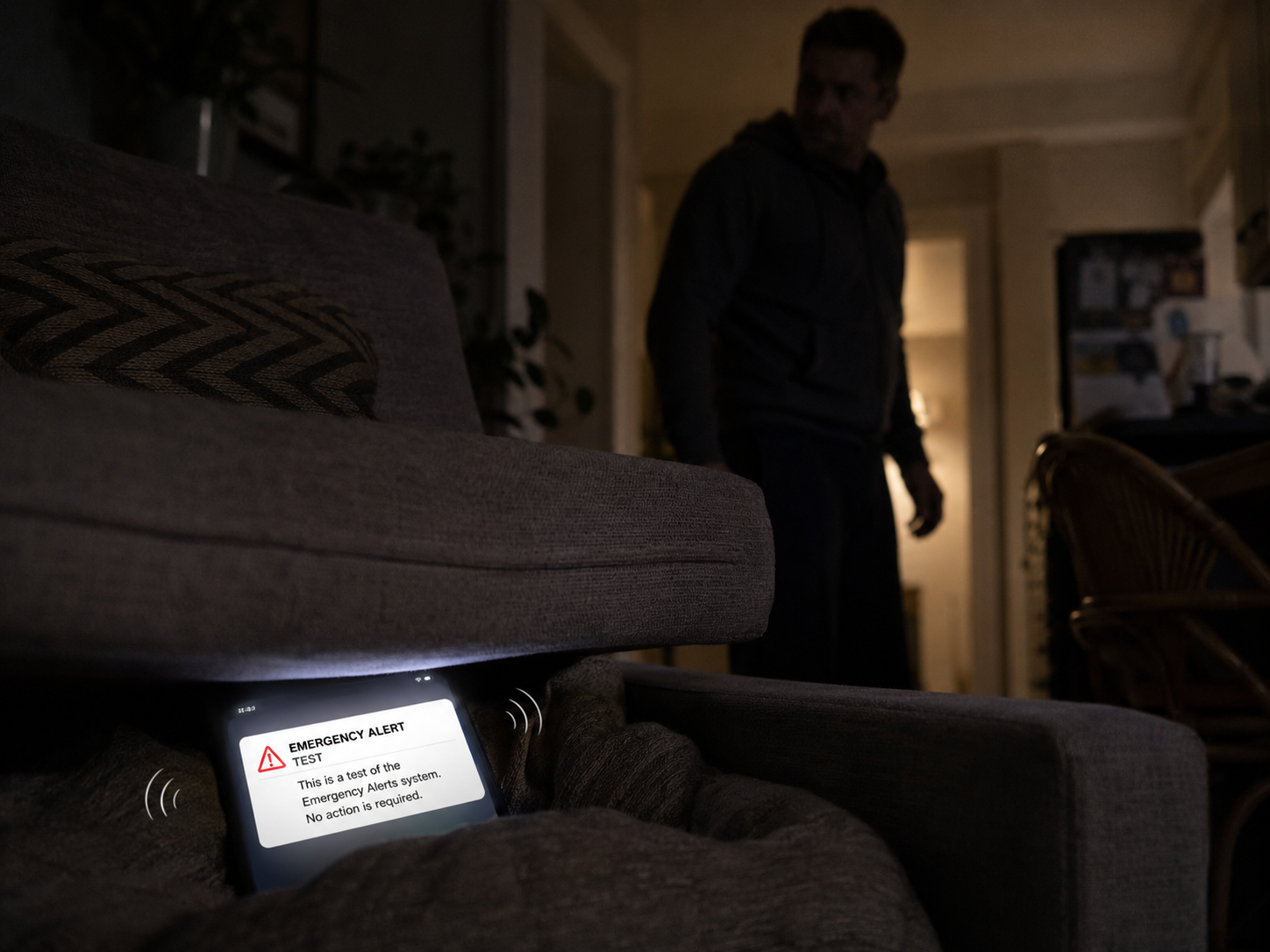
Conceptual digital illustration: Ngaarda Media
A nationwide emergency-alert test will sound on compatible mobile devices on Monday. For people experiencing family violence, a device designed to save lives could expose a hidden lifeline.
Warning: This article discusses domestic and family violence.
Most compatible mobile phones across Western Australia will vibrate and play a loud warning sound at 12 noon on Monday, July 27, as part of the first national test of Australia’s new emergency-warning system.
The test message will clearly state that no action is required.
However, the Critical AusAlert will override silent and Do Not Disturb settings, causing devices to vibrate, light up and play a siren-like sound for about 10 seconds.
For most people, it will be a brief and unusual interruption.
For a person experiencing domestic or family violence, it could reveal the location of a hidden phone kept as a way to seek help, contact trusted family or plan an escape.
Hidden phones should be turned off
The National Emergency Management Agency has warned that AusAlert messages could make concealed safety devices easier to find.
People who keep a hidden phone because of domestic and family violence are being advised to turn the device off or place it in aeroplane mode at least one hour before the test.
The device should remain off or in aeroplane mode during the test and for 24 hours afterwards. Leaving it on silent is not enough.
AusAlert does not collect or store personal or financial information and cannot track or share a device’s location history. The danger comes from the sound, vibration and illuminated screen revealing that a device exists.
The system is scheduled to begin operating nationally on October 1 and will be used to send warnings about bushfires, floods, cyclones, tsunamis, security threats, public health emergencies and other serious incidents.
First Nations women face vastly higher rates of serious violence
The safety warning carries particular weight for Aboriginal and Torres Strait Islander women and children, especially those living in regional and remote communities.
The latest nationally comparable hospital data shows Aboriginal and Torres Strait Islander women were hospitalised following family-violence assault at 27 times the rate of non-Indigenous women in 2023–24.
More recent ABS police data from 2024 shows women accounted for between 59 and 72 per cent of recorded First Nations assault victims in jurisdictions with available data. Between 67 and 74 per cent of First Nations assault victims were recorded in family and domestic violence-related incidents.
The datasets measure different things. Hospital figures capture serious injuries requiring admission, while police data reflects incidents reported to or recorded by police and is not complete across every jurisdiction. The age-standardised rate was 750 hospitalisations per 100,000 First Nations females, compared with 28 per 100,000 non-Indigenous females.
That figure should not be interpreted as meaning First Nations women are 27 times more likely to experience every form of family violence.
Hospital data captures the severe end of violence and does not include many incidents involving coercive control, threats, financial abuse, stalking, sexual violence or physical assaults that do not result in hospital admission.
However, it demonstrates a stark difference in the rate of serious injuries requiring hospital treatment.
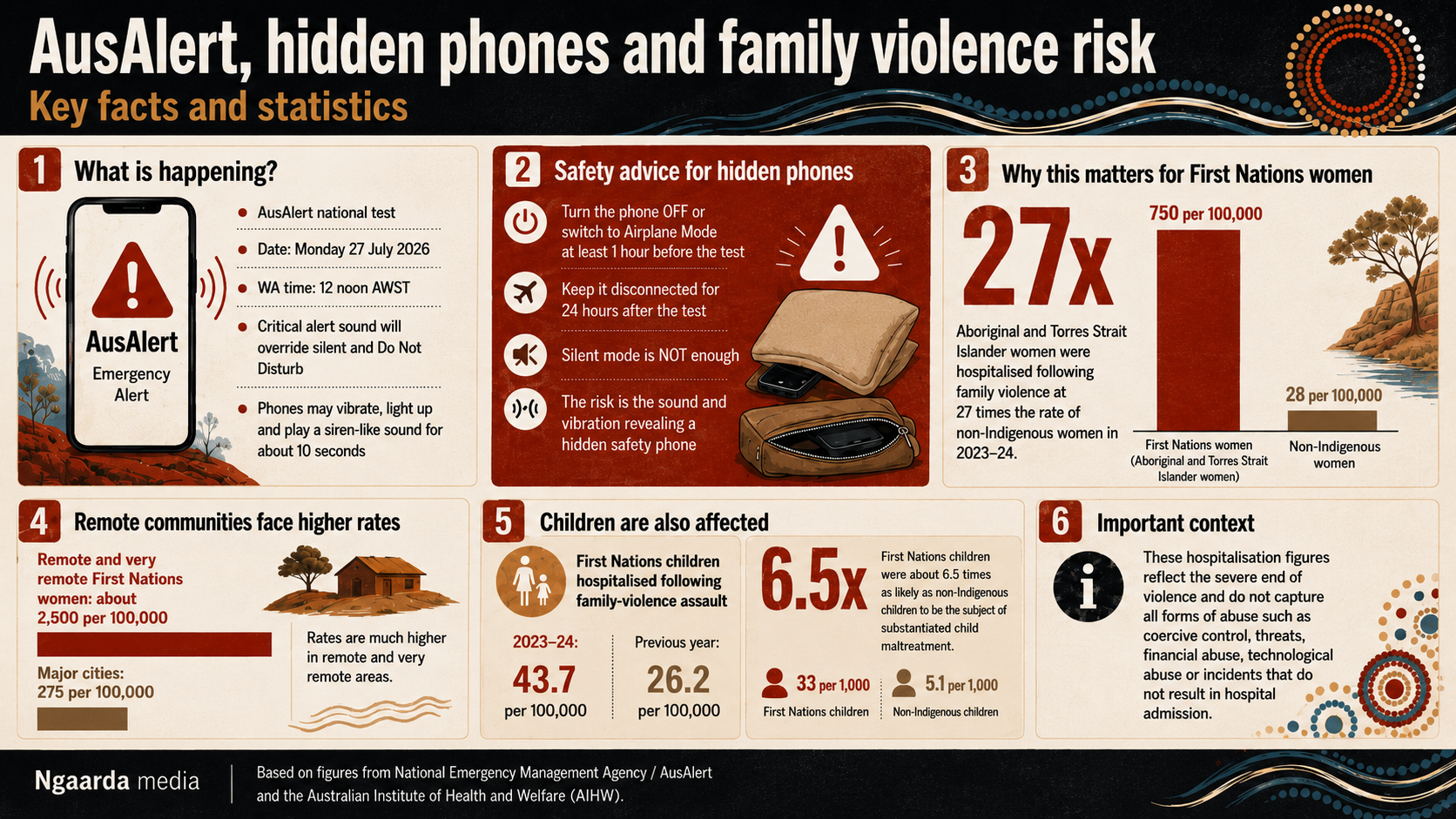
Digital infographic: Ngaarda Media. Data sourced from AusAlert, NEMA, AIHW and the ABS.
Among First Nations women admitted to hospital following family violence, a spouse or domestic partner was the most commonly recorded perpetrator. About 70 per cent of hospital admissions involving an assault-related injury included injuries to the head or neck.
The rate was also significantly higher outside major cities.
In remote and very remote areas, the family-violence hospitalisation rate for First Nations women was about 2,500 per 100,000, compared with 275 per 100,000 for First Nations women living in major cities.
Hanson describes violence as a ‘two-way street’
The AusAlert warning comes amid renewed national debate about how domestic violence is discussed by political leaders.
One Nation leader Senator Pauline Hanson told Brisbane radio station 4BC this week that domestic violence was wrong, but was also a “two-way street”.
Senator Hanson said women could also lose their tempers, referred to pressures facing households and said to women experiencing abuse “don’t put up with it”.
She also referred to her own experience of domestic violence.
Senator Hanson later said her comments had been misrepresented and shared a longer version of the interview on her social media to provide further context.
Men can and do experience domestic and family violence, and women can use violence.
But the available evidence does not support treating serious family violence as being evenly experienced or evenly perpetrated.
Among First Nations people, the family-violence hospitalisation rate for women was 750 per 100,000, compared with 220 per 100,000 for men after adjusting for age.
Police-recorded data from jurisdictions where information was available also showed family-violence offender rates were between 2.6 and 3.9 times higher for First Nations males than First Nations females. The AIHW notes that violence against First Nations women is committed by men from all cultural backgrounds, not only First Nations men.
Describing domestic violence as a two-way street may therefore suggest a level of equivalence that is not reflected in the evidence about severe injury.
The responsibility for violence rests with the person choosing to use it.
Children also overrepresented
First Nations children are also disproportionately affected.
In 2023–24, 144 Aboriginal and Torres Strait Islander children aged under 15 were hospitalised following family-violence assault, up from 86 children the previous financial year.
The hospitalisation rate increased from 26.2 to 43.7 per 100,000 children over that period.
A system designed to protect must account for risk
AusAlert is intended to address delays and inconsistencies in existing emergency-warning systems and deliver faster information to people in danger.
That purpose is particularly important in the Pilbara, where cyclones, bushfires, flooding, extreme heat and long distances between communities can make timely warnings critical.
But the hidden-phone warning shows that emergency systems can create unintended risks when they do not account for the realities of coercive control and family violence.
For those who have no need to hide a phone, no action is required when Monday’s test message arrives.
For anyone relying on a concealed phone for safety, the official advice is clear: turn it off or place it in aeroplane mode before noon and keep it disconnected for 24 hours after the test.
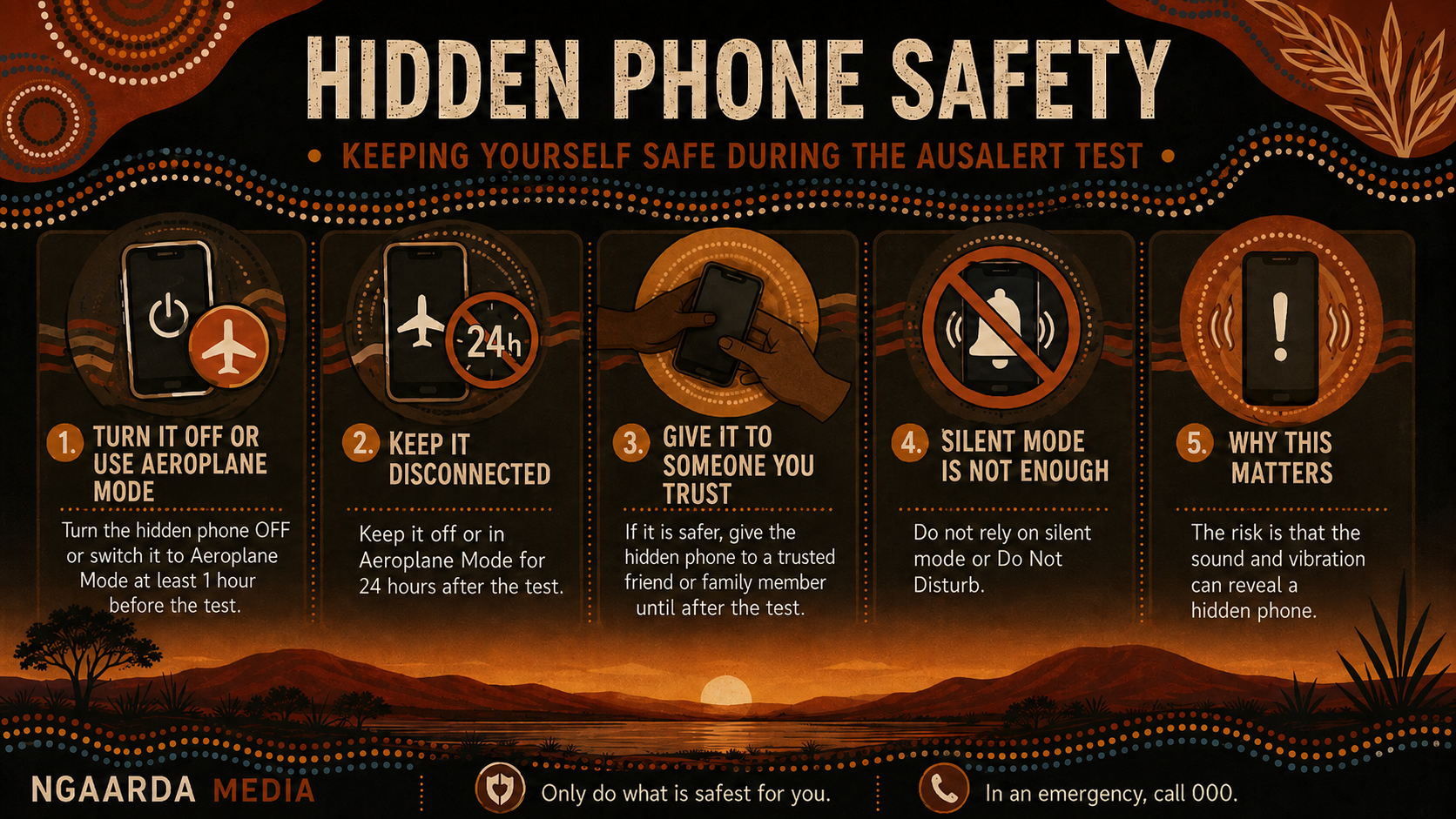
Sources: National Emergency Management Agency and AusAlert; Australian Institute of Health and Welfare; Guardian Australia reporting of Senator Pauline Hanson’s 4BC interview and subsequent public responses.