
BALGO OR BUST: THE JOURNEY TO BRING DIALYSIS TO A REMOTE KIMBERLEY COMMUNITY

Staff from The Purple House in Alice Springs celebrating the passage of building materials through Mparntwe, as part of the Balgo or Bust project.
By Daniel Burdon
Born of a dream to provide caring, sensitive dialysis treatment at home on Country in the Western Desert lands of the Pintubi people, The Purple House has become a global model of innovation for First People’s healthcare.
Years on from the first art sale that helped the group raise $1 million in seed funding at the start of this century - and thousands of treatments for hundreds of people across the Northern Territory, Western Australia and South Australia later - the service remains driven by the communities it serves.
In recent weeks, the Purple House team - or Western Desert Nganampa Walytja Palyantjaku Tjutaku - have been trucking building materials more than 2,000 kilometres from Kaurna-Adelaide, up the Stuart Highway and north-west up the Tanami Road to Balgo in the stunning ranges of the Kimberley.
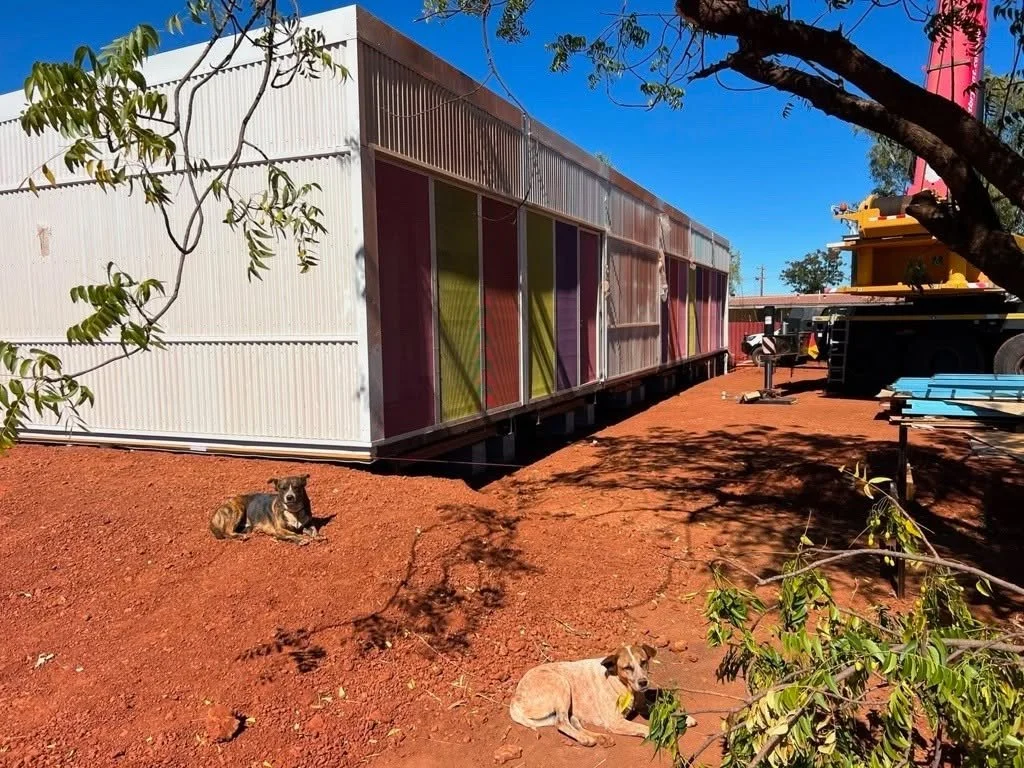
Sections of the new dialysis clinic now under construction after recently arriving in Balgo in the Kimberley.
On a promise: Balgo or Bust
Those building materials are the culmination of some 10 years of work - on the death-bed promise of a Kiwikurra man who was there since the start of The Purple House - to build a dialysis clinic in Balgo, where he made his home.
Chief executive officer Sarah Brown AM has been with The Purple House since the beginning, when it was formally established as an Aboriginal community-controlled health organisation back in 1999.
It began after the Pintubi started asking in the late 1990s how they could secure dialysis treatment for their old people in the remote central Australian community of Kintore, around 530km west of Mparntwe.
When treatment could break the kurunpa
Kidney disease has long been one of the biggest causes of death for Aboriginal people, the end result of diabetes and often high blood pressure.
Once the kidneys begin to fail, dialysis treatment is the only chance anyone has for a longer life short of a transplant, and any semblance of quality of life.
Dialysis treatment for people in remote Australia once involved being hundreds if not thousands of kilometres away from family, Country and culture.
An unbreachable distance when treatment is often needed about four days a week, every week, for the rest of a patients life.
The tyranny of a distance that can break the kurunpa, in Pintubi - in English, the spirit.
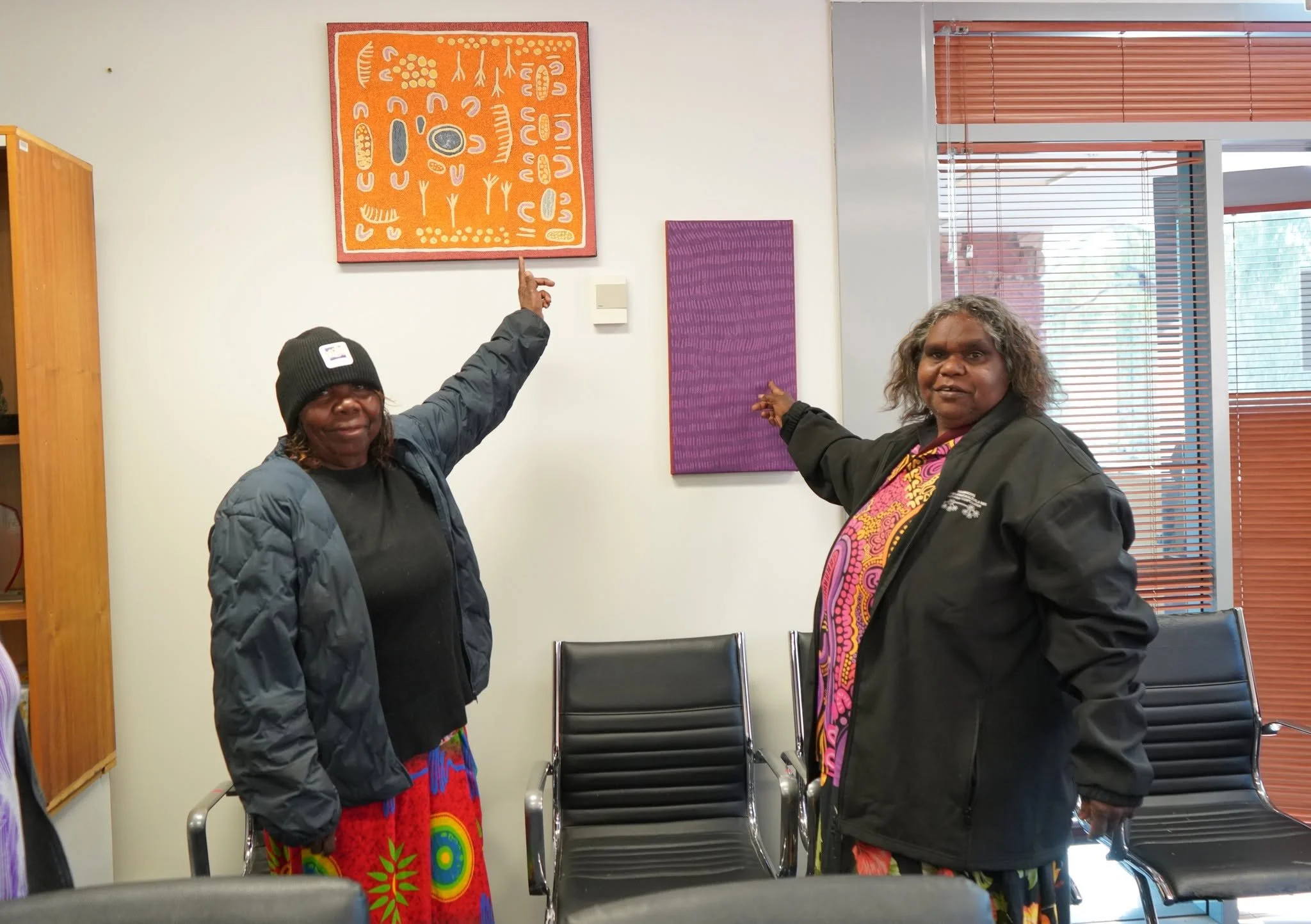
Purple House Board Chair Marlene Spencer (left) and Director Mary Pegg (right) in the new board room.
Marlene is pointing to her own painting. Mary is pointing to an artwork by famous artist Yukultji Napangati, recently donated by Papunya Tula Artists.
From a Purple House to a new home
Ms Brown spoke to Ngaarda Media of the 20-plus years journey of The Purple House from its start in a residential home in Mparntwe, which it retains, to a service that now treats more than 300 indigenous Australians facing kidney disease every year in more than 20 remote communities.
Recently, the organisation has begun expanding into new premises - a building that formerly housed the Central Australian Aboriginal Congress in Mparntwe, another big indigenous health success story - and is set to nearly double its dialysis nursing staff in the next two years.
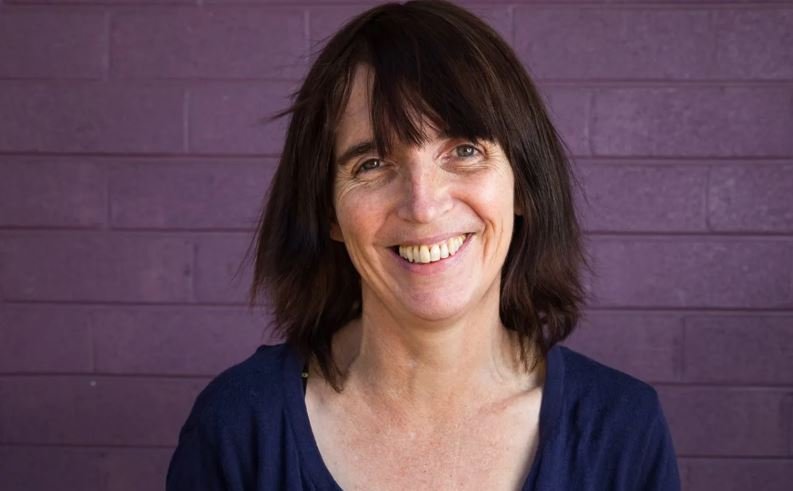
The Purple House CEO Ms Sarah Brown
In this wide-ranging interview, Ms Brown told me how the work of The Purple House led to the creation of a new Medicare Benefits Schedule item - a signal of rare government recognition of how important and unique their work is - and how that work is still driven by every community they work with, down to the very designs of the clinics they build.
We presented part of this interview today on the Ngaarda Wila Hour, recorded on Ngarluma country here in Iremagudu-Roebourne and at Ms Brown’s end, on Arrernte Country in central Australia.
You can listen to the full interview below, lightly edited for clarity and length.
WARNING: Aboriginal and Torres Strait Islander listeners are advised this interview may contain references to indigenous people who have since passed on.