FIRST NATIONS AUTHOR GAYLE KENNEDY TAKES DISABILITY ADVOCACY TO NATIONAL STAGE
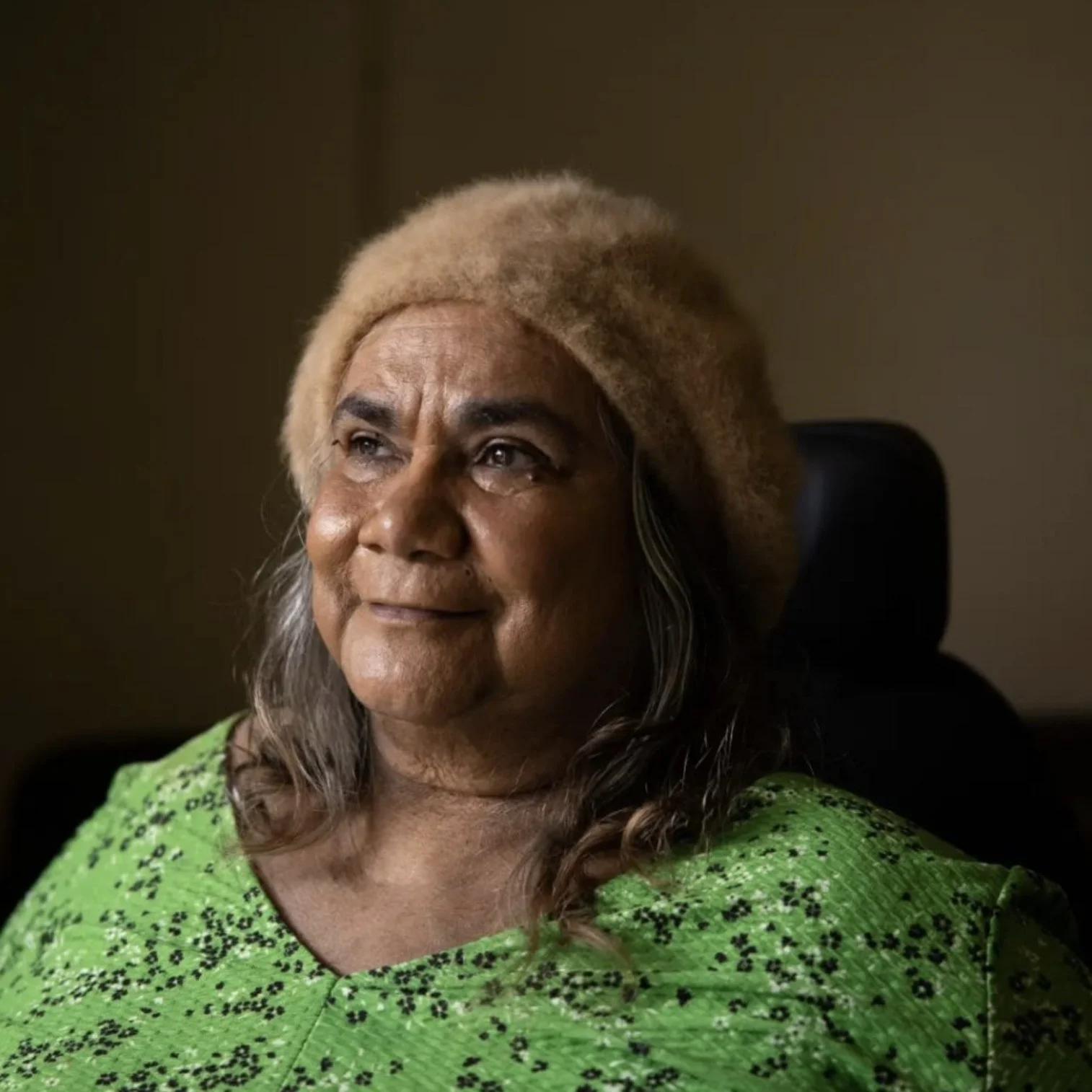
Image source: Celebrity Speakers
Award-winning Aboriginal author, journalist and disability advocate Gayle Kennedy has never been afraid to speak her mind.
Now, at 71, a Wongaiibon woman of the Ngiyampaa nation, Gayle Kennedy is preparing to use her voice on a national stage after being selected as one of six Australian ambassadors for International Day of People with Disability on December 3 2026.
But Ms Kennedy says the recognition comes at a critical time, as Australians living with disability face growing uncertainty over the National Disability Insurance Scheme (NDIS), access to essential services and their place in society.
A strong supporter of the NDIS, Ms Kennedy is concerned that public debate about the scheme too often focuses on expenditure rather than the independence and opportunities it provides.
She said people with disability were frequently blamed for problems within systems they had no control over.
"We disabled people are the ones that suffer for the mistakes of the people that are in charge," she said. "We contribute more to society, you know, through the NDIS than a lot of people do."
Ms Kennedy said disability support also created employment, supported local businesses and enabled people to remain active in their communities.
She described the ability to select her own support workers as one of the most significant changes the NDIS had brought to her life.
"You get to choose people that are happy to work for you, that respect you and like you and understand you."
Before accessing the scheme, she said her experiences with aged care services had often left her with limited choice over who provided her support.
She believes the NDIS has helped restore independence and personal dignity for many Australians.
Ms Kennedy said the invitation to become an ambassador came as a complete surprise.
"I got a call from my agent telling me that they'd received an email from the powers that be asking if I would be an ambassador," she said.
She initially took some time to consider the opportunity. But as she reflected on the challenges confronting people with disability, she decided it was too important to turn down.
"I think it's all hands on deck at the moment, you know, and I'm pretty noisy, so I thought, why not?" she said. "This is an opportunity to have a say, have my say, and stand up for us."
Ms Kennedy said having a nationally recognised platform offered an opportunity to challenge attitudes towards disability and encourage greater understanding.
Career
Ms Kennedy has built a career across writing, journalism, radio and publishing while living with post-polio syndrome, a condition that can cause progressive muscle weakness and fatigue years after an initial polio infection.
She said disability had gradually changed the direction of her working life.
After leaving a successful public service career because of her declining physical capacity, writing became a way to continue working on her own terms.
Ms Kennedy recalled how her early writing challenged the unequal treatment of Aboriginal people in public spaces.
She described observing non-Indigenous families enjoying picnics in parks without interference, while Aboriginal people gathering in similar circumstances attracted police attention.
Ms Kennedy’s David Unaipon Award winning book ‘Me, Antman & Fleabag’ published nearly 20 years ago by University of Queensland Press has become a First Nations classic.
Ms Kennedy began using a wheelchair at 49, describing the transition as a relief after years of worsening weakness and repeated falls.
"To tell you the truth, it was a relief, an absolute relief, to stop struggling," she said.
Rather than defining her life through physical limitations, Ms Kennedy said living with disability had taught her to adapt and become resourceful.
"We become very creative. We're constantly inventing quite artistic and unusual ways of dealing with our disability," she said.
But she believes many of the greatest difficulties experienced by people with disability come from the attitudes and expectations of society.
"It's more than access we want. We want equity."
As a First Nations woman living with disability, Ms Kennedy understands what it means to navigate multiple forms of disadvantage.
She said Aboriginal people and people with disability had historically experienced exclusion and discrimination, but both communities had continued to fight for greater recognition.
Ms Kennedy also wants to use her ambassador role to address the treatment of artists living with disability.
Having spent years advocating for greater recognition of their work, she said disability arts were too often dismissed as recreational activities or forms of therapy rather than professional creative practice.
She believes artists need to recognise the financial and cultural value of their work and resist pressure to provide it for free.
"What makes people respect you is if you put a price on your talent. Stop giving it away," she said. "You're worth something."
Stop Assuming We are Helpless
One of Ms Kennedy's strongest messages is directed at people who assume someone with a disability cannot speak or make decisions for themselves.
She recalled situations in which strangers addressed her carer or friends instead of speaking directly to her.
"If there are things that you want to know about disabled people, ask us and stop asking the people that are with us," she said.
"Stop assuming that we're completely helpless."
Ms Kennedy said those attitudes could be deeply frustrating and reflected broader assumptions about the capabilities of people with disability.
She urged Australians to approach people with disability with curiosity, respect and openness rather than pity.
"Don't be afraid to come and speak to me," she said.
Despite her frustrations, Ms Kennedy remains optimistic about the Australian community.
"I genuinely believe that Australian people are decent people," she said.
"I just think that they need to stop listening to the wrong people, and they need to start listening to us."
National Platform
As International Day of People with Disability approaches, Ms Kennedy says she is looking forward to joining the five other ambassadors and hearing their experiences.
She remains determined to use the opportunity to challenge discrimination, promote the value of disability support and advocate for artists whose contributions are too often overlooked.
At 71, she admits the title of ambassador is something she never expected to carry.
But she hopes the recognition will help amplify the voices of people who continue to be excluded from conversations about their own lives.
For Ms Kennedy, the message is straightforward.
"We do have a voice, you know, let us use it."