
FROM PEPSI TO PUNCHLINES: CAMERON RIBBONS FINDS COMEDY IN EVERYDAY LIFE
BY TANGIORA HINAKI AND KATHERINE GLASS | ARTS & CULTURE | FIRST NATIONS COMEDY
An unexpected moment during a Ngaarda Media interview became comedy material just hours later, proving that for First Nations comedian Cameron Ribbons, even the smallest encounters can inspire a good laugh.
When Ngaarda Media journalist Katherine Glass sat down with First Nations comedian Cameron Ribbons in Geelong in October, neither expected a simple can of Pepsi to become part of his comedy routine later that night.
Glass had grabbed a Pepsi during the interview, prompting Ribbons to notice the assortment of drinks and snacks surrounding them.
What followed was an unscripted exchange about Pepsi, Pepsi Max and a half-eaten chocolate orange biscuit, with Ribbons quickly turning the situation into a running joke.
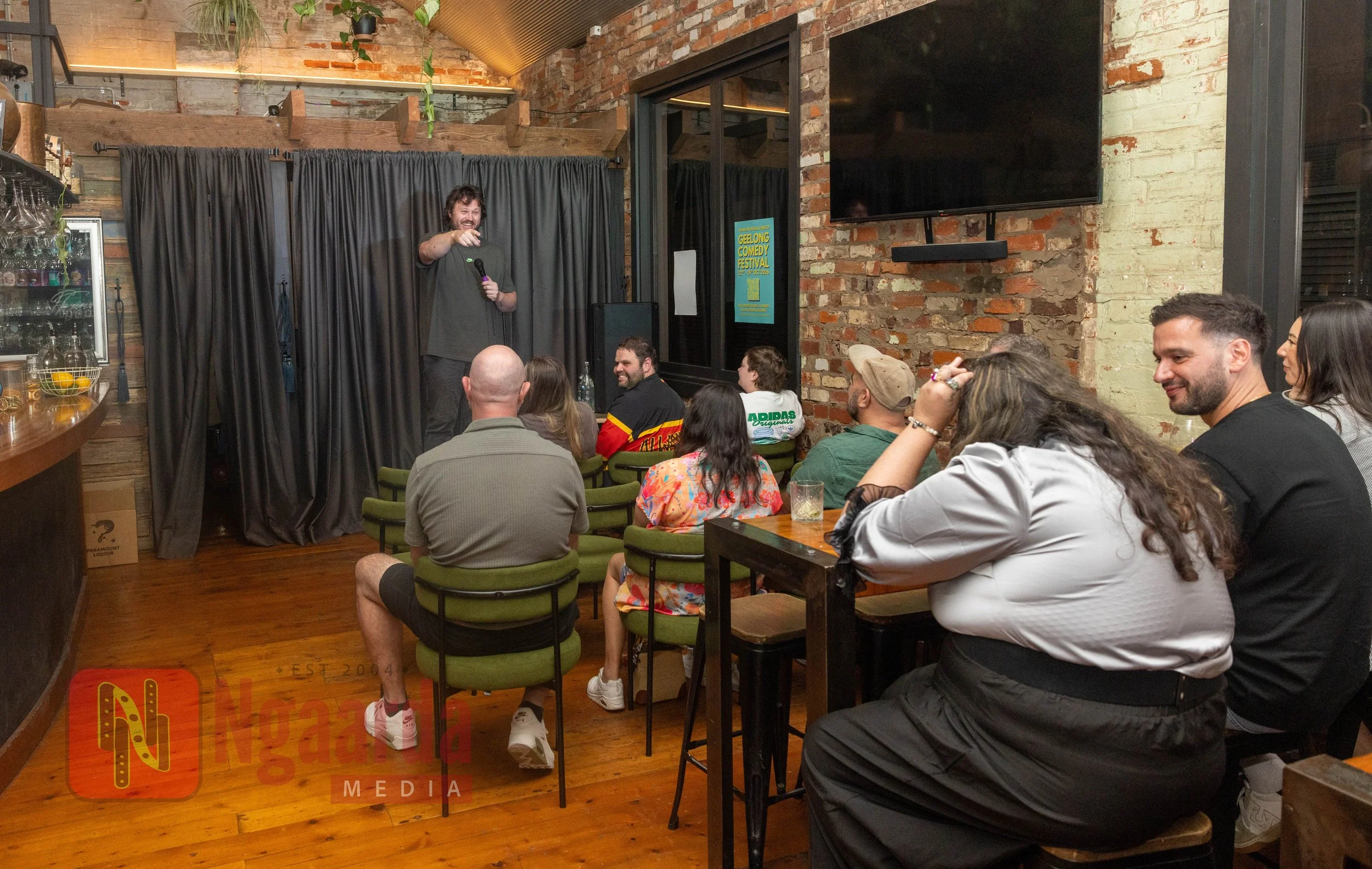
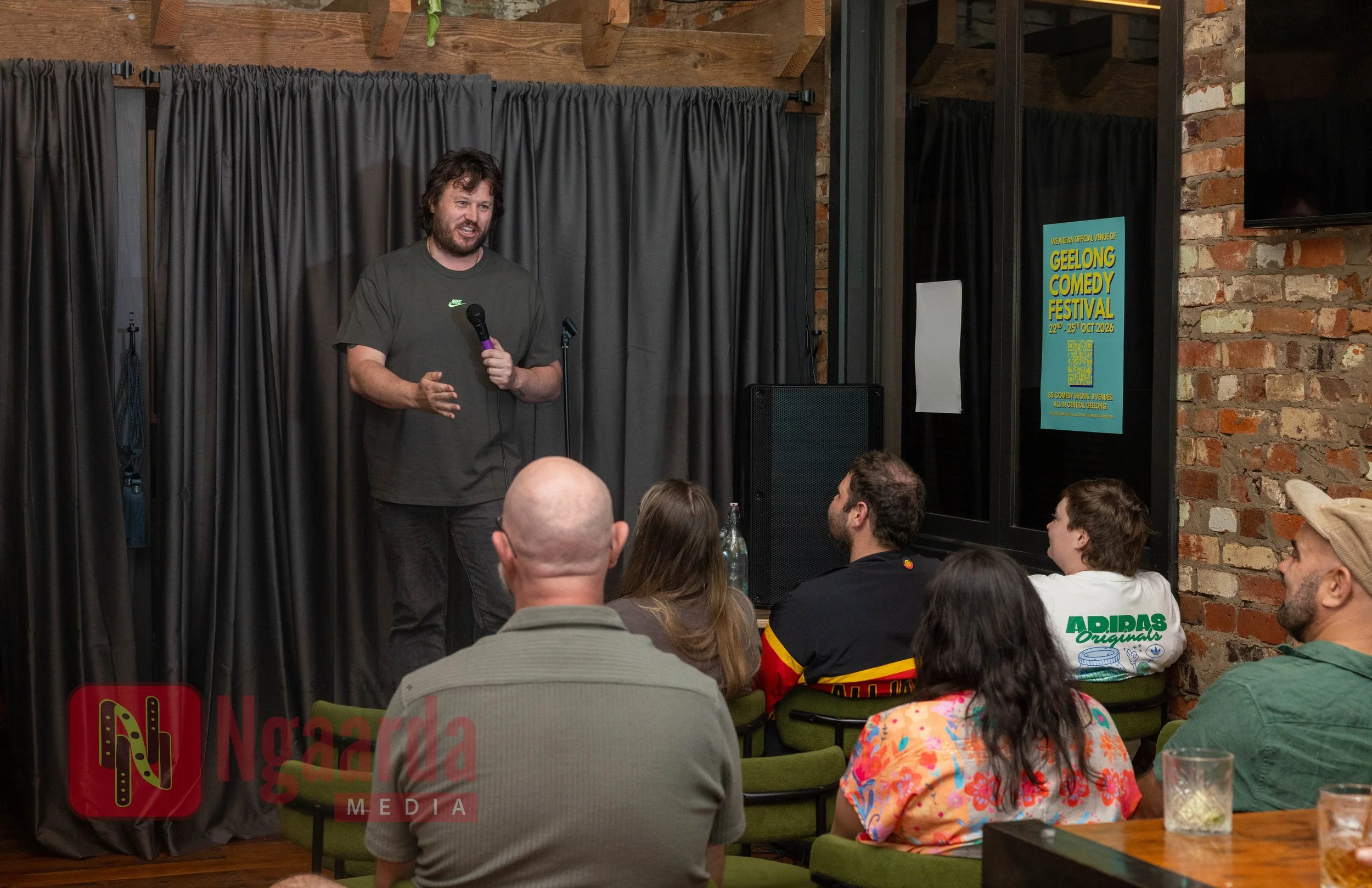
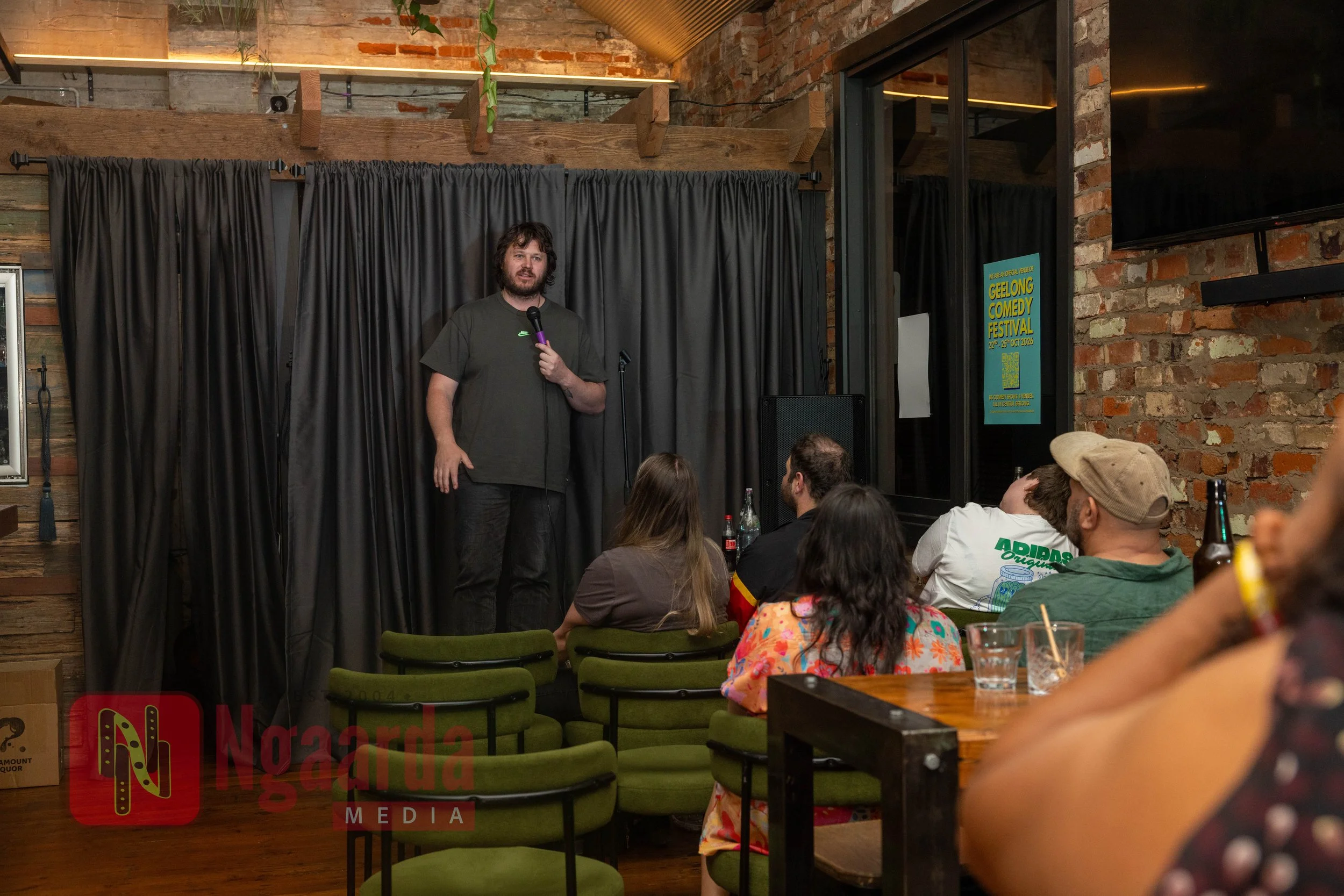
Hours later, the encounter had made its way into his stand-up performance at the Geelong Comedy Festival.
For Ribbons, a Kamilaroi man with a gift for finding humour in ordinary situations, it was a perfect example of how his comedy works.
"I tell stories, long, long, silly stories, just about things that happen in my life," he told Ngaarda Media.
"I always like to describe myself as a bit of a rat bag. So it's finding my inner rat bag most days."
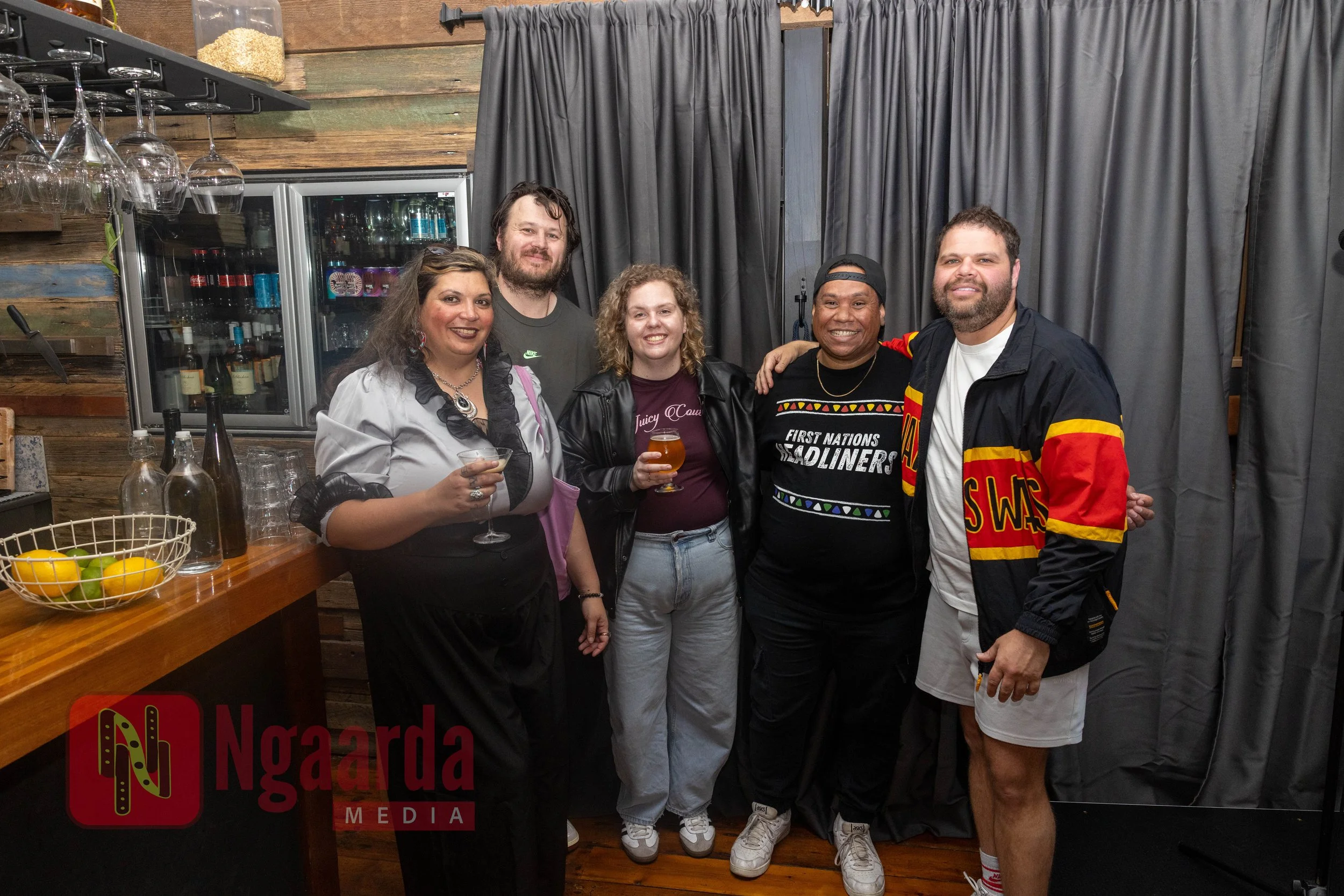
Ribbons was in Geelong to perform alongside fellow First Nations comedians Kylen Ambrum and Tarsh Jago in a showcase celebrating Aboriginal humour and storytelling.
His approach to comedy is built almost entirely around personal experiences rather than traditional observational jokes.
"It's all of it," he said when asked how his background influenced his material.
"I don't do much observational stuff."
Instead, he draws inspiration from encounters and experiences that might otherwise go unnoticed.
"Everything that happens to me in my life, I kind of think, is that funny to talk about, or is that just something that can happen?"
FROM STAGE FRIGHT TO STAND-UP
Ribbons' comedy career began around 2021, when pandemic restrictions had left him searching for something to do.
Bored at home, he discovered an open-mic night at a local cafe called The Front and decided to give stand-up a try.
But his first attempt never made it to the stage.
"I signed up, and they put me on, and then I got too scared and I didn't go," he said.
"I chickened out big time."
He returned the following month and eventually found the confidence to perform.
Although his first performance received laughs, he quickly learned that comedy was not always straightforward.
"The first time, you're like, 'Oh, I'm pretty good at this.' And then the second and third time, you go, 'I'm actually really not good at this.'"
One of his earliest routines involved talking about cricket for eight minutes, despite having only three minutes on stage.
The problem, he admitted, was that he barely understood the sport.
"I don't even watch cricket. I don't really know the rules of cricket," he said.
Since those early performances, Ribbons has gone on to perform at comedy festivals and become a national finalist in the Melbourne International Comedy Festival's Deadly Funny competition.
Melbourne International Comedy Festival+1
MORE FIRST NATIONS VOICES NEEDED IN COMEDY
While Ribbons enjoys making audiences laugh, he believes Aboriginal and Torres Strait Islander comedians remain significantly underrepresented in Australia's comedy industry.
He said there were talented and established First Nations performers, but too few emerging comedians were continuing beyond their first appearances.
"When I first started, there was four Aboriginal comedians in Canberra," he said.
"There is still, five years later, four Aboriginal comedians in Canberra. The same four Aboriginal comedians in Canberra."
He said the situation appeared similar in Melbourne, where the number of Indigenous comedians remained small compared with the broader stand-up scene.
"It's minuscule," he said.
"It's not a big voice, which it should be."
Ribbons believes the barriers facing emerging performers deserve greater attention, particularly for women entering an industry where performances frequently take place in pubs and late-night venues.
"Especially for ladies, it's harder to get into comedy, you know, because it's like, you're always at these dingy kind of pubs," he said.
He questioned whether enough support existed to help First Nations performers build sustainable careers after participating in introductory competitions and showcases.
"I don't know if there's, like, not enough just overall support from the entire comedy scene to continue to get Indigenous comedians into the space," he said.
"It's definitely something to look into, though, 'cause I would love ... I'd love 100 out of 100."
The Melbourne International Comedy Festival's Deadly Funny program has provided a national platform for emerging Aboriginal and Torres Strait Islander comedians for almost two decades, with Ribbons among its past finalists.
Melbourne International Comedy Festival+1
FINDING THE FUNNY IN THE UNEXPECTED
Despite the challenges facing First Nations performers, Ribbons remains committed to the kind of comedy that first drew him to the stage: sharing stories, connecting with audiences and finding humour in everyday life.
During his interview with Glass, he also shared a story about helping extinguish a fire at his neighbour's house.
When the grateful neighbour offered to buy him beer, Ribbons joked that saving an entire house surely deserved more than a six-pack.
The neighbour eventually arrived with a carton of non-alcoholic Guinness.
"So I went back over and I lit his house on fire," Ribbons joked.
It was another example of his willingness to turn a seemingly ordinary encounter into an exaggerated, entertaining story.
And when the conversation returned to the collection of soft drinks scattered around the interview table, Ribbons could not resist one final observation.
"We got drinks galore," he joked.
"They set me up at a table full of rubbish. This is the most professional setup we've ever had going on."
By that evening, the Pepsi incident had found a new audience at his comedy show.
For Glass, it was an unexpected reminder of just how quickly a comedian can transform a passing conversation into entertainment.
For Ribbons, it was simply another story worth telling.
And another chance to find his inner rat bag.
Reporting: Katherine Glass, Ngaarda Media. Interview recorded in Geelong, October 2026. Additional background sourced from the Melbourne International Comedy Festival and Melbourne Fringe Festival. Quotes are drawn from the Ngaarda Media interview transcript, with minor punctuation edits for readability.