
MI’DJAM WOMAN: HEALING, CULTURE AND ECONOMIC STRENGTH FOR FIRST NATIONS WOMEN

By Marli Ryan
A new Indigenous-led initiative is blending healing, cultural integrity and economic independence for First Nations women across Australia and beyond.
Natalie Lewis is the founder of Mi’djam Woman, a name drawn from the Kabi Kabi language meaning “woman woman.”
Ms Lewis said the project didn’t begin as a business plan.
“Mi’djam Woman, wasn't created actually as a business idea. I call her she. She was born from healing, and it was from my own journey and from witnessing the need for something practical for our women, and it wasn't just conversations about empowerment but real opportunity.”
Grounded in her own lived experience, the initiative is explicit about confronting trauma, particularly sexual violence and abuse, within communities.
Ms Lewis said that too often, the gaps between counselling, work and daily life leave women unsupported.
Healing through work and women’s business
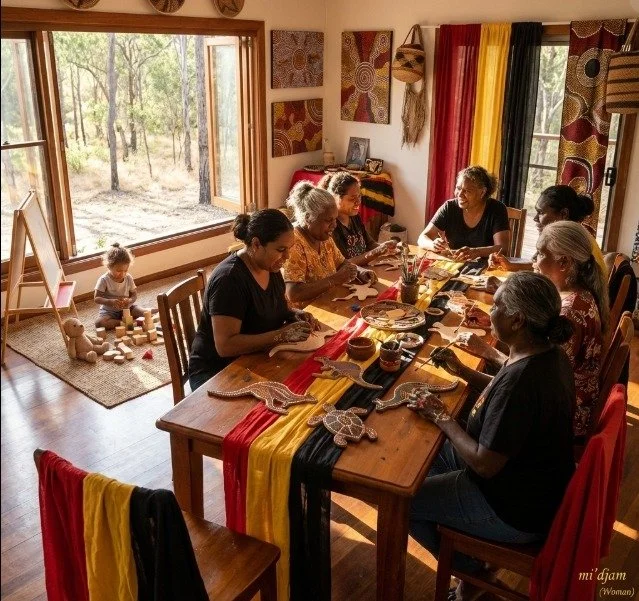
Mi’djam Woman combines online women’s business sessions, the practical production of wooden art kits, and a long-term plan to establish “women’s sheds” in communities nationwide. The model aims to provide both emotional support and paid work, particularly for women navigating trauma while raising families.
Ms Lewis said healing must be both practical and emotional.
“It's not just emotionally, but economically, because financial independence and work-life balance are powerful foundations for healing. And when a woman can create, earn, and feel culturally safe, she moves from surviving to thriving.”
Launching in 2026
The program will officially launch its first formal women’s business session in Easter 2026, beginning with a pilot and documentation phase. A cultural facilitator from the Flinders Ranges in South Australia will be involved in shaping the foundation episode of what Lewis describes as an Indigenous-led women’s business education series.
Importantly, Mi’djam Woman is structured to ensure guest cultural facilitators are paid fairly through royalty-style fees per session. Lewis says this responds directly to a long-standing pattern where Indigenous knowledge holders are underpaid or tokenised.

A long-term national vision
Her long-term vision is to see women’s sheds operating in communities across the country with local women employed to produce and distribute within their own regions. She wants economic flow to stay within families and communities, not external systems.
For Ms Lewis, this is about generational change. She spoke of rebuilding, of choosing to create something stronger for future grandchildren, and of inviting others to walk alongside the project.
Mi’djam Woman is positioned not just as a support network, but as a structure that holds culture, creates income, and centres women’s leadership.
As Ms Lewis sees it, healing is not separate from economic strength. It is built through it.
Community support and fundraising
Ms Lewis has launched a GoFundMe campaign to support the next stage of the project.
This Easter 2026, Mi’djam Woman will travel to document its first Guest Cultural Facilitator, laying the groundwork for an Indigenous-led education series built on intergenerational learning and genuine connection.
The fundraising campaign will help cover travel, accommodation, professional filming, cultural honorarium payments and production costs. Ms Lewis has committed to transparency, with updates to be shared as the project progresses.
She said the trip marks the first formal step toward a long-held goal: building a sustainable platform that supports First Nations leaders while inviting all Australians to walk alongside the journey.
Supporters can contribute via the GoFundMe campaign and follow project updates as the foundation phase unfolds.