
NARELLE WAS HERE
By Robyn Marais
Communities across the Pilbara are assessing the impact of Tropical Cyclone Narelle, which brought strong winds, heavy rain and dangerous coastal conditions over the weekend.
While the cyclone did not make landfall in the Pilbara, its outer bands were enough to cause disruption, with rising seas, periods of intense rainfall and wind gusts of 150 km per hour at Onslow and 200 km per hour at Learmonth.
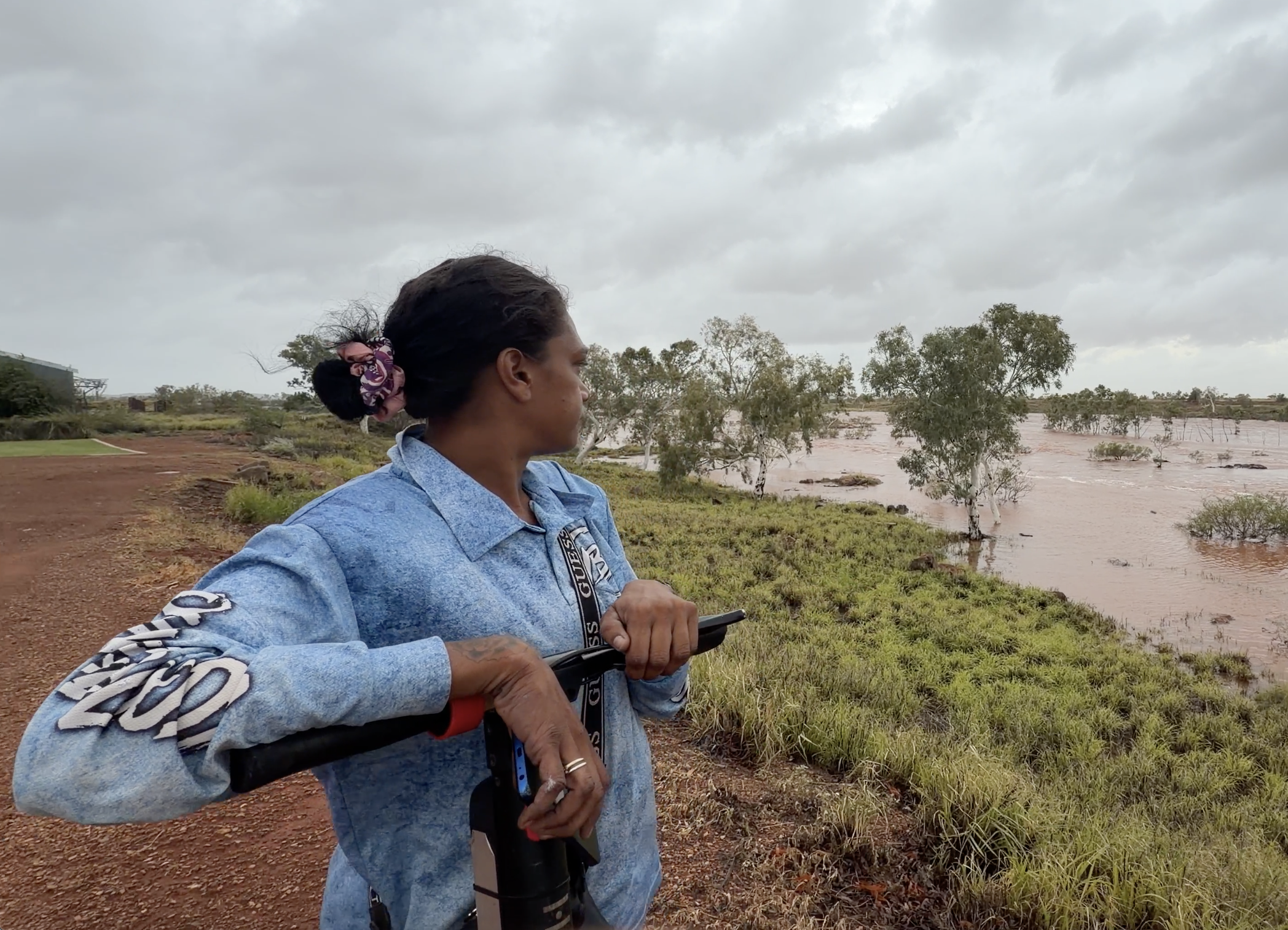
Rainfall totals varied across the region, but Roebourne’s Ngurin River has now flooded following two days of constant rain.
Authorities reported large waves and storm-surge impacts, with areas such as the Back Beach carpark at Wickham inundated. There were also reports of minor damage, including fallen branches and debris, as strong winds moved through towns.
During the extreme weather, Karratha residents raised the alarm on social media when the Bureau of Meteorology (BOM) alert differed from the DFES app. Kristie Grabenhofer told Ngaarda Media about the confusion.
“Quite a few people have noticed this. BOM’s warning is different to DFES’s warning. So that's confusing again because basically everyone has always followed BOM. Now we've been taught to follow this app. So the app is saying well you're on yellow which is the first stage but BOM is saying that we're on amber which is the second stage.”
Ms Grabenhofer contacted DFES out of concern for people forced to use the roads because businesses remained open, and said she was told that under the new system, amber alerts did not mandate shutdowns.
Ms Grabenhofer says she has been through many cyclones in which red alerts were signalled with less weather than was experienced in Karratha over the weekend. She told Ngaarda Media that the old system is ingrained and effective, and she will be running a petition to seek a review.
“And I think that, you know, perhaps the red should be used not just for oh my gosh the cyclone's coming, is imminent, take shelter. How about, it's too dangerous to be out on the road right now?” said Ms Grabenhofer.
Despite the intensity of the offshore system, major structural damage has not been widely reported, with Pilbara communities largely avoiding the worst of the cyclone’s destructive core, although Karratha gas plant on the North West Shelf has been forced offline according to Woodside.
The same cannot be said for Exmouth, where canals have flooded, boats have been inundated, streets are underwater, and reports say the roof blew off the evacuation centre.
Authorities continue to monitor conditions as the system moves farther south, with cleanup and recovery efforts underway across areas already affected.
Cyclone Narelle is expected to weaken into a tropical low on Saturday, after it crosses the coast along Western Australia’s Gascoyne region, most likely at Coral Bay around midday, according to the Bureau of Meteorology. They say, moving past Carnarvon and Denham this evening, the cyclone will become a category 3 storm and then weaken as it passes Kalbarri and Geraldton to category 2. Tracking inland beyond Dongara it should be a category 1 storm and then become a tropical low.
The Federal government says it stands ready to assist the State and local governments.