
“HIGHEST STANDARDS” FOR INDUSTRY, TO PROTECT MURUJUGA ROCK ART: MINISTER
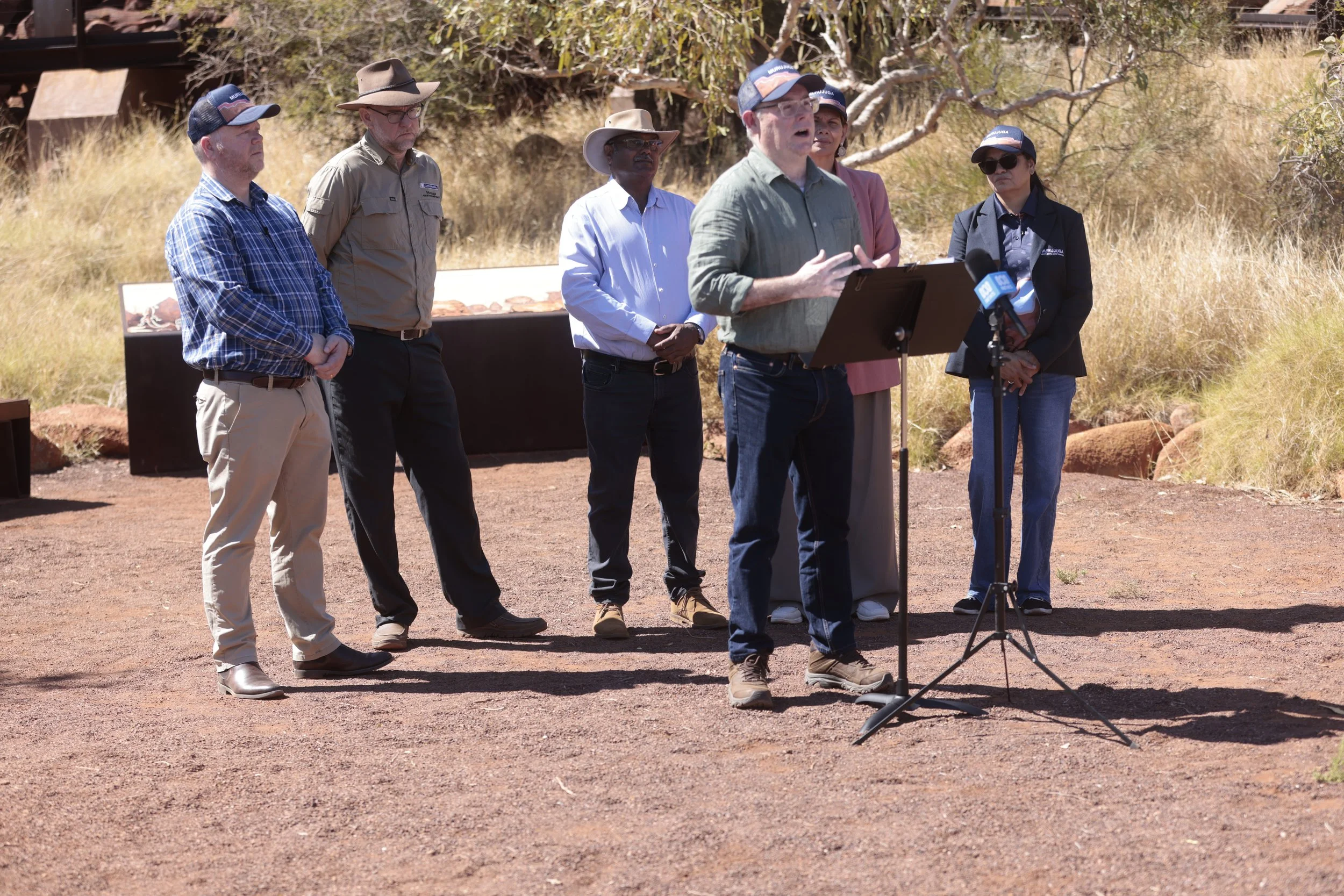
Federal Environment Minister Murray Watt said heavy industry will be held to the highest standards to protect Murujuga rock art sites.
By Daniel Burdon
Federal Environment Minister Murray Watt has promised Traditional Owners that new heavy industry at Burrup Peninsula on Western Australia’s Pilbara coastline will be held to the highest possible standards to protect sacred Murujuga rock art sites.
Mr Watt made the comment on Wednesday on his first visit to the recently World Heritage-listed area, which sits on the peninsula just kilometres from numerous heavy industrial sites including a $4 billion urea plant that is currently under construction.
He joined WA Environment Minister Matthew Swinbourn, local Ngaarda-Ngaarli indigenous leaders, Murujuga Aboriginal Corporation executives, rangers, and environmental scientists involved in what Mr Watt described as “the most significant cultural heritage monitoring program in the world”.
Traditional Owners to “hold government accountable”
Mr Swinbourn said the collaboration between Traditional Owners, the state government and Curtin University was vital - and that he believed having First Nations involvement was needed to “hold all governments accountable” for the protection of Murujuga.
It came as the state government released a report of the third official year of findings from the Murujuga Rock Art Monitoring Program, led by Professor Ben Mullins of Curtin University and involving teams of university scientists working with rangers and guided by the Ngaarda-Ngaarli - a group of five different language groups that hold combined cultural responsibility for the area and hundreds of rock art sites within.
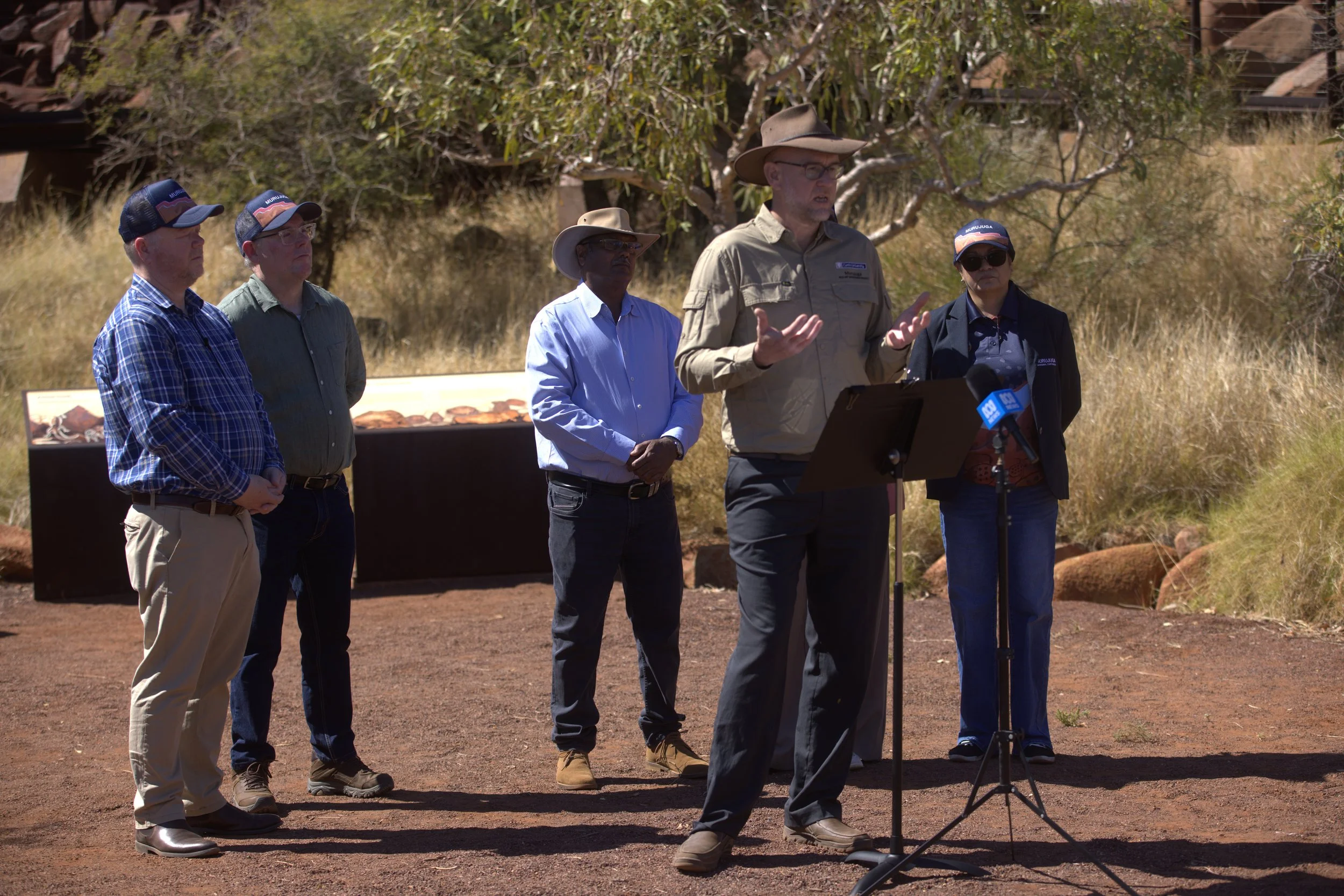
Curtin University's Professor Ben Mullins leads the Murujuga Rock Art Monitoring Program.
Damage from past industrial practices confirmed
Professor Mullins said the third year of monitoring had confirmed that past industrial practices, including the use of dirtier fuels in shipping and transport and resulting sulphur dioxide emissions had been one of the main causes of damage to the thousands of rock art sites, causing historic observations of acid rain.
He also said the third year showed a wider area then previously thought was damaged by sulphur emissions.
But he said there was no evidence that current emissions from nearby heavy industry was damaging rock art sites beyond that of natural causes, which include climate change, and no evidence of any new acid rain.
Professor Mullins said they had confirmed some increasing porosity (microscopic holes) in rock samples from the area that was found in last year’s report, but researchers believed that was due to historical emissions from fuel that was no longer in use, rather than current industrial activity.
Hundreds of thousands of tests, samples in bid to protect Murujuga
Over the three years of scientific monitoring that has now been completed at Murujuga, researchers and rangers have measured rock surface conditions more than 186,000 times, measured air quality tests and completed chemistry tests on rainfall, as well as more than 5,500 individual rock samples, taken with the permission and guidance of Traditional Owners.
Unlike many other environmental monitoring programs that developers undertake to fulfill assessment requirements for state and federal approvals, the monitoring program at Murujuga instead focusses on levels to protect the rock art - which may then be used to set the standards of any future development.
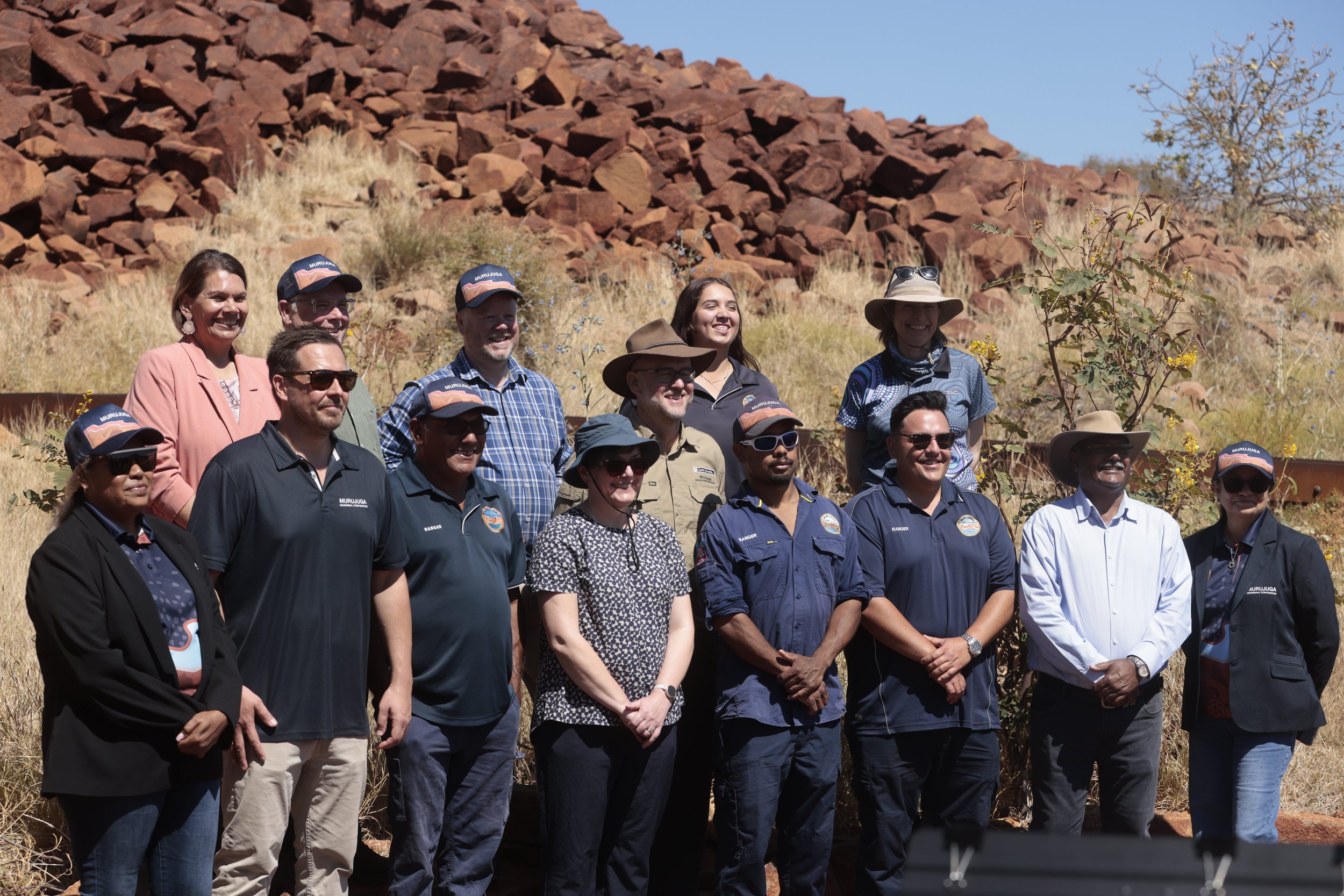
Murujuga Aboriginal Corporation Rangers with federal and state Environment Ministers Murray Watt and Matthew Swinbourn, respectively, and scientists involved in the Murujuga Rock Art Monitoring Program.
Questions remain about huge new urea plant being built
However, the huge Perdaman Fertiliser urea plant that is currently being built nearby has stoked community fears about the potential impacts, given it has already been approved and is expected to start operating within a year.
Asked what could be lost, if funding was ever cut for the montoring program - a key concern for some indigenous stakeholders - Professor Mullins said that “there was a lot of risk of repeated impact” to the World Heritage-listed site.
The progam has also been guided by the five language groups of the Ngaarda-Ngaarli as central stakeholders, to ensure samples taken are only taken from appropriate areas, as well as training rangers in scientific methods, with a view to the monitoring program being run by First Nations people from the region in the future.
The first three years of monitoring are also adding to the evidence base of what may, or may not be, affecting the future preservation of rock art sites, and will form specific environmental quality criteria that a planned long-term management program will be guided by.
Next year’s report will have a deeper focus on how air quality, microbial activity and rock surfaces interact, as well as the effects of sulphur and ammonia emissions and nitrogen dioxide - and how that may the determine the future management and protection of rock art sites at Murujuga.
For now, the key stakeholders are celebrating the results and hope it will continue “in perpetuity”, as Professor Mullins put it today.
Come and see the world’s oldest known rock art
Murujuga Aboriginal Corporation board member and proud Ngarluma woman, Belinda Churnside, invited people to visit Murujuga and see the world’s oldest rock art.
“People are welcome to come, to take photos and take away nothing but good memories,” she said.
For readers who want more information, Professor Mullins has written a scientific piece for The Conversation website here
The 2025 report, past reports and further detailed reading is available on a WA Government website here.
And you can listen to Ngaarda Media’s live interviews from today’s Breakfast Show with Lynnese O’Donoghue below, with Professor Mullins and Ms Churnside.