
NOONGAR LEADER CALLS FOR INDIGENOUS BUSINESS GROWTH TO DELIVER MORE FOR GRASSROOTS COMMUNITIES
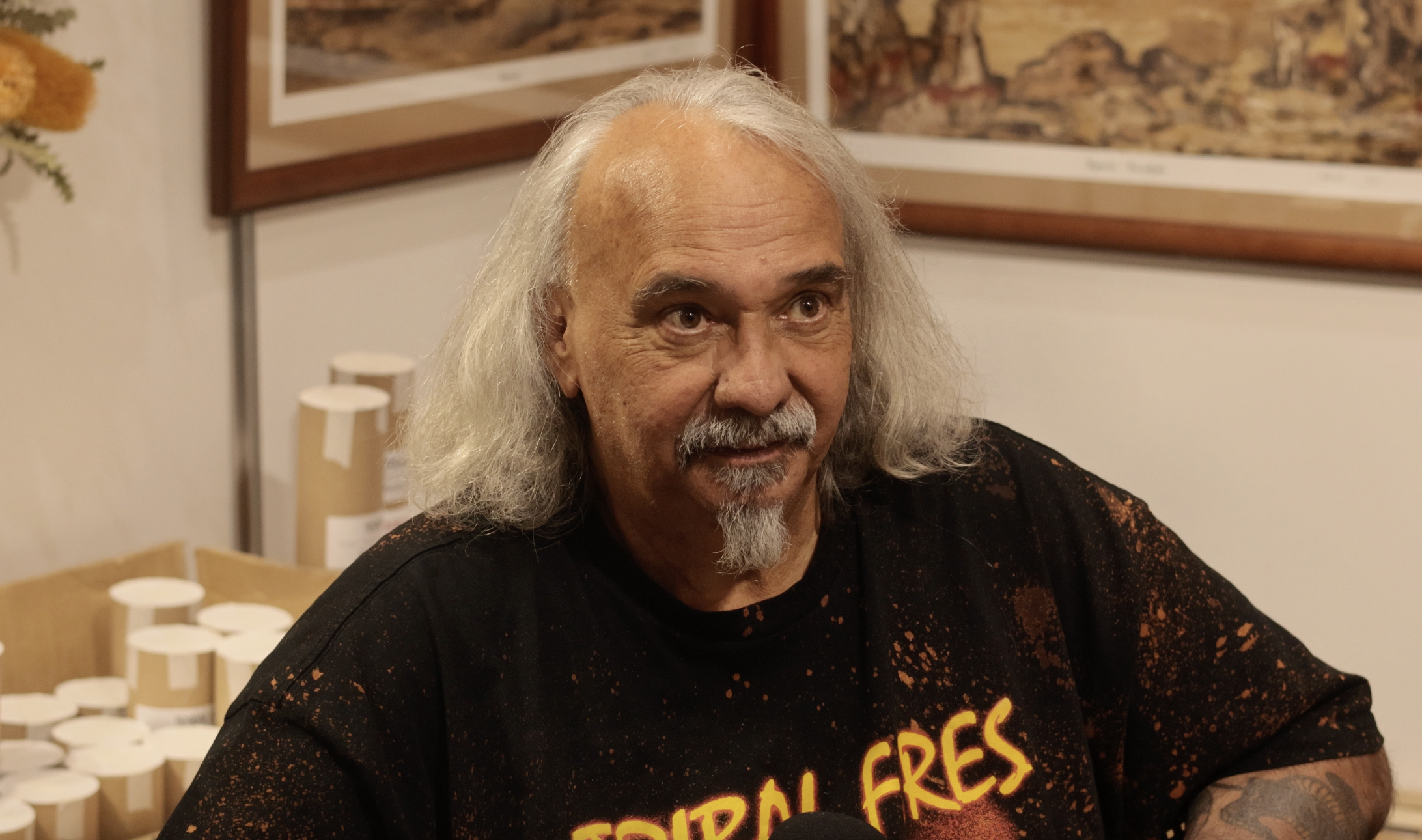
Dambartung director Robert Eggington. Image by Ngaarda Media
By Tangiora Hinaki and Katherine Glass
A veteran Noongar community leader says Australia's growing Indigenous business sector must ensure its economic success delivers meaningful change for Aboriginal people experiencing disadvantage — as hundreds of businesses, including nationally recognised First Nations fashion label Haus of Dizzy, showcased the opportunities being created through Indigenous enterprise in Boorloo this week.
Robert Eggington, director of Perth's Dumbartung Aboriginal Corporation, raised the concerns while attending Supply Nation's Connect 2026 at the Perth Convention and Exhibition Centre on Whadjuk Country.
The two-day event brought Aboriginal and Torres Strait Islander businesses together with corporate organisations and government departments, including a major Indigenous Business Tradeshow.
Supply Nation says the event is designed to connect Indigenous suppliers with buyers, create new business opportunities and build partnerships.
Mr Eggington said he supported efforts to increase Aboriginal economic participation, but questioned whether enough of the benefits were filtering through to people experiencing entrenched disadvantage.
"Supply Nation has to look at the social investment into our communities and start to develop the procedural processes through policy to ensure that that happens," he said.
"The big question is, is this really benefiting our community?"
FOUR DECADES OF COMMUNITY WORK
Mr Eggington has worked in Nyoongah community organisations for about 40 years and has led Dumbartung for more than three decades.
Based in Waterford, Dumbartung delivers cultural and social wellbeing programs and has worked with young people through education and custodial settings.
The organisation has also developed Tribal Fires, which includes a podcast documenting Dumbartung's history, cultural work and perspectives on issues affecting Aboriginal communities.
Mr Eggington said developing commercial opportunities offered organisations such as Dumbartung another potential avenue for generating income and supporting their community work.
But he said Indigenous economic development should not be judged solely by the number or size of Aboriginal businesses being created.
"They've got to link the investment of what they do again to the most impoverished part of our community," he said.
"If they don't, what it creates is not a unification … of making things better in our community."
BUSINESS OPPORTUNITIES WELCOMED
Despite his concerns, Mr Eggington said attending Supply Nation also gave Dumbartung an opportunity to tell the stories behind its artwork and cultural practice and expose the organisation to potential buyers and partners.
He said sales had been relatively modest but acknowledged Connect operated primarily as a trade show rather than a retail marketplace.
There was also value, he said, in younger members of his family being there and learning about business.
"We've got young members of our family here who are in the booth working with us, learning from the process," he said.
"If the change can be made by our young people understanding this procedure and process … then I'll see a bright future."
OWNERSHIP RULES STRENGTHENED
The event comes as the Commonwealth strengthens requirements around businesses accessing opportunities through its Indigenous Procurement Policy.
From July 1, businesses seeking to qualify under the policy are required to be at least 51 per cent Indigenous owned and controlled, rather than the previous 50 per cent ownership threshold.
The federal government has said the changes are intended to strengthen the integrity of Indigenous procurement and address concerns about "black cladding", where businesses may use an Indigenous partner or ownership structure to access Indigenous-specific contracts without meaningful Indigenous control.
Supply Nation already uses a higher standard for its Certified businesses, requiring them to be at least 51 per cent Aboriginal and/or Torres Strait Islander owned, managed and controlled. Its broader Registered category has historically included businesses with at least 50 per cent Indigenous ownership.
Mr Eggington said strengthening Indigenous ownership and decision-making was important, but argued percentages alone would not guarantee meaningful outcomes.
He also questioned the prominence of major non-Indigenous corporations at Indigenous business events and said businesses and institutions involved in Indigenous procurement needed to acknowledge their historical and contemporary relationships with Aboriginal communities.
FROM THE BEDROOM FLOOR TO A NATIONAL BRAND
Elsewhere on the Connect tradeshow floor, proud Wiradjuri woman Kristy Dickinson offered another perspective on the opportunities being created through the growing Indigenous business sector.
Ms Dickinson is the founder and creative force behind Haus of Dizzy, the Naarm-based jewellery and accessories label known for its bold Aboriginal designs and social and political messaging.
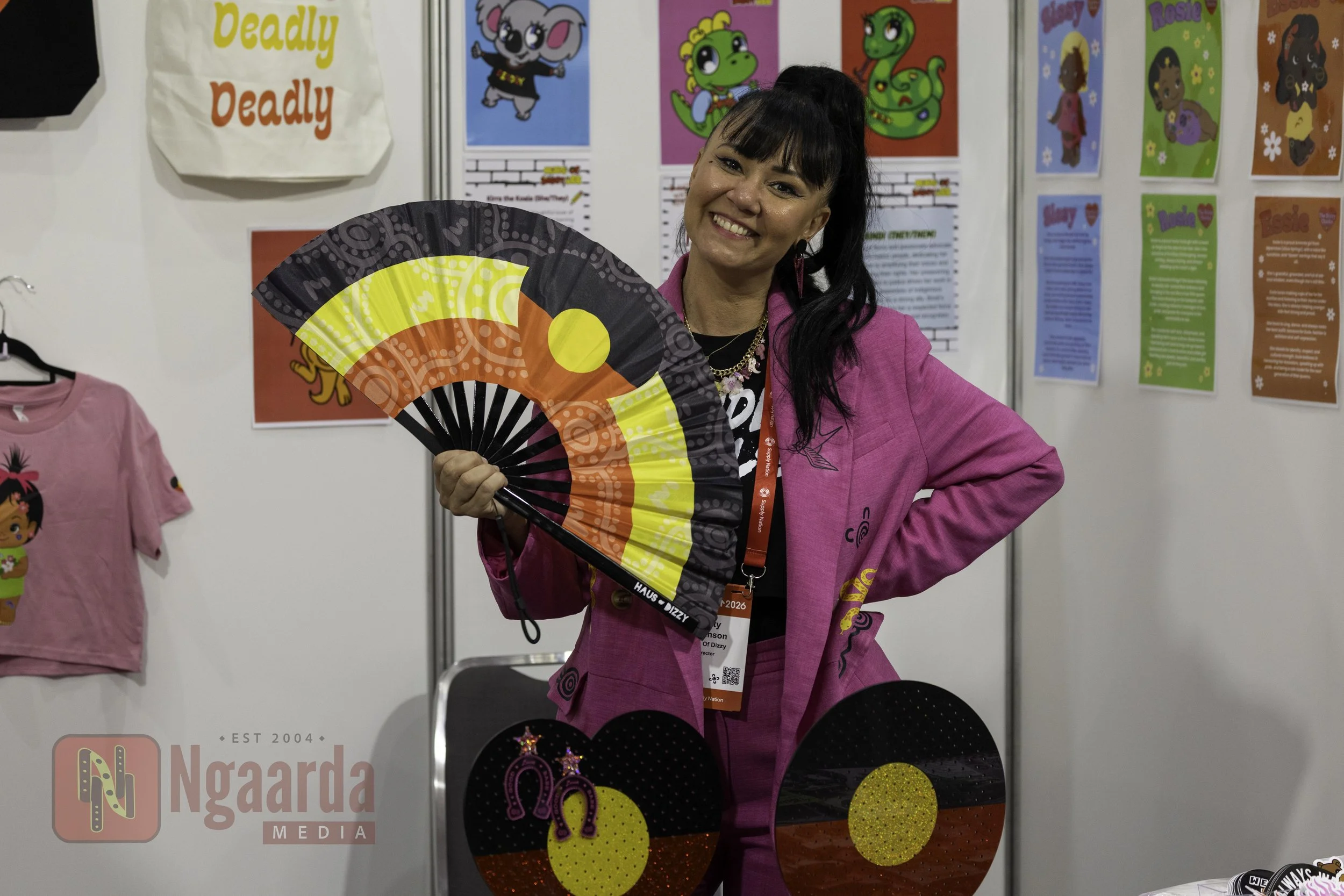
Haus of Dizzy founder Kristy Dickenson. Image by Ngaarda Media
"Haus of Dizzy is basically me spewed up in earring form," she told Ngaarda Media.
"It's everything that I believe in. It's everything that I want to be in the world. It's conversations that I think need to be heard.
"It's bold, it's bright, it's colourful, it's in your face, and the bigger the better, I say."
Ms Dickinson said Haus of Dizzy was entering its 12th year.
The business began on the floor of her bedroom in a small Newtown apartment and has since grown into a label stocked in more than 40 stores across Australia and New Zealand, including museums and art galleries.
Connect 2026 was her second Supply Nation tradeshow, after travelling to Perth almost immediately after attending the Darwin Aboriginal Art Fair.
She said business had been strong from the moment the doors opened.
But some of the biggest opportunities created through events such as Connect can emerge well after the tradeshow ends.
Ms Dickinson said a connection she made at last year's event developed into an entire jewellery collaboration with another artist.
"Last year at Connect I met the amazing artist Kylie Montelone, and then we ended up doing a whole collab together of jewellery, which is really amazing," she said.
At this year's event, Ms Dickinson said she had already made new connections, including with Tourism Australia and a Perth museum interested in stocking her products.
"There's definitely a lot of connects out there and it's definitely worth … being here."
BUSINESS, CULTURE AND PRIDE
For Ms Dickinson, however, the value of her business goes beyond sales.
Among Haus of Dizzy's popular products at Connect were Aboriginal heart hair clips and glitter Aboriginal flag designs.
Ms Dickinson said customers had described the sense of confidence and pride they felt wearing her Aboriginal flag pieces.
"When I put my flags on sis, I feel like my back straightens up," she recalled customers telling her.
"I feel confident and like, you know, my … chin goes up and I can, you know, take the day on."
Her work also deliberately engages with social and political issues.
Ms Dickinson said that stance had sometimes brought backlash, including over Haus of Dizzy products supporting Palestine.
She described being contacted following a corporate pop-up and told the organisation could not continue working with her unless the range was removed from her website.
But she said she remained committed to using the business to represent the issues she believed in.
"You get a lot of … keyboard warriors, but I just stick to what I believe in," she said.
"And I stick to what I do, and I love what I do."
Ms Dickinson said that philosophy was also something she shared through her mentoring work with young people.
"I always tell kids to love what you do, otherwise don't do it."
CALL TO LISTEN TO ELDERS
For Mr Eggington, the success stories emerging from Indigenous enterprise reinforced the importance of ensuring the wider economic movement remained connected to grassroots Aboriginal communities.
He said organisations including Supply Nation and Reconciliation Australia should draw more heavily on the experience of Elders and long-running community-controlled organisations.
"Listen to the voices of the elders in the community," he said.
"Listen to what they're saying through organisations like Dumbartung — 40 years on the front lines, working in the trenches of our community."
Mr Eggington said self-determination needed to remain central as Aboriginal businesses became a larger part of the Australian economy.
"The experience of the eldership of wisdom is what Supply Nation and other movements forward … must set their policies on — what our people are saying at a grassroots level," he said.
For Mr Eggington, the growth of Indigenous enterprise presents substantial opportunities for the next generation.
But he said its success should ultimately be measured not only by what happens on the Connect tradeshow floor, but by whether that economic growth improves the lives of Aboriginal people in communities.
For entrepreneurs such as Ms Dickinson, Connect demonstrates how those opportunities can translate into something tangible — new customers, new collaborations and a bigger platform for Aboriginal culture, identity and business.

Connect 2026 promotional banner. Image from Facebook