
Pilbara stories and family legacy stitched into Jina-Jina’s Darwin runway collection
By Katherine glass
Yindjibarndi artist Melissa Sandy says Jina-Jina’s latest collection carries the colours of Pilbara Country, the strength of family and the legacy of artists who helped establish the Aboriginal-owned fashion label.
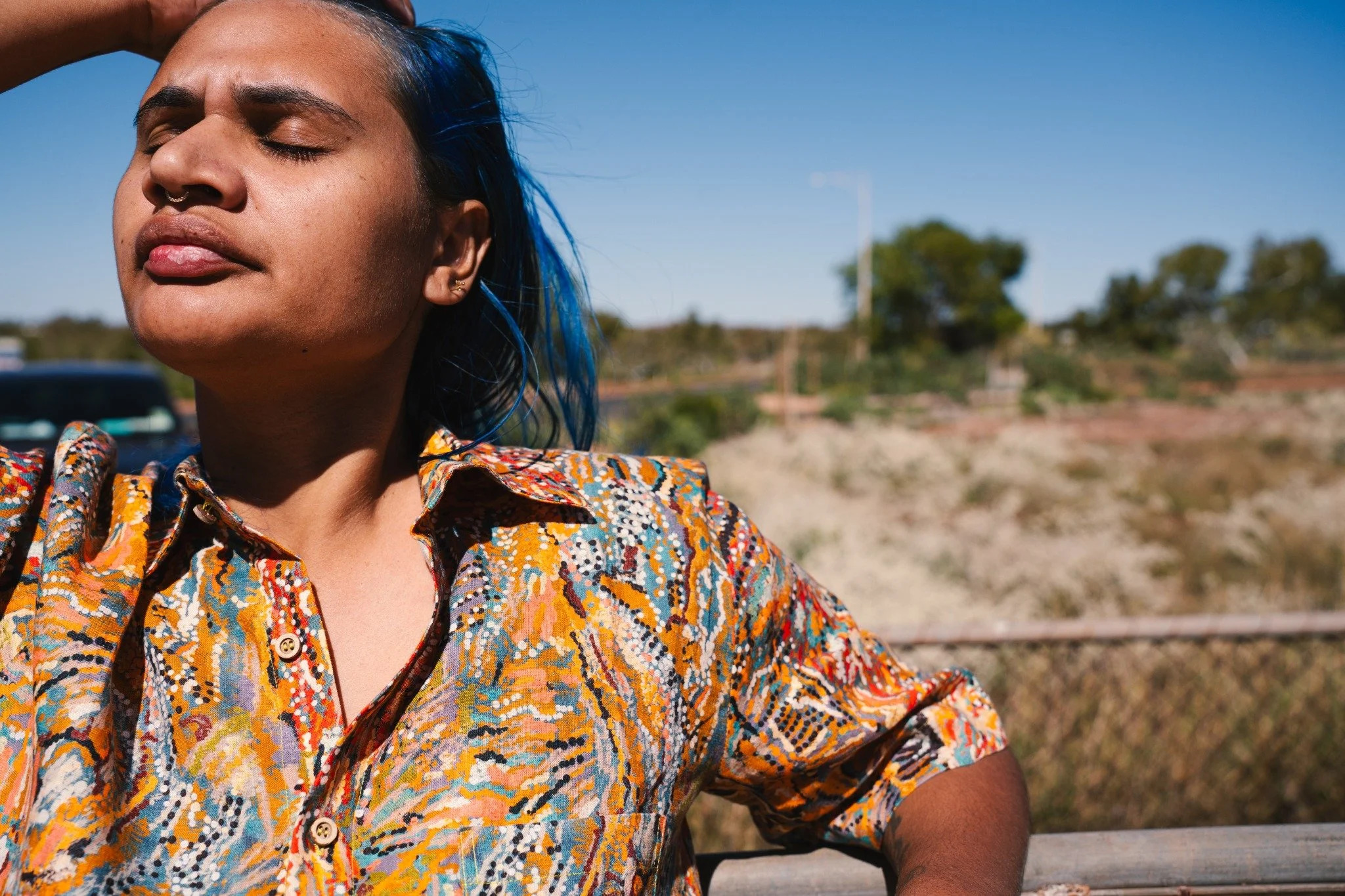
Yinjaa-Barni artist Trenaiya modeling a garment from the latest Jina-Jina collection
A collection carrying stories from Roebourne and the Millstream Tablelands will take to one of Australia’s biggest First Nations fashion runways in Darwin.
Jina-Jina by Yinjaa-Barni Art will feature in the second Country to Couture show on Monday, August 3, at Charles Darwin University’s Danala campus on Larrakia Country.
The show, titled Imprints and Memory — Seasons of the Land, Waters and Sky, will bring together collections exploring the living relationships between First Nations people, Country, culture and the changing seasons.
For Yinjaa-Barni Art chairperson and artist Melissa Sandy, taking the collection from the Pilbara to Darwin is about much more than clothing.
“It means a lot because it’s myself and my family who are sharing our culture and our stories and our legacies with other people, besides our community or people close by,” she said.
“It’s very special.”
Pilbara colours brought to life
Yinjaa-Barni Art is a not-for-profit Aboriginal corporation based in Roebourne.
Its artists predominantly belong to the Yindjibarndi language group, with ancestral homelands surrounding the Fortescue River and Millstream Tablelands.
The collective’s paintings often depict the region’s wildflowers, waterways and landforms, carrying personal and shared memories of Country. The name Yinjaa-Barni means “staying together” in Yindjibarndi.
Jina-Jina, which means “to dress”, takes those original artworks beyond the canvas and transforms them into wearable designs.
Ms Sandy said the colours used in the collection were influenced by the dramatic changes that occur across the Pilbara landscape.
“If anyone has travelled to the Pilbara, they would see the beautiful wildflowers that blossom in the Country,” she said.
“The colours are just breathtaking. They’re very vibrant. When you can sit down in your space with your family around you and paint with beautiful colours and paint your beautiful Country, it just makes it a lot more special.”

The new collection draws on the wildflowers, colours and changing landscapes of Yindjibarndi Country. Cheyenne modeling
A family legacy on the runway
One of the collection’s most significant garments has been created using the last remaining fabric featuring the work of a late family matriarch.
Ms Sandy said memories of the artist remained strong inside the art centre, where her painting table continues to hold a special place.
“We often still talk about her and think about her laughter and her joy,” she said.
“We think about her when she used to sit at the back of the art centre at her table. No one paints at her table. No one sits at her table. It’s still her special space.”
Her designs appeared in the first Jina-Jina collection, and Ms Sandy said bringing the rare fabric back to the runway would allow her legacy to continue.
“She’s never left our collection,” she said.
“To have that design on the runway and be able to share her legacy with people is something that is very rewarding to our family, but also something that is very close to our hearts.”
Ms Sandy said the late artist had been shy and would probably have avoided the spotlight, but she believed she would have been proud to see the garment in Darwin.
“I could still see her smile and her laugh,” she said.
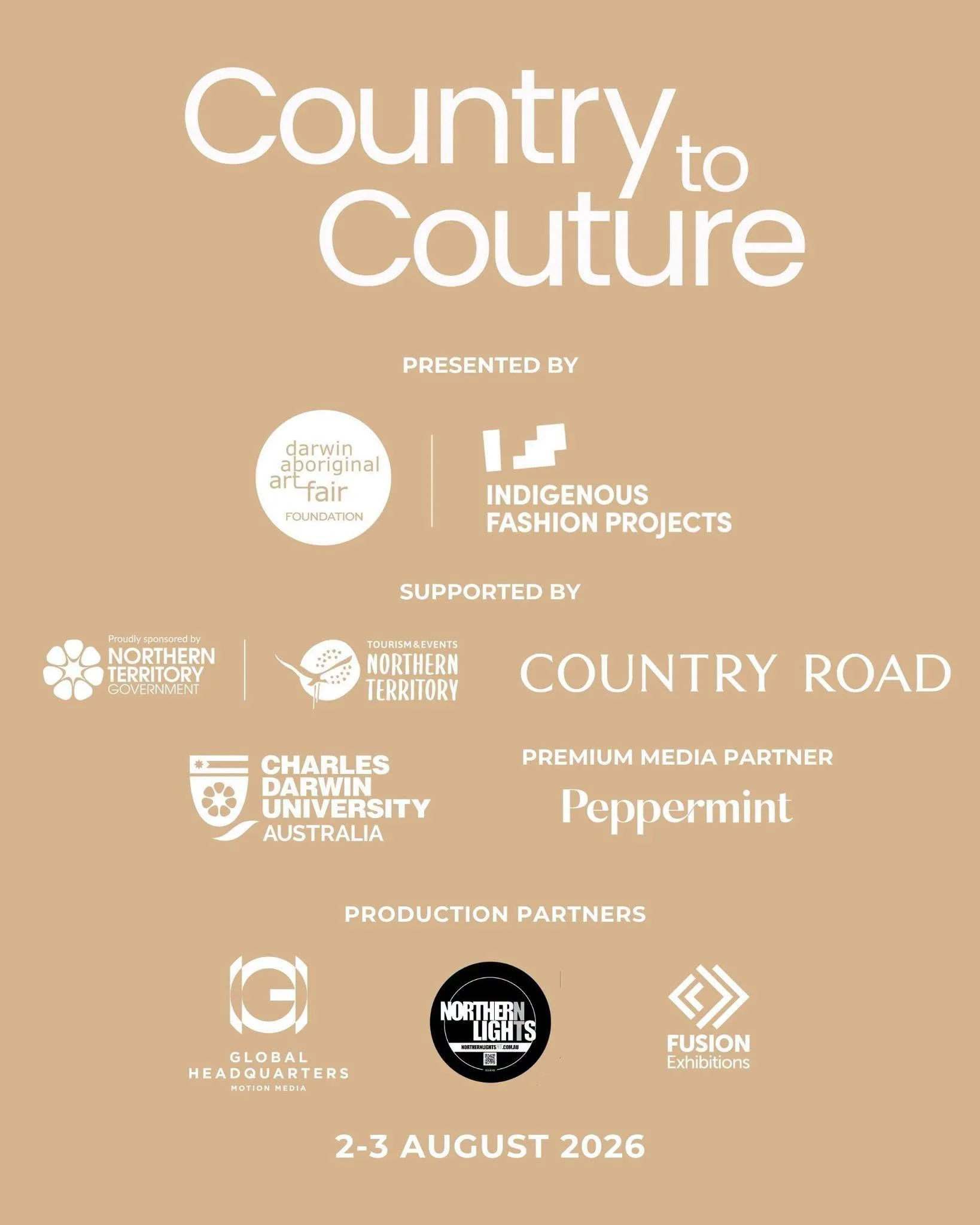
Country to Couture promotional graphic
Artists at the centre of the industry
Ms Sandy said it was important for audiences to see the people and work behind the finished garments.
Creating a collection involves the artists, art centre staff, fabric producers, garment makers and family members who have supported Jina-Jina since its earliest days.
“But also remembering that it’s the artists’ artwork,” she said.
“It’s our thing. It’s what we started years ago to be sustainable, and it’s what we continue to do now.”
Jina-Jina is owned by Yinjaa-Barni Art, with proceeds reinvested into the Aboriginal-owned business and the careers of its artists.
Yinjaa-Barni Art is also a member of the Indigenous Art Code. Its ethical trade policy covers fair contracts, pricing, copyright, artists’ moral rights and transparency in the sale and promotion of Aboriginal art. Purchases are accompanied by certificates of authenticity.
Country to Couture began as a small textile showcase in 2016 and has grown into what organisers describe as Australia’s largest showcase of Indigenous fashion.
More than 120 collections, 1,000 looks and 250 First Nations models from different language and cultural groups have appeared on its runway.
Ms Sandy said Aboriginal fashion had developed into a growing industry while continuing to create relationships between artists and the people who wear their work.
She remembered the label’s earliest days, when orders were taken by hand and former manager Patricia Floyd sewed garments herself.
“That’s where we started, so we’ve come a long, long way,” she said.
“It’s really exciting. You not only make friends selling your artwork, but also selling the beautiful garments with our designs.”
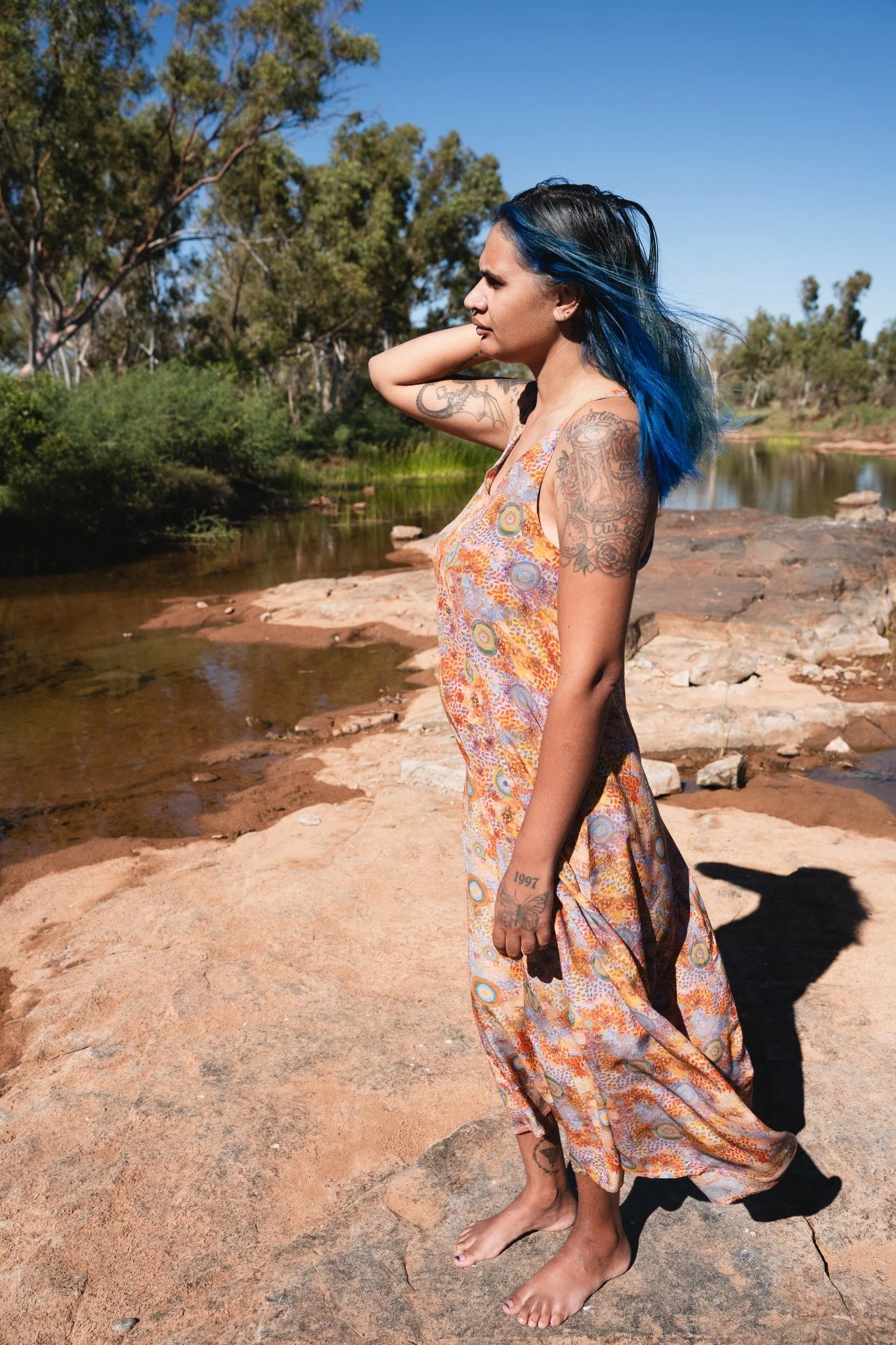
Jina-Jina is an Aboriginal-owned textile and fashion business that transforms original Yinjaa-Barni artworks into wearable designs. Treinaya models
‘Every artist deserves to shine’
Among the new designs, Ms Sandy said a piece featuring artwork by her sister, Yindjibarndi artist Justina Willis, strongly captured the heart of the Pilbara.
Ms Willis is known for detailed paintings using fine brushwork, dots and rich colours inspired by Country and time spent travelling through the landscape with family.
“The way my sister tells her stories, travelling through Country with her family, and the way she puts it down onto her canvas is natural and beautiful,” Ms Sandy said.
She hoped the collection would encourage young Aboriginal artists and designers watching from communities across Australia to trust their own stories and creative voices.
“Share what you have in your hearts and what your elders have passed down to you, whether it’s cultural or whether it’s about your Country,” she said.
“Don’t shy away. Have your artwork out there, because every artist deserves to shine.”
Jina-Jina by Yinjaa-Barni Art will appear in Country to Couture’s second runway show at the Charles Darwin University Danala campus on Monday, August 3, 2026.
Doors open at 6pm, with the runway scheduled to begin at 7pm.