
RECONCILIATION WEEK PUTS PRESSURE ON COOK GOVERNMENT OVER TRUTH-TELLING
BY TANGIORA HINAKI
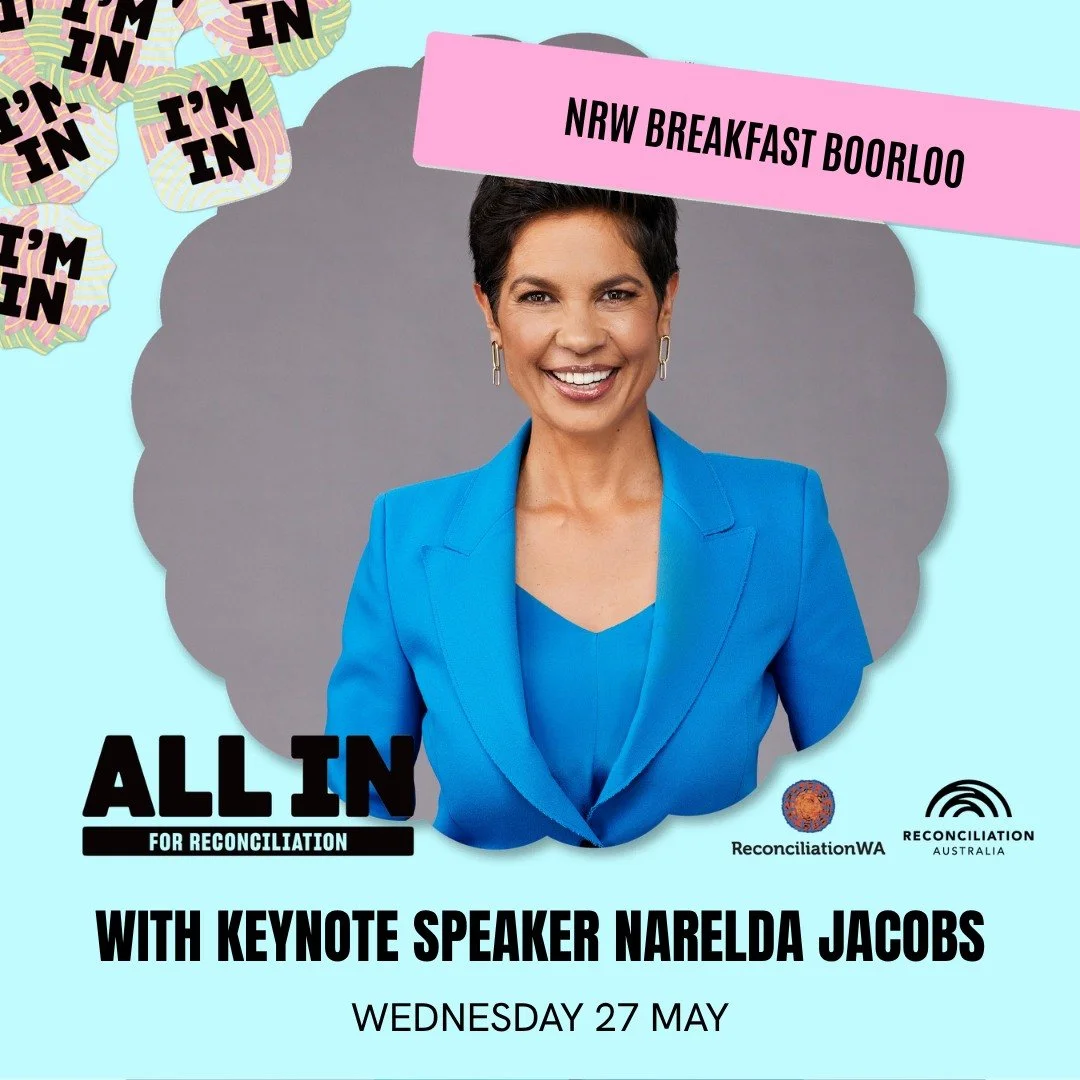
Western Australian Premier Roger Cook has used National Reconciliation Week to promote the State Government’s reconciliation agenda, while broadcaster and journalist Narelda Jacobs publicly challenged him to follow through on commitments around truth-telling and racism.
Speaking at the Reconciliation Breakfast in Boorloo on Wednesday, both Cook and Jacobs called for reconciliation, healing and anti-racism, but Jacobs made it clear symbolic support would not be enough.
“Our ask is for Premier Cook to make good a previous commitment he has made to truth-telling.”
Jacobs delivered the remarks before leading supporters to a “Walk for Truth” to Parliament House in solidarity with Victorian truth-telling advocate Travis Lovett.
COOK CALLS FOR UNITY AND ACTION
Cook’s speech focused heavily on reconciliation, mutual respect, the WA Government’s work on Closing the Gap, anti-racism, and the Stolen Generations Redress Scheme.
He said reconciliation required action from all Western Australians.
“Reconciliation is a shared responsibility, one that belongs to us all.”
The Premier also announced further planning for the 2029 WA Bicentenary, which he said would include truth-telling, storytelling and reconciliation initiatives.
The WA Government has appointed Reconciliation WA, Community Arts Network and Yirra Yaakin Theatre Company to help shape the bicentenary planning process.
Cook also defended the Government’s anti-racism work and Closing the Gap commitments, including:
More than $10 million through the 2026–2028 Closing the Gap Implementation Plan
An extra $8 million for Aboriginal community-controlled organisations
Continued work on the WA Anti-Racism Project

JACOBS DETAILS WHAT RACISM “LOOKS LIKE”
But Jacobs’ keynote speech pushed beyond government announcements, pointing directly at systemic racism and failures affecting Aboriginal people across WA.
“The best way to address racism is with the truth.”
Jacobs reminded the audience Cook himself had spoken publicly about addressing racism.
“He wants truth. He said in his speech that he wants the truth. He wants to address racism.”
She then laid out a series of examples she said reflected the reality of racism in Australia.
“It’s no charges being laid over the supermarket death of Kumanjayi White.”
“It’s booing at Anzac Day welcomes.”
“It’s the 13-year-old girl catching a train in Perth who ends up being arrested by an off-duty officer.”
Jacobs also described an incident involving two Aboriginal children in Perth.
“It’s two 11-year-old Noongar friends walking to the park after dinner at Nan’s in Bayswater Grove, only to be pounced on by three carloads of plain clothed police.”
She said one child ran home while the other was arrested before police realised they had targeted the wrong children.
Jacobs also referenced the alleged explosive device incident during an Invasion Day event in Perth earlier this year.
“Mobs should be able to gather on our day of mourning without the risk of being harmed.”
She argued racism extended beyond policing into environmental management, child protection systems and workplaces.
“It’s the destruction of Jarrah forests on the outskirts of Perth.”
“It’s fears of water bankruptcy in the Kimberley.”
“It’s the expansion of a fossil fuel project right next to World Heritage-listed rock art at Murujuga.”
Jacobs also pointed to social conditions affecting Aboriginal communities.
“It’s overcrowding in homes, prisons, and juvenile detention.”
“WA has the highest rate of First Nations child removals behind the NT, higher than during the Stolen Generations.”
She said racism also appeared in the workplace and governance structures.
“It’s micromanaging First Nations staff or underestimating them.”
“It’s putting them in advisory positions but never taking their advice.”
“Appointing them to boards but taking their power away.”
“Giving them a platform but controlling what they say.”
Jacobs argued these experiences showed racism remained embedded within institutions and public systems.
“The experience of living here is different according to the colour of your skin.”
But she warned reconciliation could not succeed without confronting uncomfortable realities.
“Without truth telling, reconciliation, healing, moving forward can't happen.”
REDRESS SCHEME DRAWS STRONG RESPONSE
Cook revealed more than 3,000 applications had already been received through the WA Stolen Generations Redress Scheme since applications opened in November last year.
Eligible survivors can receive $85,000 in payments and a formal acknowledgement from the State Government.
Cook described the response as evidence of how widespread forced removals were in WA.
Jacobs acknowledged the scheme during her speech but described it as “flawed”, adding pressure on the Government to go further.
SYMBOLISM OR STRUCTURAL CHANGE?
The speeches reflected two sides of the reconciliation debate now playing out in Western Australia.
The Government is promoting investment, advisory groups, and public commitments focused on healing and inclusion.
Advocates like Jacobs are asking if those commitments will lead to structural change or remain symbolic.
Jacobs ended her address with a direct challenge to supporters and political leaders alike.
“Allyship takes action.”