
STAFF SHORTAGES AND SEVERE OVERCROWDING PUT PRESSURE ON ROEBOURNE PRISON
By Daniel Burdon
Severe overcrowding, chronic staff shortages and limited access to mental health care are among the key concerns identified at Roebourne Regional Prison, despite the long-awaited installation of air conditioning.
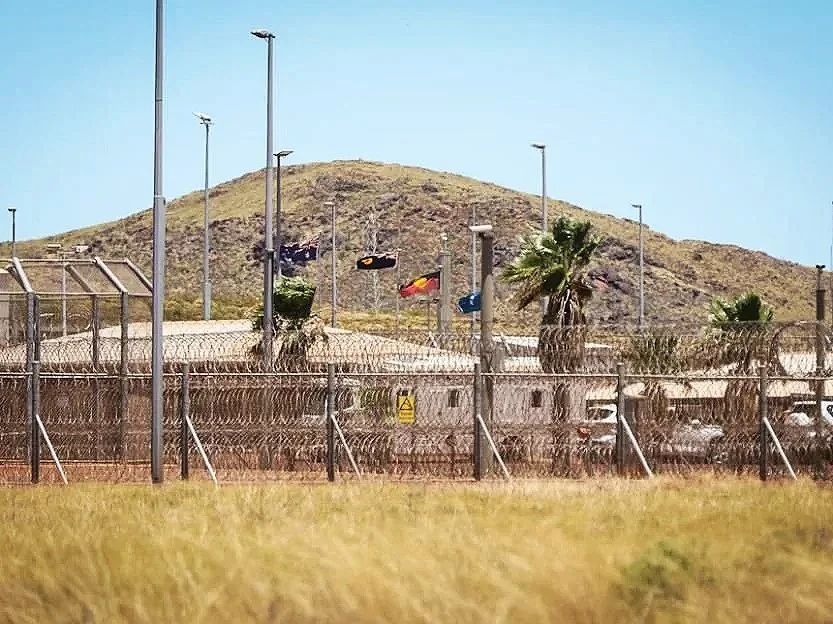
Roebourne Prison, Credit, ABC Pilbara - Amedlia Searson
The Office of the WA Inspector of Custodial Services this week released a report of its independent, week-long inspection of the prison in November 2025, when it was officially tabled in parliament.
Acting Inspector of Custodial Services Jane Higgins said staffing shortages remained the most urgent and significant issue facing the Pilbara prison, affecting almost every part of daily life for prisoners.
“The staffing shortages affect so many parts of the prison, including daily operations, service delivery, health, access to education and programs, and re-entry support for people,” Ms Higgins said.
At times, the prison was operating with shortages of up to 30 per cent of required staff, largely due to the region’s housing shortage, and high rates of staff out of action due to workers compensation.
Ms Higgins said the lack of available officers was stopping prisoners attending medical appointments, training and education and rehabilitation programs or accessing recreational activities.
“Because of the staffing shortages, prisoners were locked in their cells a little bit more than they were previously,” she said.
Health services have also been affected, with reduced health centre opening hours, gaps in GP coverage and concerns around preventative care.
Ms Higgins said access to mental health treatment was particularly concerning, with the prison operating without a permanent treating psychiatrist, and only one mental health nurse available to treat inmates.
“That affects medication reviews, it affects the ability to identify new or emerging mental health needs as well,” she said.
Female inmates were also identified as being particularly disadvantaged, still without a dedicated women’s support officer 10 months after the inspection, limited employment opportunities and reduced access to recreational activities compared with male prisoners.
Inspectors also raised concerns about cleanliness in parts of the women’s unit and the limited regular presence of custodial officers.
Overcrowding remains another significant pressure.
Cells originally designed for one prisoner have been converted to accommodate two people, while double cells can hold three prisoners and four-person cells have been fitted with six beds.
Inspectors observed as many as 11 prisoners accommodated in a six-bed cell, with mattresses on floors described as common.
Ms Higgins described the overcrowding as “severe”.
“I don’t think you can keep just putting more people in cells,” she said.
“Something really needs to be considered to address overcrowding.”
But she said the installation of air conditioning throughout the prison had delivered a significant improvement in living conditions for inmates’ and staff morale.
Before the upgrade, prisoners were enduring temperatures in their cells up to about 32 degrees overnight, a level often exceeded in summer.
“The heat in the cells prior to that was just appalling,” Ms Higgins said.
Inspectors also highlighted positive programs at the prison, praising the East Pilbara Aboriginal cultural education and transition program, Kanyirninpa Jukurrpa Martu, and a rail infrastructure training program connecting prisoners with potential jobs after release.

Roebourne Prison, Credit Gerard Mazza
But with Roebourne among the prisons across the state that are overcrowded, with ageing infrastructure and a lack of staff, the state government is currently reviewing the system with a view to finding more locations for new prisons.
Buit Ms Higgins said building more prisons alone would not resolve the wider pressures facing Western Australia’s custodial system.
“The problem is much bigger than just building prisons,” she said.
“I think if you build prisons, they will be filled.”