
‘Always, ever, continuing’: Menang exhibition brings cultural knowledge home to Albany
By Katherine Glass

Cultural materials held in museums across Australia and overseas have returned to Albany for an exhibition recognising the Menang people’s enduring connection to the region’s land, sea and skies.
For the first time since leaving Country, objects, specimens, images and records carrying Menang knowledge have been brought together in Albany-Kinjarling.
Kalyagul: Connections to Menang Country places the voices and experiences of Menang people at the centre of Albany’s history during a year marking 200 years since the establishment of a permanent British settlement.
The exhibition opened at the Museum of the Great Southern on July 4 and will run until February 21, 2027.
Lead curator and Menang woman Shona Coyne said the exhibition was about more than displaying historical objects.
“This exhibition, I feel, is really a celebration of our community and our connection to this place,” she said.
“It’s a really important exhibition this year amidst the 200th anniversary of the bicentennial of Albany.”

Kalyagul is a Menang Noongar word meaning “always, ever, continuing”.
Ms Coyne said the title acknowledged that while colonisation disrupted the transmission of culture and knowledge, Menang connections to Country remained alive.
“It reaffirms that Menang knowledge and our connection to Country, even though it’s been disrupted over many, many years, is continuing and ongoing,” she said.
“It’s a living word.”
Menang Boodja refers to the traditional lands of the Menang people, a Noongar dialect group and the Traditional Custodians of Albany and surrounding areas.
The exhibition also distinguishes between Menang people as a specific local group and Menang Noongar people as members of the wider Noongar nation living in Albany today.
Menang voices guide the exhibition
The exhibition was developed by the Western Australian Museum with members of the Menang Noongar community and Deakin University.
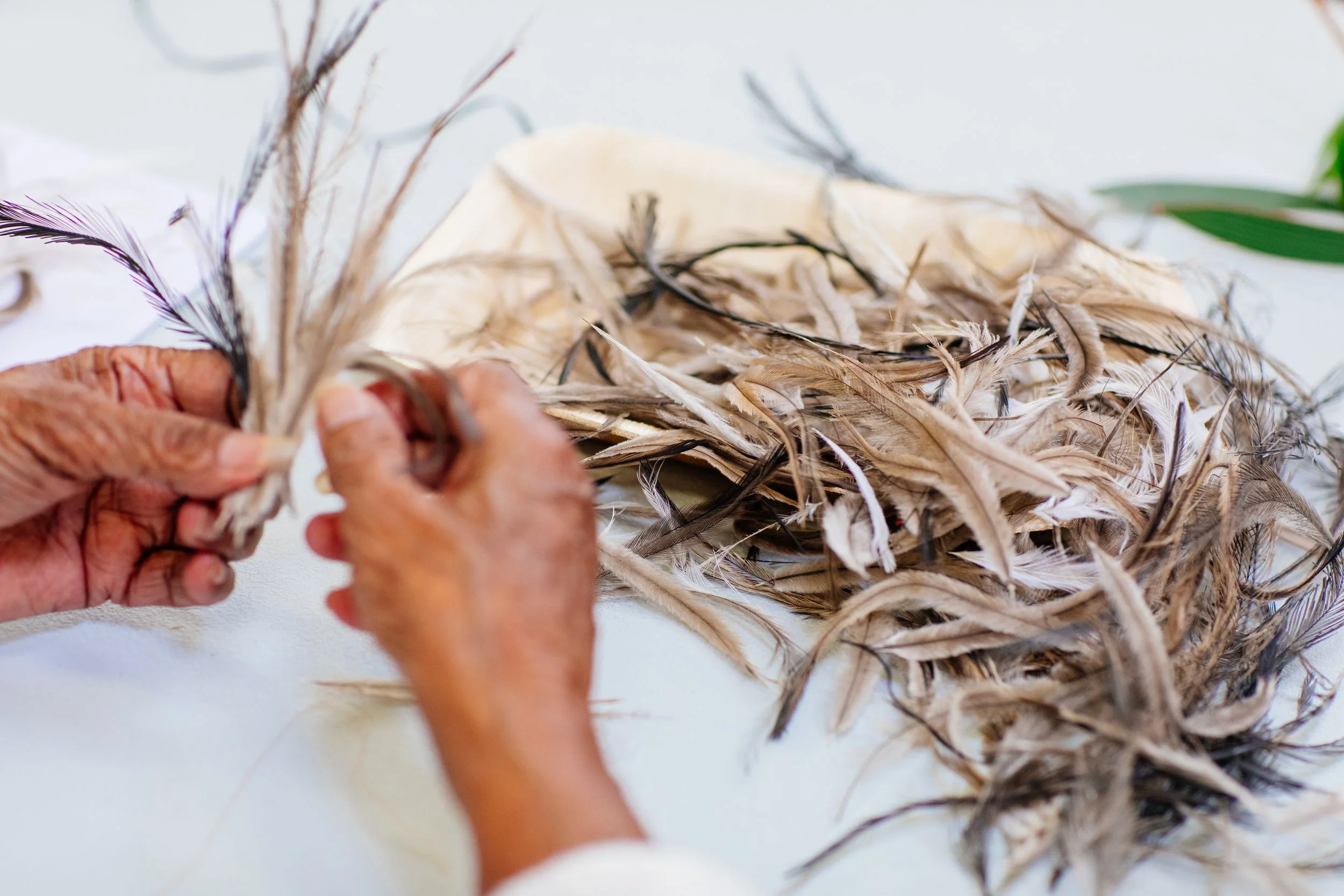
Ms Coyne said Menang community members influenced every part of the exhibition, from its title and language to the objects, scents and stories presented.
“They have led on every single element,” she said.
“When visitors come to experience the show, they know that they’re hearing first-hand from community and that there’s an authentic perspective and voice.”
The collection includes scientific watercolours of fish, reptiles and mammals, along with preserved specimens and records containing Menang names and information.
Menang people helped catch, identify and preserve fish and advised visiting researchers about habitats, food sources and the natural environment.
Ms Coyne said those contributions had often been overlooked when the resulting collections were interpreted as the work of European scientists alone.
“We helped form these collections,” she said.
“We helped inform these new visitors about where to go, what to find and how they could care for particular things.”
The exhibition also includes botanical specimens collected by Menang women and now held by the Royal Botanic Gardens Victoria.
Together, the materials show that Menang knowledge holders were central to the early documentation of Albany’s plants, animals and waterways, even when their names and intellectual contributions were not properly recorded.

Ms Coyne said the physical return of cultural materials was significant, but the research process had also enabled what she described as the repatriation of knowledge.
Whenever photographs, records or collection materials were identified in overseas institutions, that information was taken back to community members.
“There’s already been a massive amount of the repatriation of knowledge,” she said.
“Those objects will continue to go on and tell our story overseas where they are. We’re okay with that because we’ve got our story here, and we continue to make those objects today.”
For Ms Coyne, the work of researching the exhibition has been both rewarding and emotionally difficult.
“As a Menang woman, this isn’t just work for me,” she said.
“This is representing my community, putting a best foot forward, and I don’t take that responsibility lightly.”
She said colonial archives could reveal ancestral names and cultural information that had been missing from community knowledge, but they also contained records of violence, dispossession and loss.
“I’m constantly dipping in and out of feeling excited and elated, but also saddened by the loss that has happened over time,” she said.
“It comes at a cost, but I wouldn’t have it any other way.”
Kalyagul: Connections to Menang Country is showing at the Museum of the Great Southern until February 21, 2027.