
BANJIMA LEADER JOHNELL PARKER CALLS FOR ACCOUNTABILITY OVER WITTENOOM CONTAMINATION
BY TANGIORA HINAKI
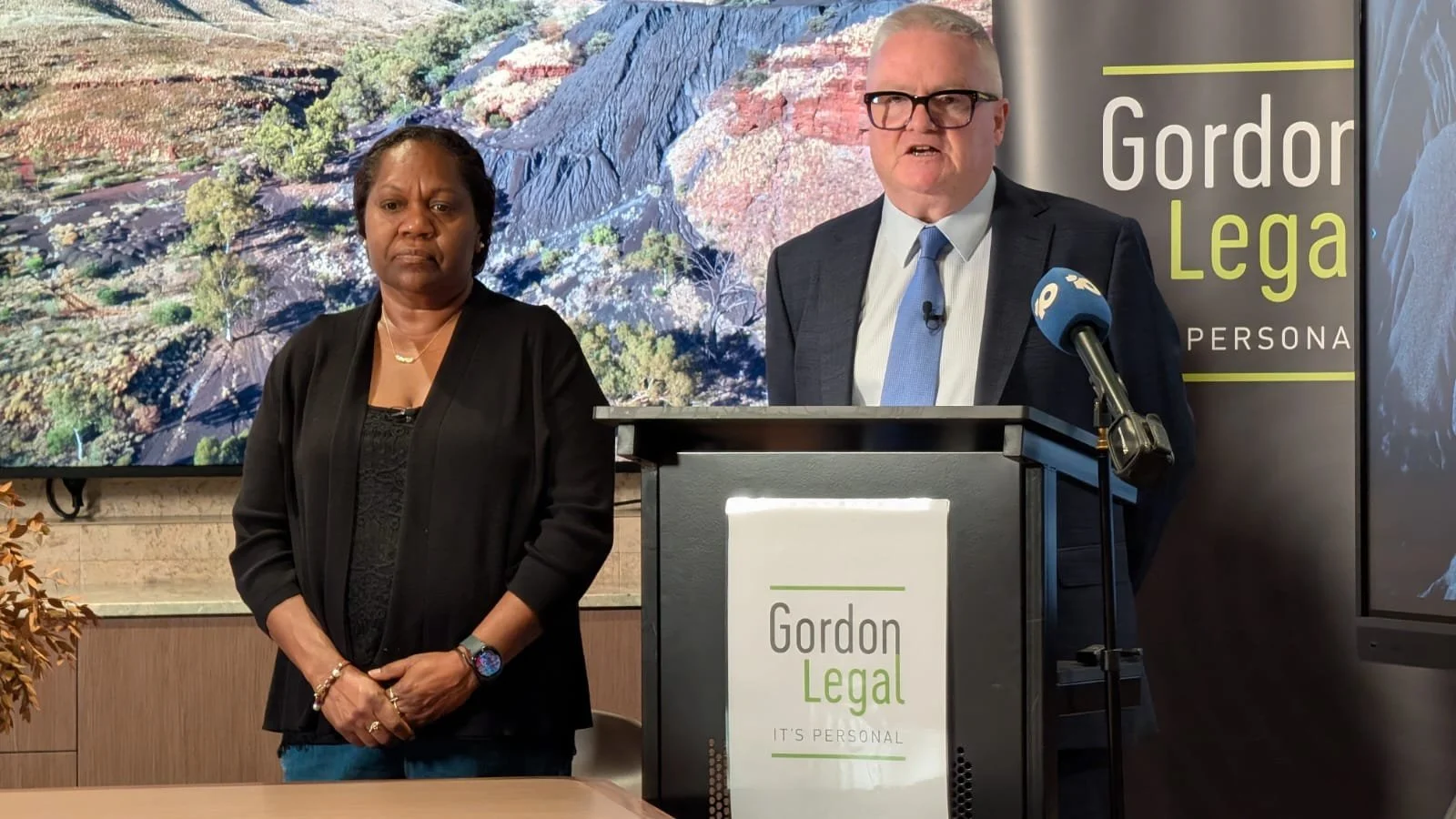
Banjima Native Title Aboriginal Corporation Vice Chair Johnell Parker says this week’s court hearing over contamination at the former Wittenoom mine site marks a significant step for her people.
She says the legal action has been a long time coming.
“It’s a long time coming for us as Banjima and for us to finally get to this stage of taking that next step and cleaning country up,” she said.
“It feels really good. I stand very proud in bringing this message across.”
The Banjima are asking the Supreme Court to consider who is responsible for cleaning up asbestos waste left on Country after mining operations ceased.
Wittenoom sits on Banjima land in the Pilbara and was once home to a blue asbestos mine. Decades after its closure, asbestos tailings remain in the area.
Parker says the impact of blue asbestos has been widespread.
“There is not one family that has lived in Wittenoom that hasn’t been touched by the impacts of blue asbestos,” she said.
“We lost loved ones as a family due to the blue asbestos.”
She says Traditional Owners have tried to engage with government and remain open to discussions moving forward.
But she says removing residents from the town and restricting access does not resolve the broader issue.
“When nobody wants to use the land and it’s left with toxic waste — who cleans it? Who’s responsible?” she said.
“For us as Banjima people, this part of the country is still a significant part of us.”
Parker says the contamination is not only a health issue, but an environmental one.
“It’s toxic waste on Country and it’s still there,” she said.
“It’s an environmental issue that should be everybody’s business.”
She also points to the documentary Yurlu | Country, which tells the story of families affected by asbestos exposure, as helping bring broader attention to the issue.
“This film has brought to light that the sickness lives in our families,” she said.
“Country and people are one and the same.”
For Parker, the case is about more than legal process.
It is about responsibility — and about what happens to land once it is no longer commercially useful but still carries the burden of industrial harm.
“As Banjima people, we’re choosing to ask the question: what happens to the land when it’s of no use to anyone, but there is still toxic waste exposed on Country?” she said.
She says the answer matters not only for Banjima, but for all families who lived and worked in the town.