
RISE UP, STAND PROUD: BOSS ARTS CREATIVE AND YOUNG ARTISTS CELEBRATE AWARD-WINNING YEAR
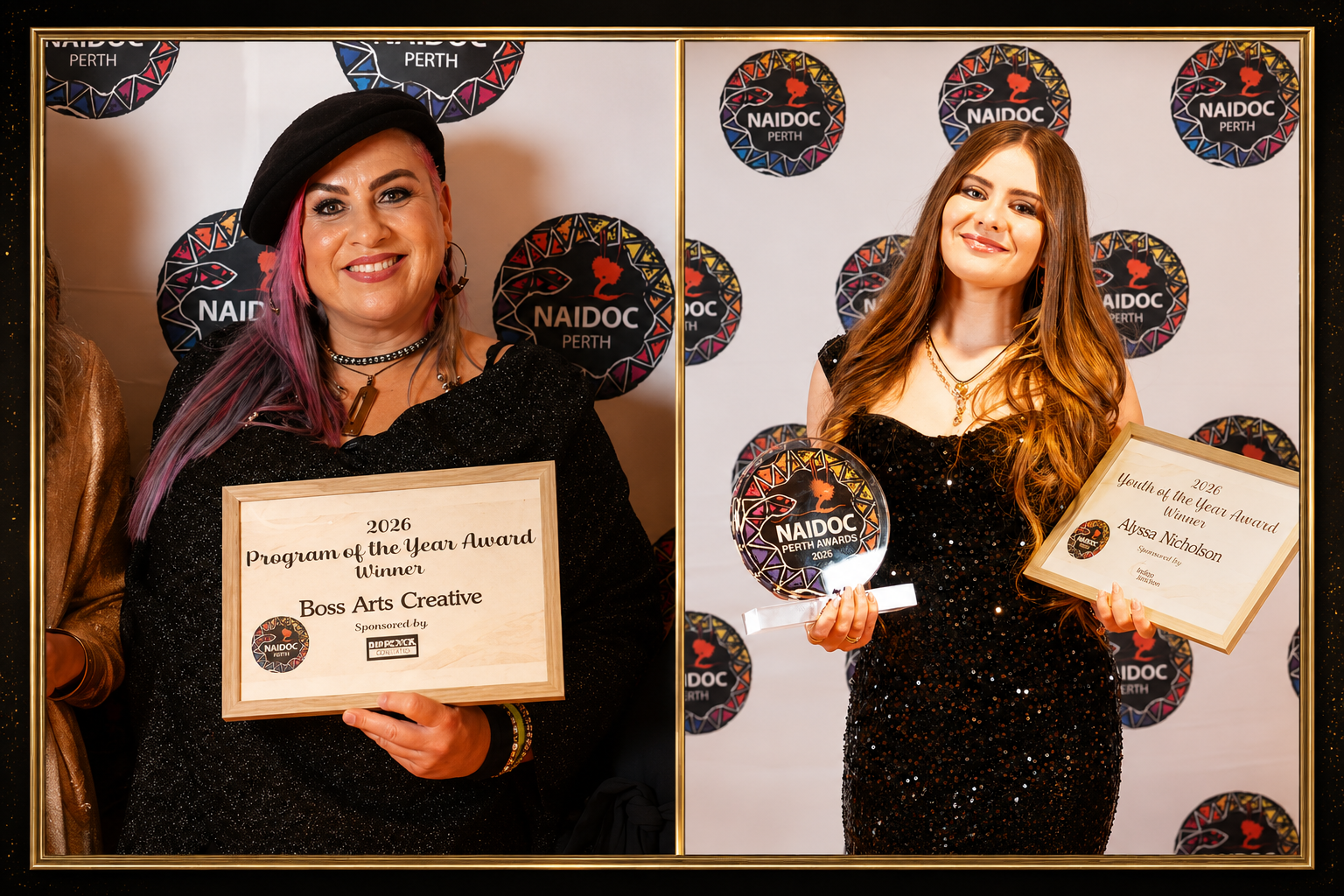
Charlie Caruso (left) and Alyssa Nicholson with their respective NAIDOC 2026 awards. Images from Facebook
Two young Noongar sisters are turning stories of Elders, family and culture into award-winning music, as the First Nations arts program helping them find their voice celebrates a major year of its own.
By Katherine Glass
At just 15 and 12, Alyssa and Mackenzie Nicholson are already finding their place in Western Australia’s music industry.
The sisters have been developing their music through Boss Arts Creative’s Rise Up artist development program, which supports emerging First Nations performers to take their music from an early idea through songwriting, recording and the production of a music video.
Boss Arts Creative co-founder and vocal coach Charlie Caruso said Rise Up developed as young people became increasingly interested in learning about her songwriting and production work.
“I’m quite obsessed actually,” Miss Caruso said of her love of music.
“I do music production and songwriting and that’s how come the Rise Up program developed itself, because the young ones especially just kept wanting to do what I’m doing and join in — and so it just built itself.”
The program is now attracting growing interest after being named Program of the Year at the 2026 Boorloo NAIDOC Awards.
Alyssa was also named Youth of the Year, while fellow Boss Arts Creative performer ICONYX received Artist of the Year.
“This is the first time we’ve done it, like last year. And then this year we’ve got inbox after inbox of people wanting to join, so I’m very excited,” Miss Caruso said.
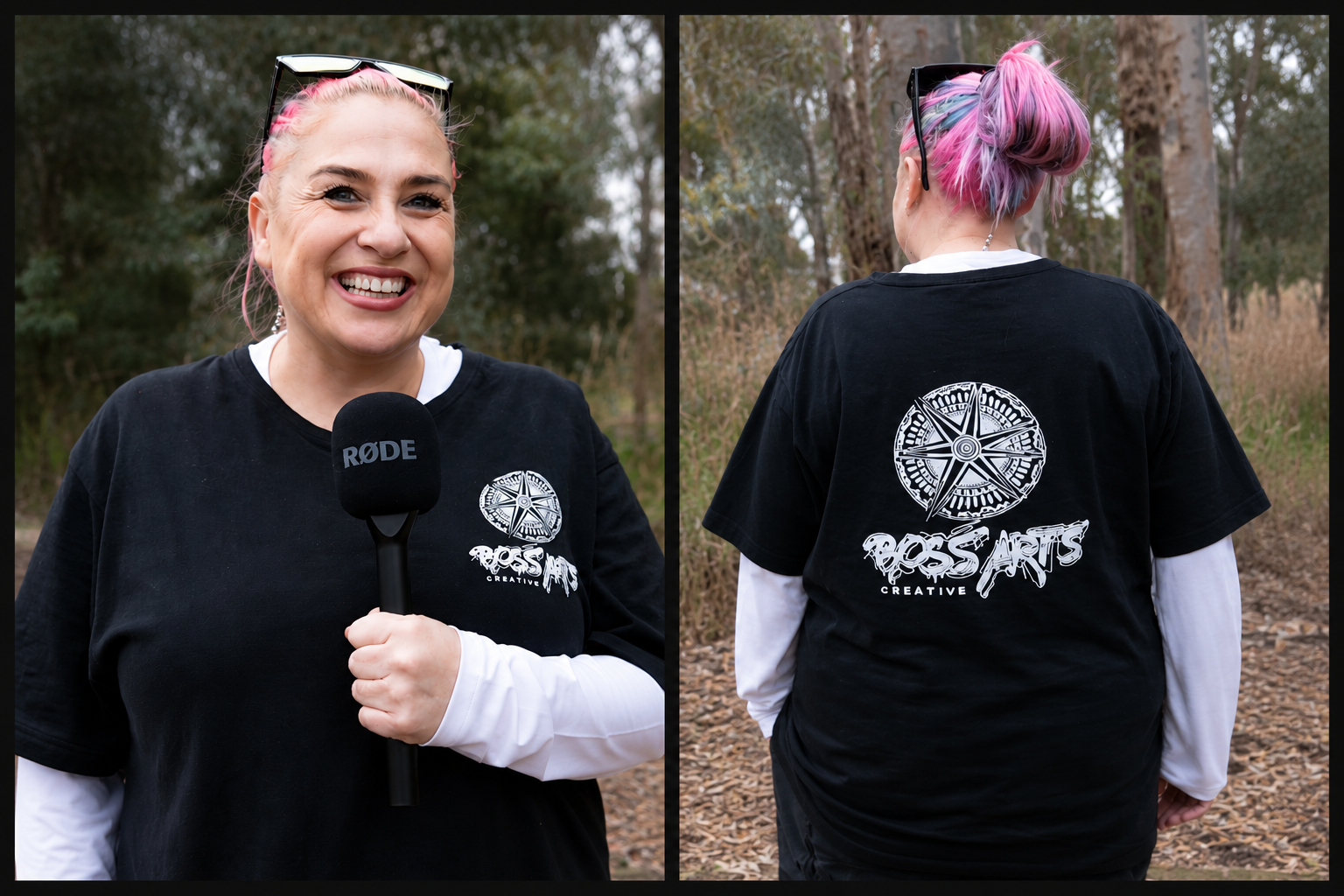
Boss Arts Creative co-founder Charlie Caruso. Image by Ngaarda Media
Rise Up brings together artists from urban, regional and remote parts of Western Australia, with participants developing skills in singing, ensemble work, songwriting in English and Aboriginal languages, production, marketing and music distribution.
Artists finish the program with a recorded single and video, along with opportunities to perform at showcases and connect with music industry representatives.
Miss Caruso said an important part of Rise Up was giving young musicians skills they could continue using after the program.
“I also try to teach the artists Ableton along the way so they can use that for their own ideas and future songs,” she said.
“And then we build the song from there.”
‘WALK WITH THE ELDERS’
Alyssa Nicholson has spent about three years with Boss Arts Creative and said the experience has helped develop much more than her voice.
“They’ve helped me a lot from teaching me to improve my singing and my stage presence, and really helped me learn how to write music and get real involved with my passion,” she said.
Her song Walk With The Elders blends contemporary music with Noongar language, cultural knowledge and intergenerational storytelling.
The song was released on May 27, the anniversary of the 1967 referendum, and includes contributions from cultural leaders, musicians and members of Alyssa’s community.
It went on to win the Outstanding Indigenous category at the 2026 WAM Song of the Year Awards and was second runner-up for the competition’s overall Grand Prize.
But the song began with a conversation.
Alyssa said she and Miss Caruso were in the studio talking about racism and the result of the 2023 Voice referendum.
“I was quite devastated about it because we are Aboriginal culture and just people have so much to offer and share,” Alyssa said.
Miss Caruso suggested they turn those feelings into music.
“You know what? Let’s chuck it in a song.”
What began as Alyssa's response to the referendum grew into a broader reflection on the continuation of culture and the knowledge carried by Elders.
“Walk With The Elders is about the knowledge that the Elders have for us and that they can share with us,” Alyssa said.
“I can then share that with people older or younger than me.
“So their knowledge is shared. Their cultural knowledge is shared through every single generation.”
For Alyssa, that message comes directly from her relationship with her own Elders.
“They’re very significant. They hold all the knowledge about my culture, about my family,” she said.
“If they weren’t here, I probably wouldn’t know a lot. But fortunately, they are here. So I know where I’m from. I know my name.”
She said having that connection meant she had the opportunity to continue learning about her culture.
“Fortunately, I do know that I’m Aboriginal and I do know that I can learn this amazing culture.”
Boss Arts Creative was closely involved in turning those ideas into the finished track.
Alyssa said Miss Caruso and Boss Arts Creative co-founder Deirdre Morrison had become like aunties to her.
“I actually made the song. I wrote it with them and I sung it with them,” she said.
“With help from them and my mum, we managed to get to a studio and record the song.”
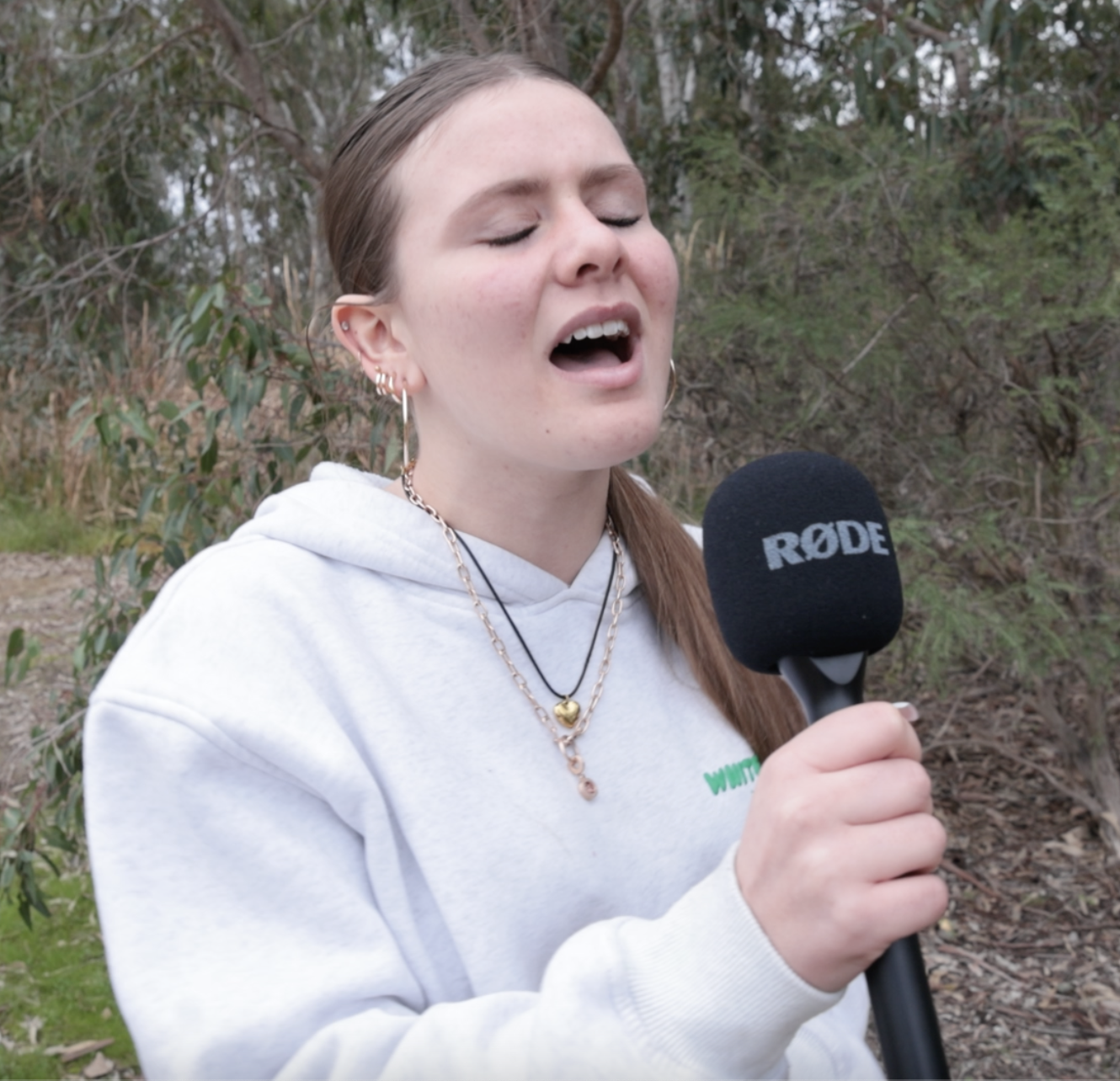
Alyssa Nicholson singing “Walk with the Elders”. Image by Ngaarda Media
ELDERS, FAMILY AND COUNTRY ON SCREEN
The story continued beyond the recording studio.
The music video for Walk With The Elders, filmed by Sandbox Productions, took Alyssa to Noble Falls, Lesmurdie Falls and Bells Rapids.
Elders Jim Morrison, Ben Taylor and Barbara Moore appeared in the video alongside Alyssa's family and community.
One of its most powerful visual elements was Alyssa's dress.
People connected to the song and video painted their hands white and placed handprints onto it, including Elders and members of Alyssa's family.
“The Elders in my music video, they chuck their hands on my dress. My mum and dad, my siblings, because my siblings were in the music video as well,” she said.
The success of the song was followed by another major moment when Alyssa was named Youth of the Year at the Boorloo NAIDOC Awards.
She said simply being surrounded by accomplished First Nations people made the event memorable.
“Just to be in a room with all these successful Indigenous people is so amazing,” she said.
“It’s such an honour to be a recipient of the award.”
She wasn't expecting her name to be called.
“They’re like, ‘Alyssa Nicholson,’ and I was like, ‘Wait, that’s me. Oh my gosh.’”
She walked up to collect the award before suddenly realising she had another job to do.
“I was going to turn to walk off and I was like, ‘Oh wait, I need to speak.’”
Despite the awards, performances and growing music career, Alyssa has a straightforward priority for the next few years.
“I really do want to get far in music because I’m really good at it, and it is one of my passions,” she said.
“But at the moment, one of my goals is just to graduate Year 12.”
MACKENZIE FINDS ‘THE FIRE’
For Alyssa’s younger sister Mackenzie, inspiration came from another powerful source — family.
The 12-year-old's song The Fire was also selected among the final five in the WAM Song of the Year Awards' Outstanding Indigenous category.
Mackenzie said the song grew from her experience of being part of a large family and understanding there is no single way a family has to look.
“I come from a big family, a big household, and it’s normal to have a big household and to not always live with your biological parents,” she said.
“Sometimes you live with your aunties, your nans, your pops, and it’s normal for that. It doesn’t make you any different to any other family.”
That became the heart of The Fire.
“I wrote a song to not only tell my family that I love them, but to also tell other people that are struggling or feel like they’re different because they don’t live with their biological parents that you’re not any different — that you’re loved as well.”
The message was carried into the music video.
One scene shows a young person being left out before her friends decide to return and comfort her.
“My vision was just, like, in the video to acknowledge the actual words of the song,” Mackenzie said.
Like her older sister, Mackenzie said the lessons she received from Elders went beyond music.
She said they had taught her “that you’re strong and don’t let anyone else put you down”.
“You might not be the best, you might be the worst, you might not be the best, but you always give it a go,” she said.
“You know that you’re strong enough and proud enough to do anything you want, and whatever you believe in, you just go for it and you know you can achieve what you want.”
Mackenzie is also looking towards other First Nations women in music for inspiration.
She singled out rapper BARKAA, whose confidence and pride helped influence Mackenzie's interest in rap.
“I instantly loved that she was strong and proud and she didn’t care what people think. She just wanted to publish her music,” Mackenzie said.
“When I wrote my first song, I was like, why not give a shout-out to her?”
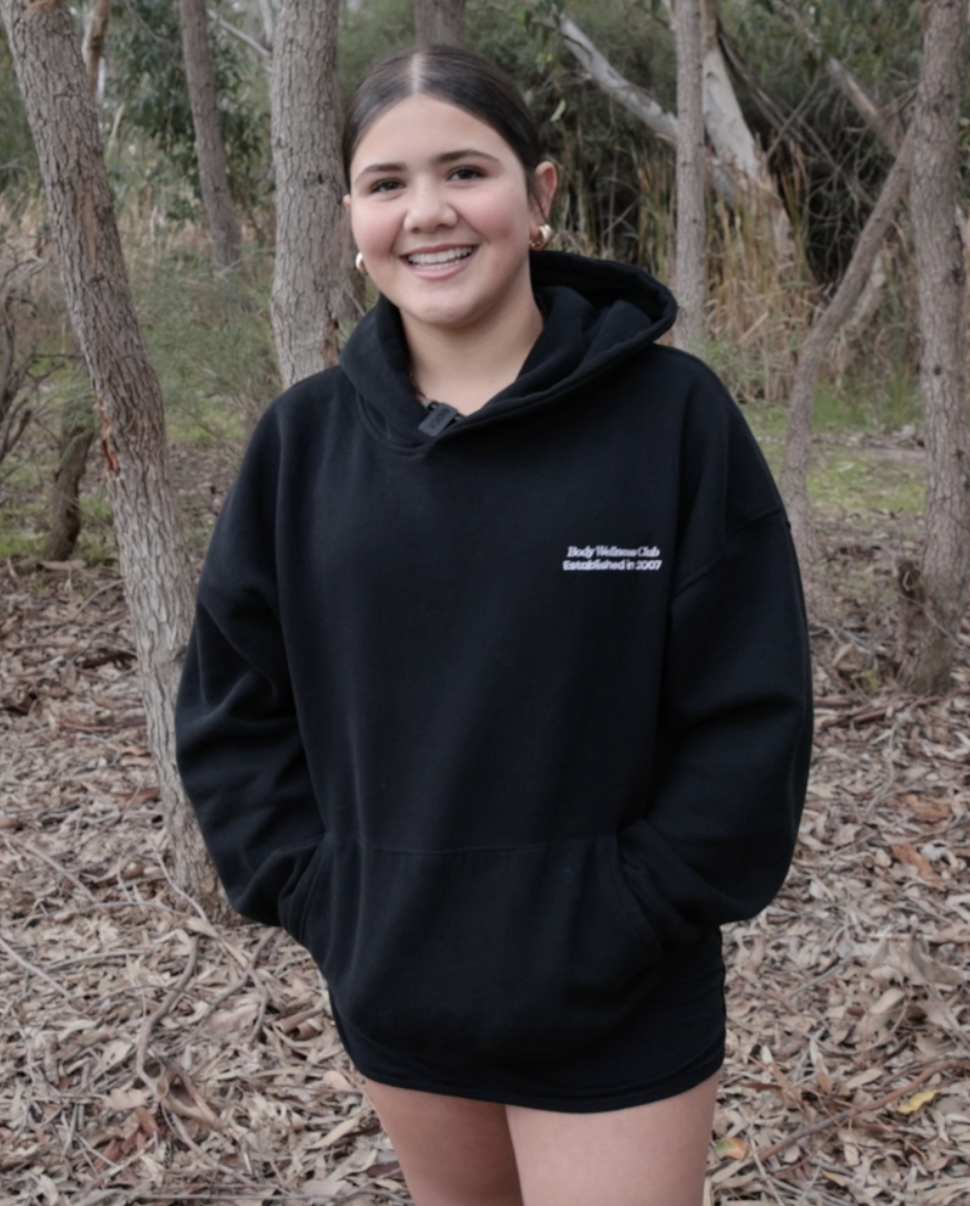
Mackenzie Nicholson. Image by Ngaarda Media
CULTURE AT THE CENTRE
For Boss Arts Creative, Rise Up is about more than bringing young people into a studio and recording their vocals.
Culture is placed at the centre of the creative process.
Miss Caruso said Boss Arts Creative co-founder Deirdre Morrison, a language speaker, brought an important cultural dimension to the program.
“She’s just got a very unique way of bringing people into the space and sort of becoming strong culturally, like seeing the music in a different way and bringing more of a cultural element to it, and to be proud to do that and to step into it,” Miss Caruso said.
“She’s really, really important in this program.”
That approach has also been taken beyond Boorloo.
In Narrogin, Boss Arts Creative brought community members together for songwriting and beat-making sessions before travelling to culturally significant Yilliminning Rock.
“We ended up sampling the rock sounds into the beat,” Miss Caruso said.
“As it went along, the song became, like, epic. It’s so cool. I can’t wait for it to come out.”
She said many community members ultimately became part of the song.
The organisation has also travelled north to Kununurra, where it worked with women from surrounding communities to create music around their experiences of family and domestic violence.
“The women came from all the communities around and sat with us and gave us their words and we wrote a beautiful song, Streets I Roam, with Janisha,” Miss Caruso said.
Miss Caruso believes there are many more artists waiting to be discovered outside the metropolitan music industry.
“I’d love to do more travelling because I think there’s so much talent in the communities that is untapped, like that people don’t know about,” she said.
“If we could get more funding, I’d definitely do that all the time.”
THE NEXT 12
Boss Arts Creative is now preparing for the next stage of Rise Up.
Miss Caruso said another 12 artists would be recruited while the organisation continued working with its existing performers.
“This next six months we are recruiting a new 12 artists,” she said.
“For the Rise Up program, it’s about getting new music out — and so, yeah, I’m very excited to do that.”
For Alyssa and Mackenzie, the results already show what can happen when young First Nations artists are given the tools to tell their own stories.
One sister has turned the knowledge of her Elders into an award-winning song.
The other has turned the strength of family into a message for young people who might feel they don't belong.
And behind them, Rise Up is preparing to open the studio door for another generation of young artists to do the same.