
DOT WEST OAM WARNS SUSTAINED INVESTMENT NEEDED TO CLOSE FIRST NATIONS DIGITAL DIVIDE
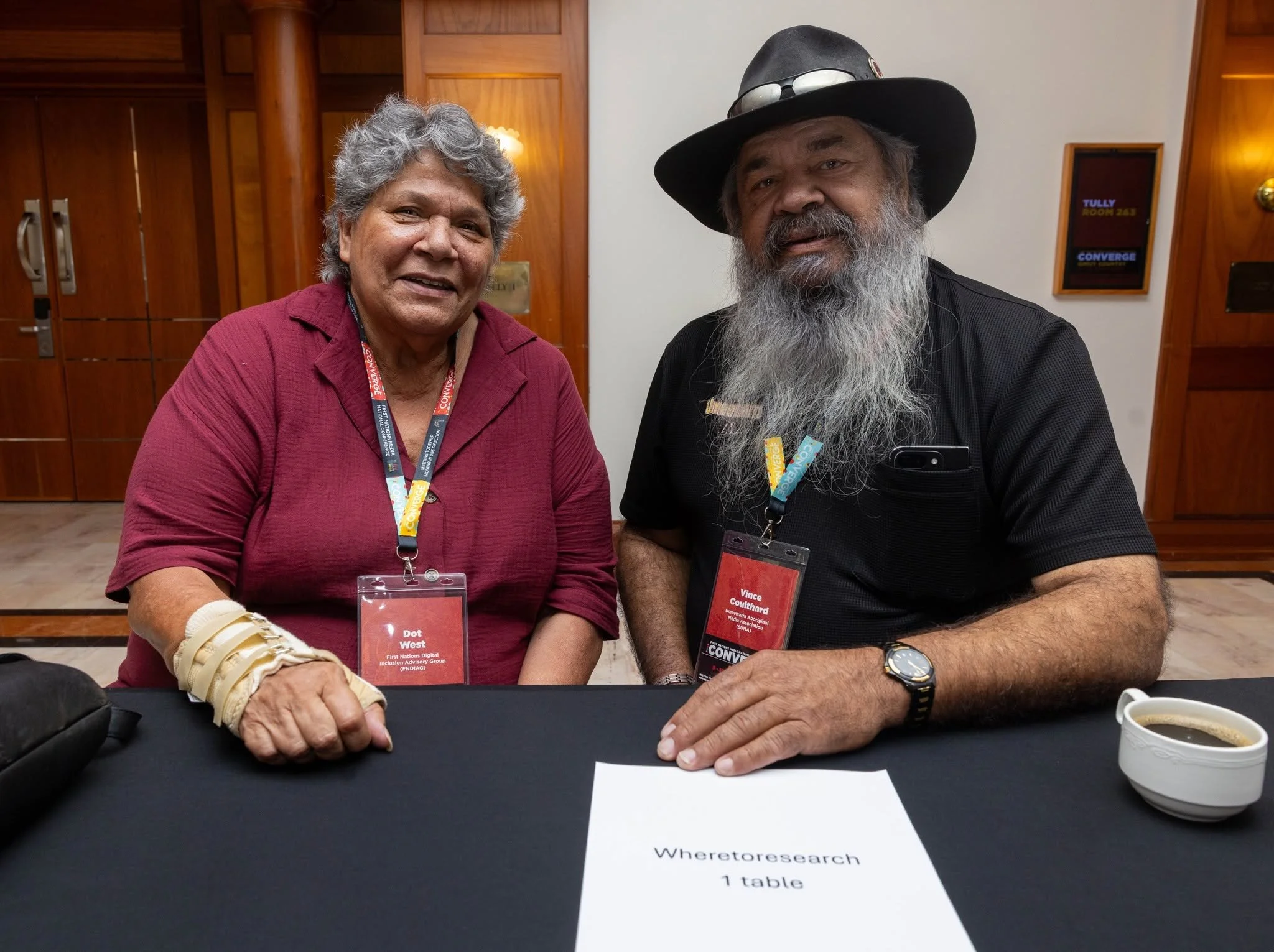
First Nations media leader Dot West OAM has warned Australia is unlikely to meet its digital inclusion commitments without long-term investment, saying connectivity must be treated as essential infrastructure rather than something determined by commercial viability.
Speaking in the opening keynote address at First Nations Media CONVERGE 2026 in Cairns, Ms West said around 40 per cent of Aboriginal and Torres Strait Islander people remained digitally excluded.
She said access to technology was now fundamental to healthcare, education, employment, banking, government services and maintaining connections with family and community.
Australia's Closing the Gap Target 17 aims for Aboriginal and Torres Strait Islander people to have equal levels of digital inclusion.
But Ms West said recent progress was not enough.
“Without additional and sustained investment, it is unlikely that Target 17 will ever be achieved.”
The First Nations Digital Inclusion Advisory Group was established by the federal government in 2023 to advise on closing the digital divide.
Ms West said its work had helped deliver community Wi-Fi to around 30 remote First Nations communities, with another 45 expected to come online.
Around 500 devices have also been distributed across 24 remote communities through the First Nations Digital Device Bank, while $12 million over three years has been allocated to support the First Nations media sector.
CONNECTIVITY CANNOT RELY ON COMMERCIAL RETURNS
Ms West said the First Nations Digital Inclusion Roadmap contained 30 recommendations covering access, affordability, digital skills, media, data, governance and advocacy.
She said one of its central principles was that people living in small or remote communities should not be denied reliable communications because telecommunications companies could not make an adequate return.
“Digital inclusion cannot depend entirely on commercial viability.”
“If a community is too remote or too small to generate an adequate commercial return, that cannot mean its people are left behind.”
The roadmap calls for more community Wi-Fi, shared telecommunications infrastructure, stronger mobile coverage, more resilient power and communications systems and technicians based in communities.
Ms West said affordability also extended well beyond the monthly cost of an internet plan.
Phones, laptops, repairs, travel to access technical assistance and replacing outdated devices could all determine whether people remained connected.
FIRST NATIONS MEDIA ‘ESSENTIAL’
Ms West also used the address to push for stronger and ongoing investment in First Nations media and broadcasting.
She said First Nations media provided culturally safe and trusted information while helping communities counter misinformation, racism and harmful narratives.
The Digital Inclusion Roadmap recommends increased funding for First Nations radio and greater use of Indigenous media organisations to communicate government and industry programs.
“When we see ourselves, hear ourselves, it is then that we trust the message.”
Ms West said funding could not remain dependent on one-off programs, arguing the sector required sustained support to keep pace with changing technology and continue meeting community needs.
‘WITH COMMUNITIES, NOT FOR COMMUNITIES’
Ms West said greater digital access also had to come with First Nations control over decision-making and data.
She called for stronger recognition of First Nations data sovereignty and said information about Aboriginal and Torres Strait Islander communities should not simply be collected by governments and companies.
Communities should instead be involved in deciding how data was gathered, governed and used.
That principle, she said, must extend across the entire digital inclusion agenda.
“Let’s make sure that the decisions about digital futures are made with communities, not for communities.”
Ms West said the ultimate ambition should also extend beyond simply closing a statistical gap.
She said First Nations people should have the opportunity to become technology creators, entrepreneurs, technicians, broadcasters, researchers, innovators and leaders.
“The goal is not simply to close the digital divide. The goal is to ensure that every First Nations person in every community has the information, services and opportunities to fully participate in Australian society on their own terms.”
Ms West said the next challenge for the advisory group was turning years of advocacy and recommendations into sustained action.
“The challenge now is implementation,” she said.
“The challenge is sustained commitment.”