
FAR WEST COAST WOMAN SPEAKS OUT ON CHILD PROTECTION, KINSHIP CARE AND CULTURAL CONNECTION

A Far West Coast Aboriginal woman says many Aboriginal families still live with the trauma of child removals, warning that government systems continue to disconnect children from culture, family and Country.
Speaking at the Women Deliver Conference in Melbourne, Joalin Dudley Miller shared her experience as a kinship carer and advocate working alongside Aboriginal families dealing with child protection systems in South Australia.
Ms Dudley Miller said her understanding of kinship care began with her mother, who fought to keep her siblings connected during the era of the Stolen Generations.
“As an intergenerational Aboriginal woman, I seen my mother take roles from a lot of people,” she said.
“Watching my mum and hearing my mum’s story made me be like my mum.”
She later became a kinship guardian for members of her own family, including her sister’s children.
Ms Dudley Miller said her family avoided formal involvement with child protection services because of fears linked to past removals.
“We didn’t want DCP support because of the removals, because of the structures, because of the systematic issues that we as Aboriginal people faced,” she said.
She described feeling intimidated rather than supported while dealing with child protection authorities.
“Supported is not a word that I would use. I would use intimidated,” she said.
Ms Dudley Miller said many Aboriginal families wanted support that recognised culture, family structures and the authority of elders and matriarchs.
“Our kinship on the Far West Coast is really connected as family values come first. Mothers are matriarchs,” she said.
“A grandmothers are the ones who give us the strength to be mothers and know our children.”
Throughout the interview, she repeatedly stressed that Aboriginal children should remain connected to bloodlines, family and Country wherever possible.
“The connection has to be within the bloodline,” she said.
Ms Dudley Miller shared examples of informal family-led arrangements where children temporarily stayed with relatives while parents recovered from difficult circumstances.
In one case, she said a cousin asked her to care for her daughters for six months while she got her life back on track.
“All we had to do was understand the welfare,” she said.
“Six months is all I need, and I can recover.”
She said the children later returned home without court action or long-term separation.
“Now she’s a nana,” she said.
“The kids love her.”
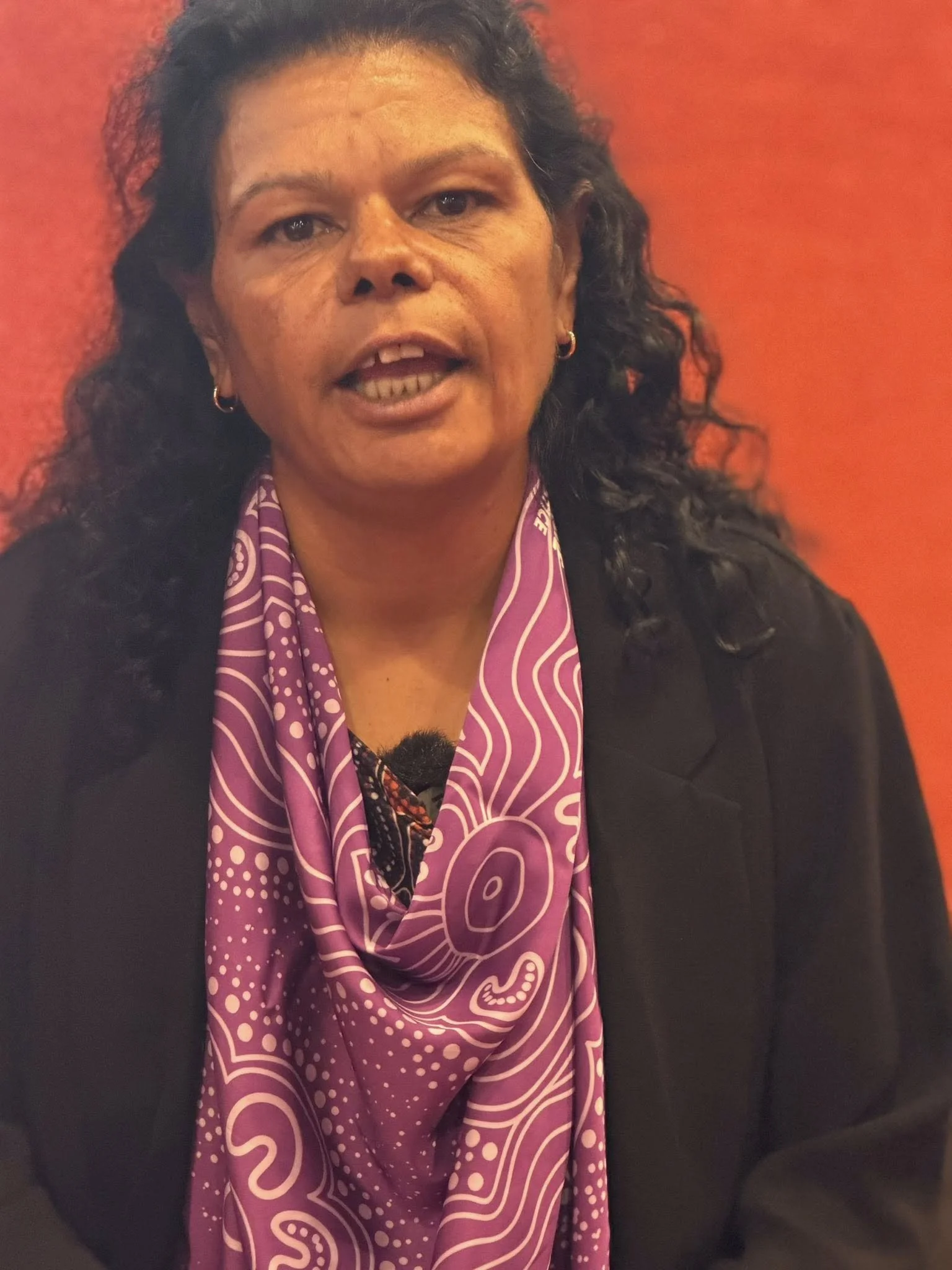
Ms Dudley Miller also criticised restrictions she says prevent young people from reconnecting with family when they are ready.
“The Westernised world will not let him connect with his mother or his sisters,” she said while describing the experience of a younger relative.
“We need to stop those systems that are stopping our young people.”
She said Aboriginal families needed culturally informed support instead of fear-driven intervention.
“One notification can frighten an Aboriginal family and then the education of them young people are failed,” she said.
Ms Dudley Miller travelled to the Women Deliver Conference after seeing information about it online.
She said the event gave her hope that Aboriginal women’s voices were beginning to be heard more widely.
“The word change is obviously why all us women are here,” she said.
She now works with young Aboriginal women in education settings, helping them understand identity, family connections and culture.
“We as Australians are connected all over the place from one rainbow serpent to Seven Sisters to every dreaming story that we can tell,” she said.
“Women are connected.”
Ms Dudley Miller also raised concerns about mental health, suicide, drugs and alcohol affecting Aboriginal communities, saying more culturally grounded healing approaches were needed.
“The only way we can live is by surviving our way in the bush with our own culture, our own elders, and to be respected for the lands that we work on, live on, and breathe on,” she said.
She ended the conversation with a message encouraging people to seek guidance from elders and community.
“If you’re out there and you know that you have some issues, please go and look for an elder,” she said.
“Sit down, take the time, make a cup of tea, and breathe, and learn, and listen, and give love.”