
FROM STOCKMAN TO STATION MANAGER
By Zoe Oliver
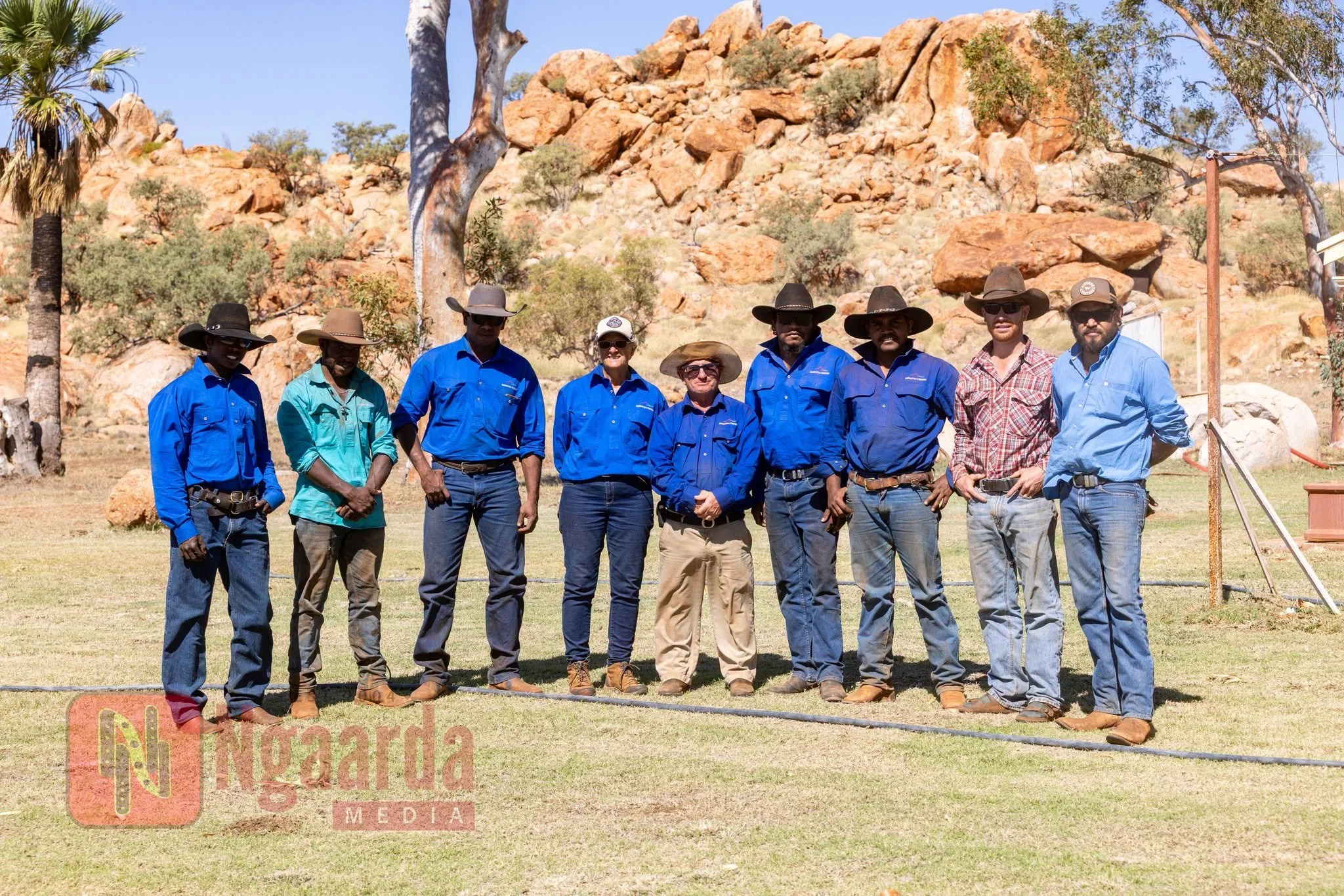
The Karratha Station workers celebrating their muster. Credit: Jenson Pyrar.
Originally from the West Kimberley region around Derby and Fitzroy Crossing, Jeffrey grew up hearing stories about the stockmen in his family. His grandfathers and uncles worked on stations, with some becoming head stockmen and camp managers. Those family stories inspired him to continue the tradition and pursue a career in the pastoral industry.
Jeffrey began as a station hand at Gillingham Station, where he learned the foundations of cattle work from manager Michael Percy and other experienced people in the camp. From there, he moved between stations across Western Australia, building his knowledge of cattle, horses, breeding, mustering and property management.
His journey eventually brought him to Karratha Station, where he initially worked as a head stockman before stepping into the manager’s role.
The achievement represents years of early starts, demanding physical work and a determination to keep learning.
“I didn’t pull up at just being a station hand,” Jeffrey said.
“I had to go to the next level and learn and get there.”
Jeffrey is now using his position to create opportunities for young people entering the industry. After beginning the mustering season with an experienced team, he found himself working alongside several first-year station hands who were still learning the job.
He says regular discussions before and after each day’s work help the crew plan their approach, reflect on their performance and build confidence.
“We all help each other and encourage each other,” he said.
Jeffrey hopes Karratha Station can become a place where young men and women learn practical skills involving horses, cattle, fencing, machinery and the bush—while also strengthening their connection to Country and culture.
He would also like Elders to spend time at the station, sharing cultural knowledge with young people in a peaceful environment away from the pressures of town.
“That way, we’ve got an opportunity to get the Elders to teach them about the Country too,” he said.
“Learn about station, know their Country—there’s a lot in plan here.”
Alongside his pastoral career, Jeffrey has spent about 15 years competing in rodeo. He began riding junior bulls before progressing into novice and open bull-riding events.
His career took him from rodeos across regional Western Australia to major competitions interstate. He was selected three times to represent Western Australia and competed at the Australian Championships in Albury-Wodonga, as well as events in Sydney and other parts of the country.
The sport came with significant physical consequences, including injuries to his hips and ankles, but Jeffrey says his love of bull riding kept him competing.
He believes success in the arena requires physical fitness, supportive friends and, most importantly, a strong mindset.
“It’s a big mental game,” he said.
“Keep away from the negatives, have good friends encouraging you, and just go—no doubt.”
While Jeffrey may be approaching the end of his competitive rodeo career, he says he can continue passing his knowledge to younger riders.
His story is one of determination, cultural and family legacy, and the courage to leave home in pursuit of a goal. It also demonstrates the importance of experienced Aboriginal stockmen leading, mentoring and creating pathways for the next generation.
Congratulations to Jeffrey Benning on his journey from station hand to station manager—and on the legacy he continues to build at Karratha Station.