
VICTORIA’S TREATY NEEDS LONG VIEW TO DELIVER CHANGE, JOURNALIST SAYS
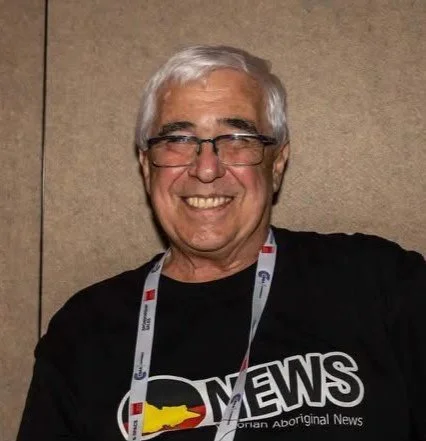
Charles Pakana. Image: Tangiora Hinaki
Victorian Aboriginal News founder Charles Pakana says treaty should be judged on lasting outcomes, with local agreements offering possibilities for cultural renewal.
Aboriginal journalist Charles Pakana says Victoria’s treaty process will need time to deliver changes in people’s everyday lives, with education, incarceration and cultural renewal among the areas he believes could benefit.
The Victorian Aboriginal News founder told Ngaarda Media that legislation and representative structures were foundations for further work, rather than evidence that the challenges facing communities had been resolved.
Speaking at the Community Broadcasting Association of Australia conference, Mr Pakana said Elders had stressed the need to think beyond immediate results.
“I think you've got to look long-term on this, and this is what a lot of our elders have worked to help us understand is that we have to take a long-range view on this.”
Asked what had changed at a community level, he said substantial work still lay ahead.
“Not a lot has changed right now.”
He described the process as “treaty 1.0”, with further developments to come.
Local priorities on the table
Mr Pakana said an important feature of Victoria’s approach was the opportunity for Traditional Owner treaties alongside the statewide agreement.
He identified cultural practices, hunting and fishing, and language learning hubs as examples of matters that could be pursued through local negotiations.
He presented those as possibilities, rather than rights already secured through treaty.
Mr Pakana also stressed that he could not speak on behalf of individual Traditional Owner groups.
The Victorian Government’s treaty framework provides for local negotiations addressing Traditional Owners’ needs and interests. Matters for discussion include relationships with land and waters, cultural heritage, culture and language, and economic sustainability. The content of any agreement depends on negotiations.
For Mr Pakana, the potential significance extends beyond establishing new institutions.
He said education and incarceration were among the areas where Aboriginal people and the wider Victorian community wanted improvements over time.
From legislation to implementation
Victoria’s statewide treaty commenced on December 12, 2025. Gellung Warl, the First Peoples’ representative body established under the Statewide Treaty Act 2025, began operating on May 1, 2026.
It brings together an elected First Peoples’ Assembly, an independent accountability mechanism and a body continuing truth-telling, healing and reconciliation work.
The government says the Assembly informs parliament and government on matters affecting First Peoples and has decision-making functions in specified areas.
Mr Pakana said listening to First Nations people had been important in establishing the treaty process.
He recalled an earlier period of bipartisan political support, describing it as part of the foundation for the work that followed.
Keeping communities informed
Treaty has also been central to Mr Pakana’s journalism.
He said he had covered the process since 2018 and built Victorian Aboriginal News around interviews examining issues affecting Aboriginal communities across the state.
What began as a podcast now supplies current affairs content to several Victorian radio stations, he said, including Aboriginal broadcaster 3KND.
“Our ongoing work with regard to treaty has been fundamental to what we've been doing.”
At the broadcasting conference, he identified the strength of First Nations media within the community broadcasting sector as a key takeaway.
As treaty implementation continues, further local agreements will require Traditional Owner delegations and the state to work through the negotiation process. Mr Pakana’s assessment is that the foundations are in place, while the changes communities are seeking will take longer to realise.