
RARE PUBLIC HEADDRESS TRANSFER PASSES LEADERSHIP RIGHTS TO HINE TI TAMA CROWCHILD AND TYSON HEAVENFIRE
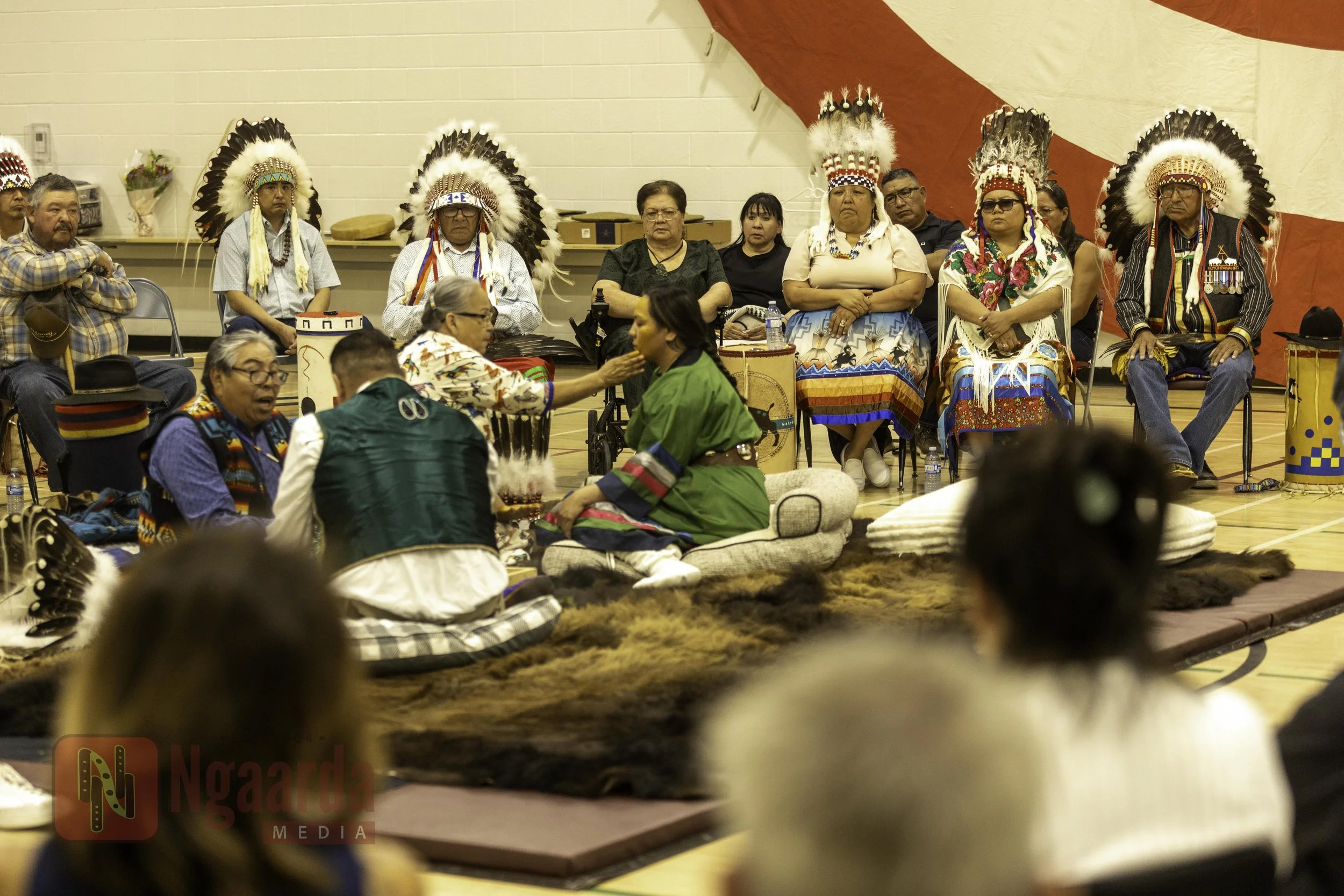
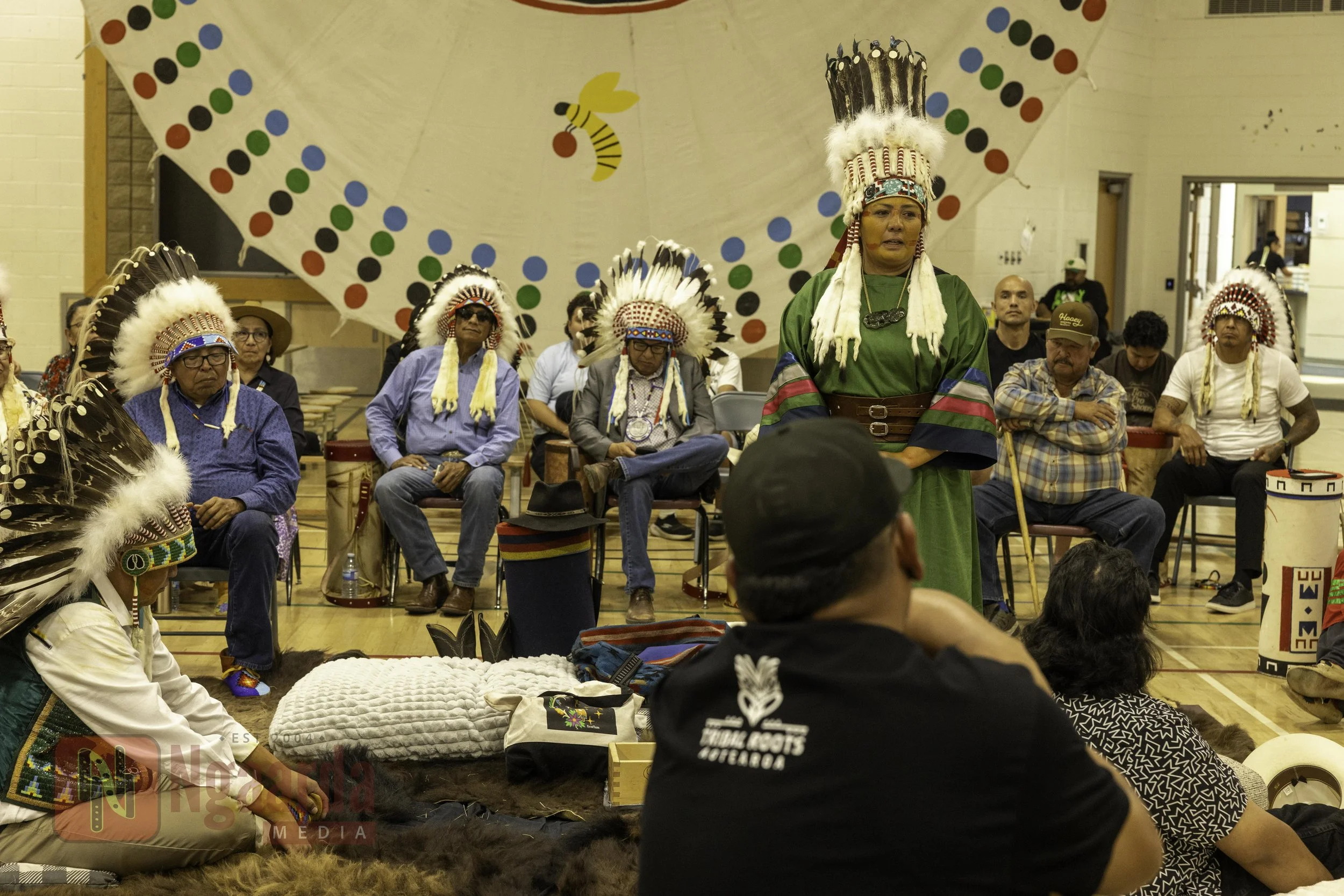
Hine Te Tama Crowchild - Ayoungman participating in Transfer Ceremony
BY TANGIORA HINAKI
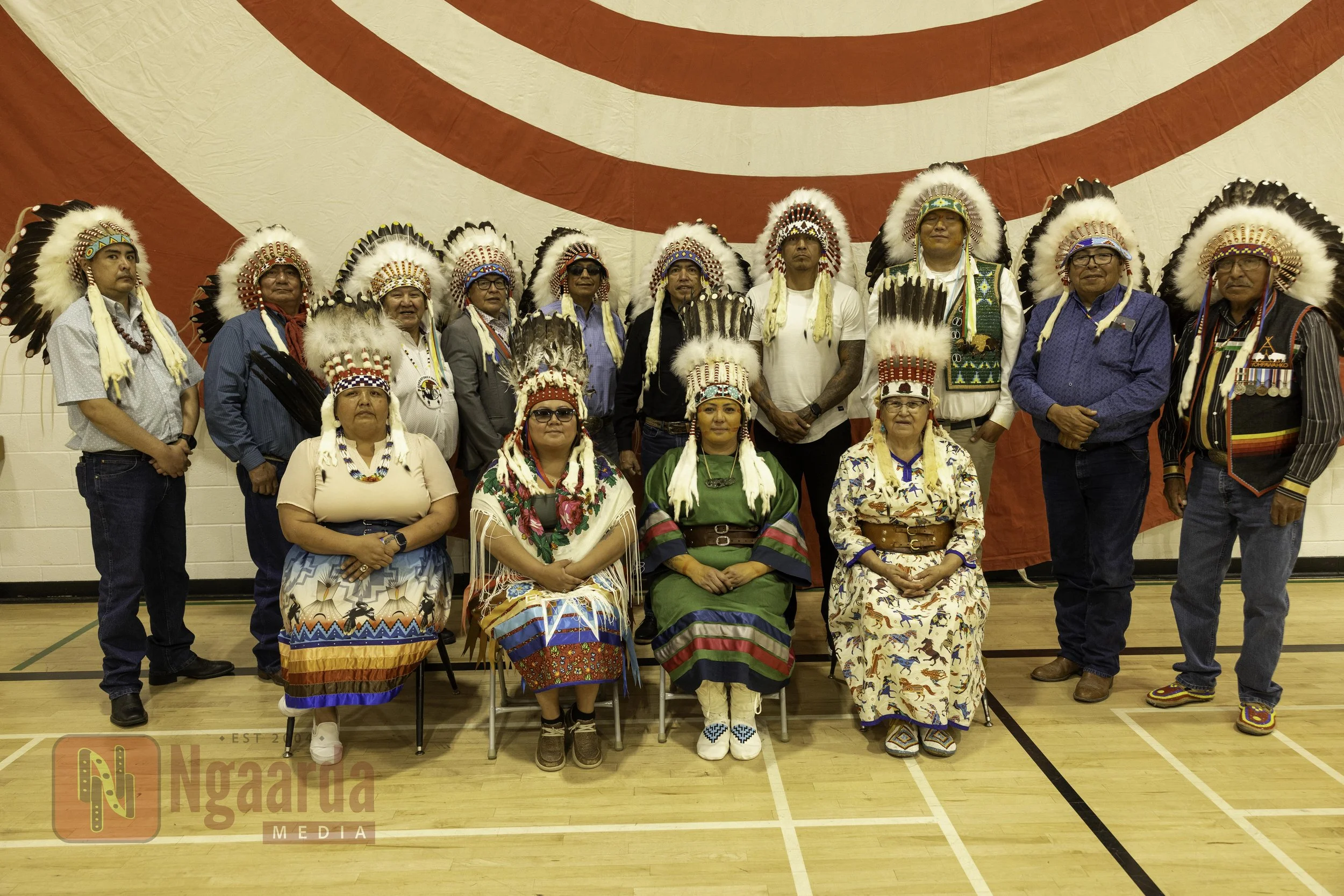
Chief Lee Crowchild says a traditional headdress transfer held on Wednesday, July 22, formally entrusted Hine Ti Tama Crowchild and Tyson Heavenfire with the cultural rights and responsibilities of leadership within the Tsuut’ina Nation.
Chief Lee, a former Chief of the Nation and Hine’s father, called for the ceremony after Hine and Tyson were elected to council.
He said being elected did not automatically give a person the traditional rights associated with carrying and publicly representing Tsuut’ina leadership.
“A headdress transfer isn’t just a ceremony to show, ‘Hey, we’re announcing you,’” Chief Lee said.
“You have to be given the rights to be in leadership. This is our Tsuut’ina way.
“Not every First Nation is like that, but this is our way.”
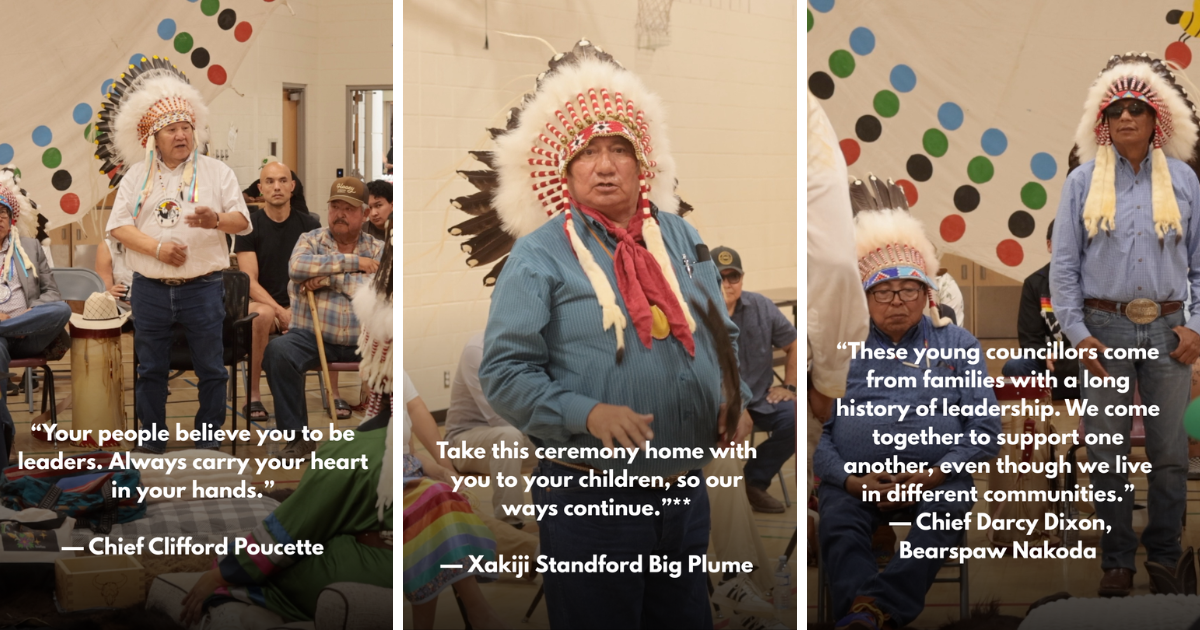
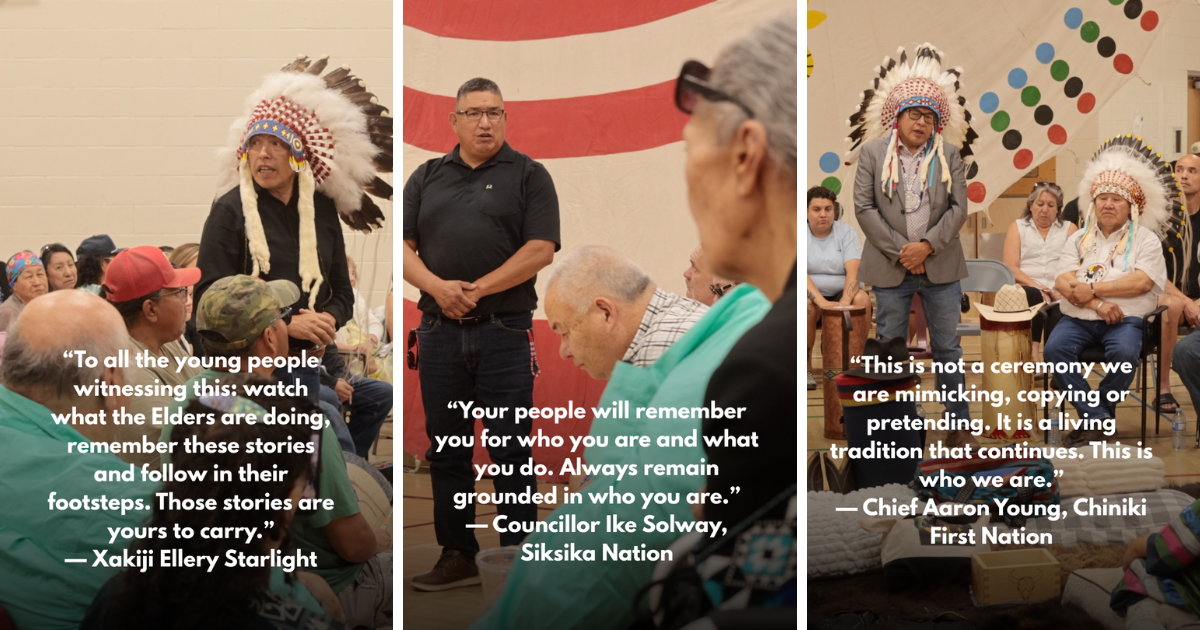
Six Chiefs and seven minor Chiefs were among the Elders, relatives, witnesses and community members who gathered for the ceremony.
Representatives from Tsuut’ina, Siksika, the wider Blackfoot Confederacy and Stoney Nakoda attended, alongside members of Hine’s Huata whānau who travelled from Aotearoa, New Zealand.
For many of those present, it was the first time they had witnessed a headdress transfer conducted in such a public way.
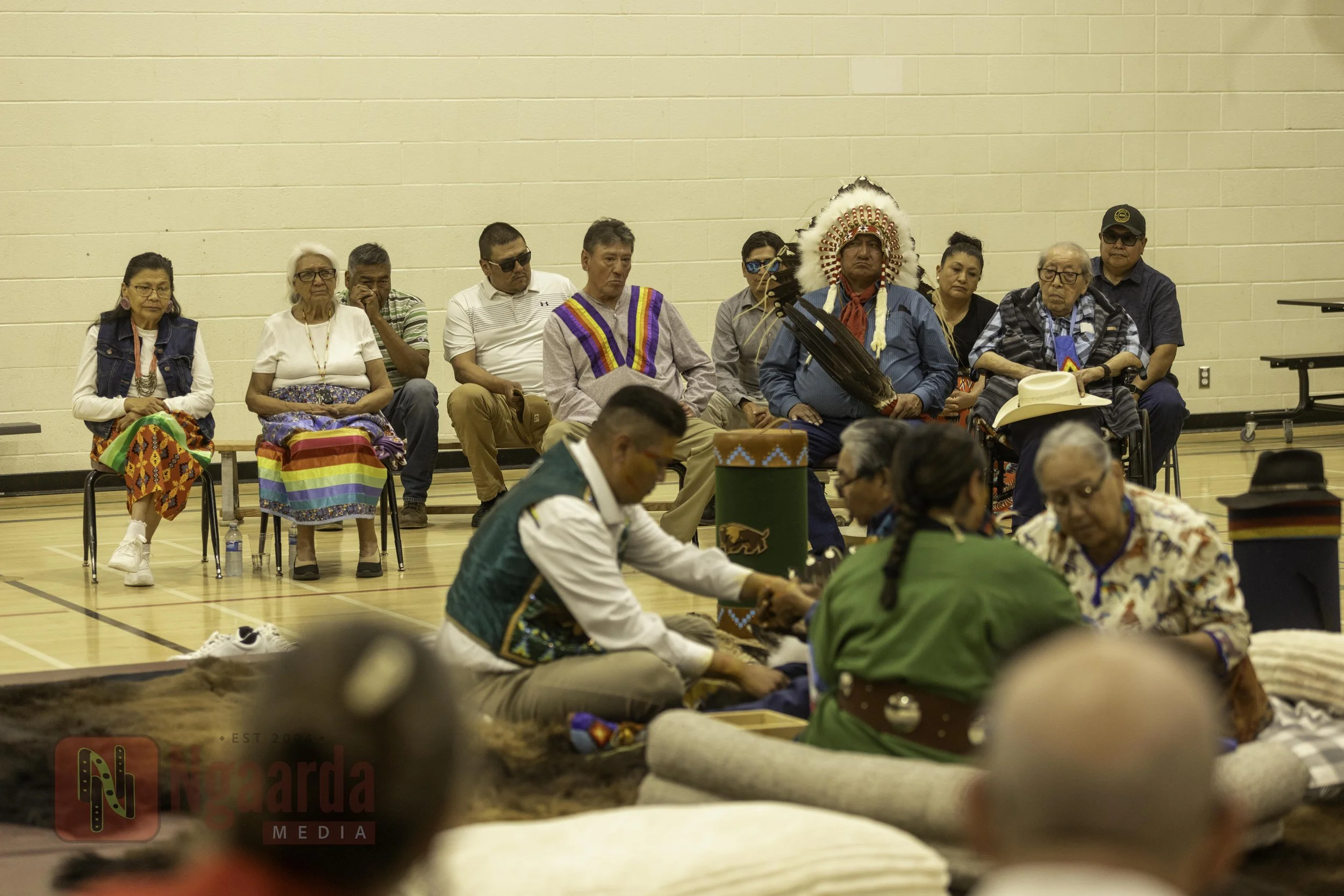
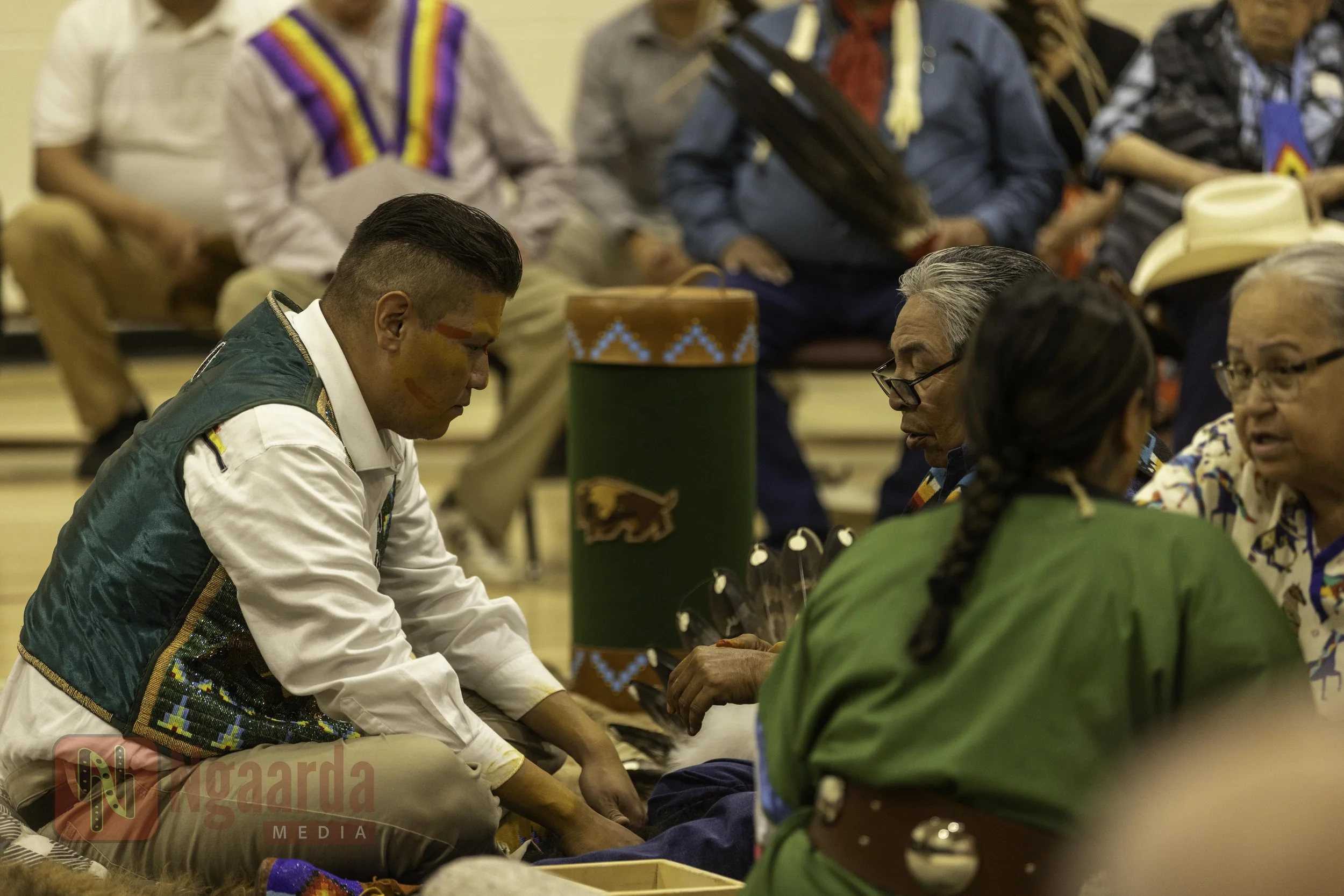
Tyson Heavenfire participating in Transfer Ceremony
Community witnesses transfer of leadership rights
As part of the ceremony, Hine and Tyson were ceremonially “captured” and brought before the Elders conducting the transfer.
Chief Lee said the practice represented scouts going out, identifying the people who were to be recognised and bringing them into the ceremonial area.
“They’ll get captured and be brought in,” he said.
“Then they’ll transfer the rights to that headdress.”
He said the presence of community witnesses was essential because the ceremony publicly confirmed that Hine and Tyson had received those rights through the proper cultural process.
“People watch it and they say, ‘Now we have witnessed the proper rights of that headdress transfer.”
“Whatever they say now, they’re speaking from a point of having those rights of leadership. A feathered headdress was not traditionally the everyday sign that a person held a leadership position.
In a more traditional Tsuut’ina context, he said leaders would wear a cowboy-style hat to signal publicly that they carried leadership authority.
However, that practice had also changed as cultural knowledge was lost or disrupted across generations.
“The transfer was therefore about more than what Hine and Tyson would wear. It established their right to carry leadership responsibilities and ensured that knowledge was witnessed and passed forward.”
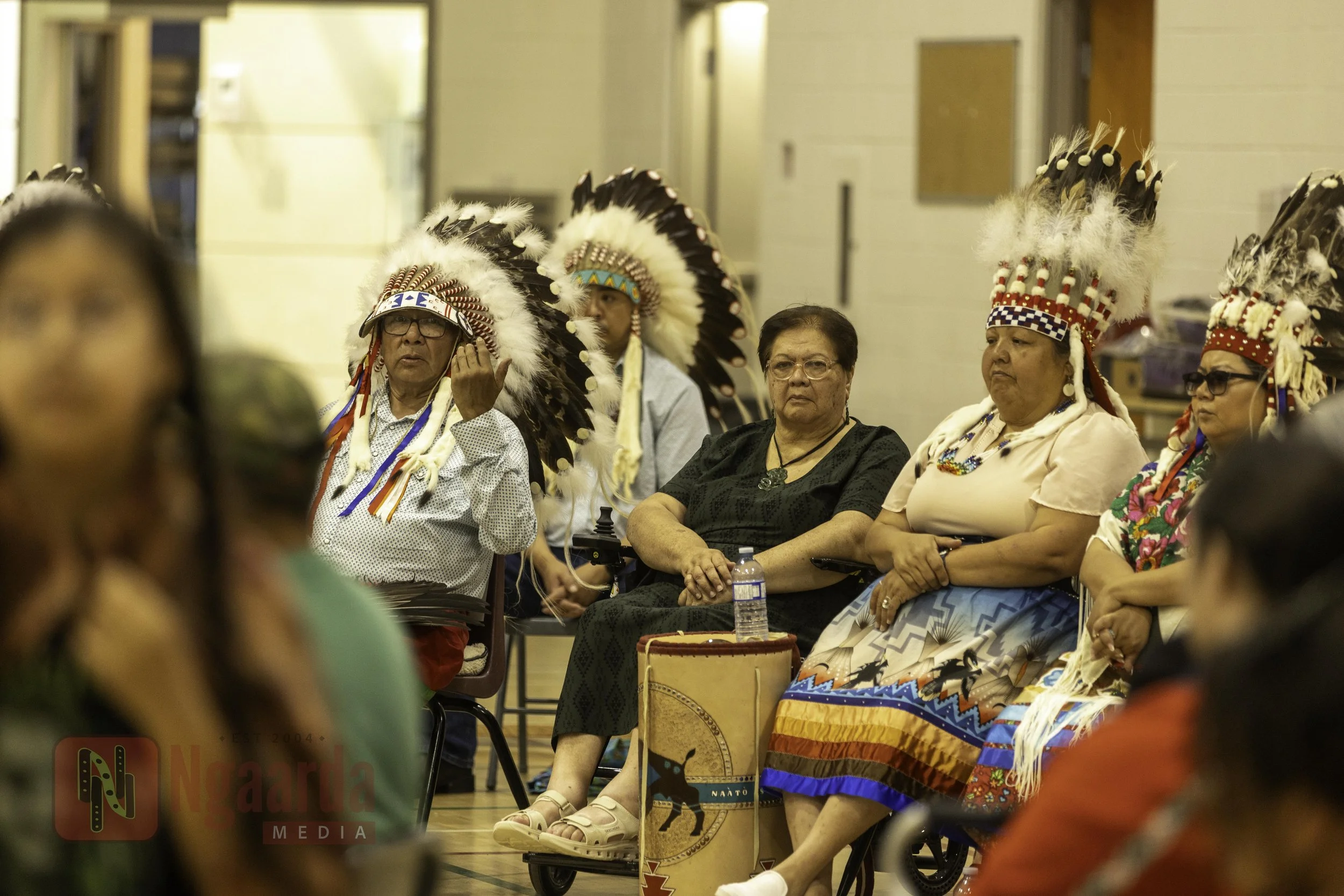
Autny Te Rau Aroha Huata at the Transfer ceremony
Leadership inherited from both sides of Hine’s family
Hine also descends from a significant line of Māori leadership through her mother, Te Rau Aroha Huata.
Hine said her mother’s leadership was demonstrated within their home long before any of her children entered public roles. Te Rau Aroha raised six children, largely as a single mother, and taught them from an early age to share responsibility for her eldest son, Pita Crowchild, who has a disability and requires full-time care. “When I think of her, I think of her being a very strong woman,” Hine said. “She was always teaching us to take care of him.” As the children grew older and began raising families of their own, Te Rau Aroha told them: “Make sure your kids know.”
Hine said her mother could be strict, but her discipline was always grounded in love. “Because of that, that shaped us into who we are today,” she said. “We can be strict, but we can also be loving at the same time.” Hine described one of Te Rau Aroha’s greatest teachings as learning to “love hard”, particularly when difficult decisions had to be made. “Being in this role, I love my nation hard,” she said. “I know how to love hard, and I love that about my mom.”
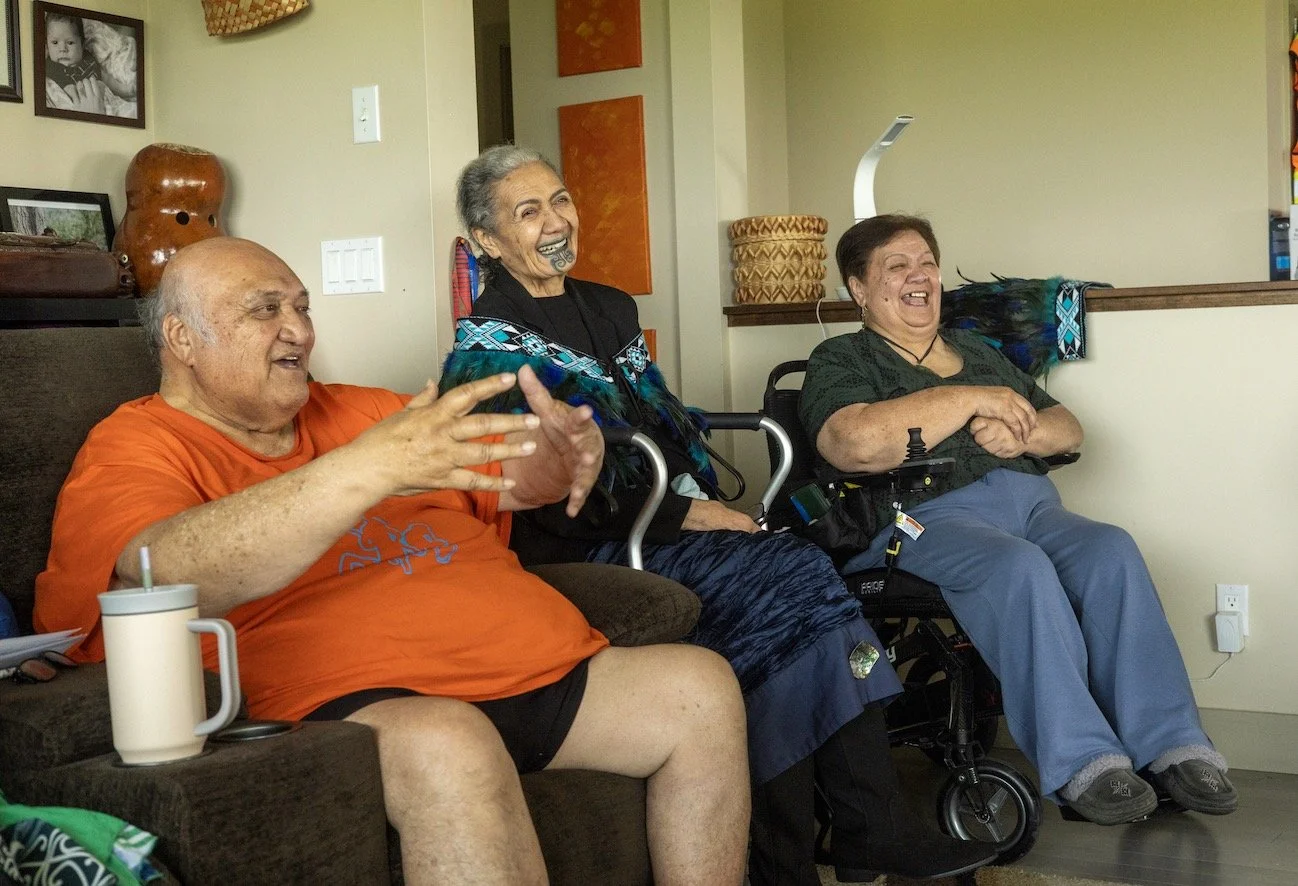
Uncle Te Rangi Huata (left), Ngatai Huata (middle) and Auntry Te Rau Aroha Huata (right)
That strength has also guided Hine through the pressures of leadership. She said her mother taught her: “You never let anyone take your mana from you. You have to let it out, but you never let anyone take that from you.”
Te Rau Aroha also encouraged her children not to make important decisions while emotions were running high. Her familiar advice was simple: “Sleep on it.” Hine said her mother would tell them to pray, rest and return to the problem with a clear mind the following morning. “Wake up tomorrow,” Hine said. “Then it’s manageable.”
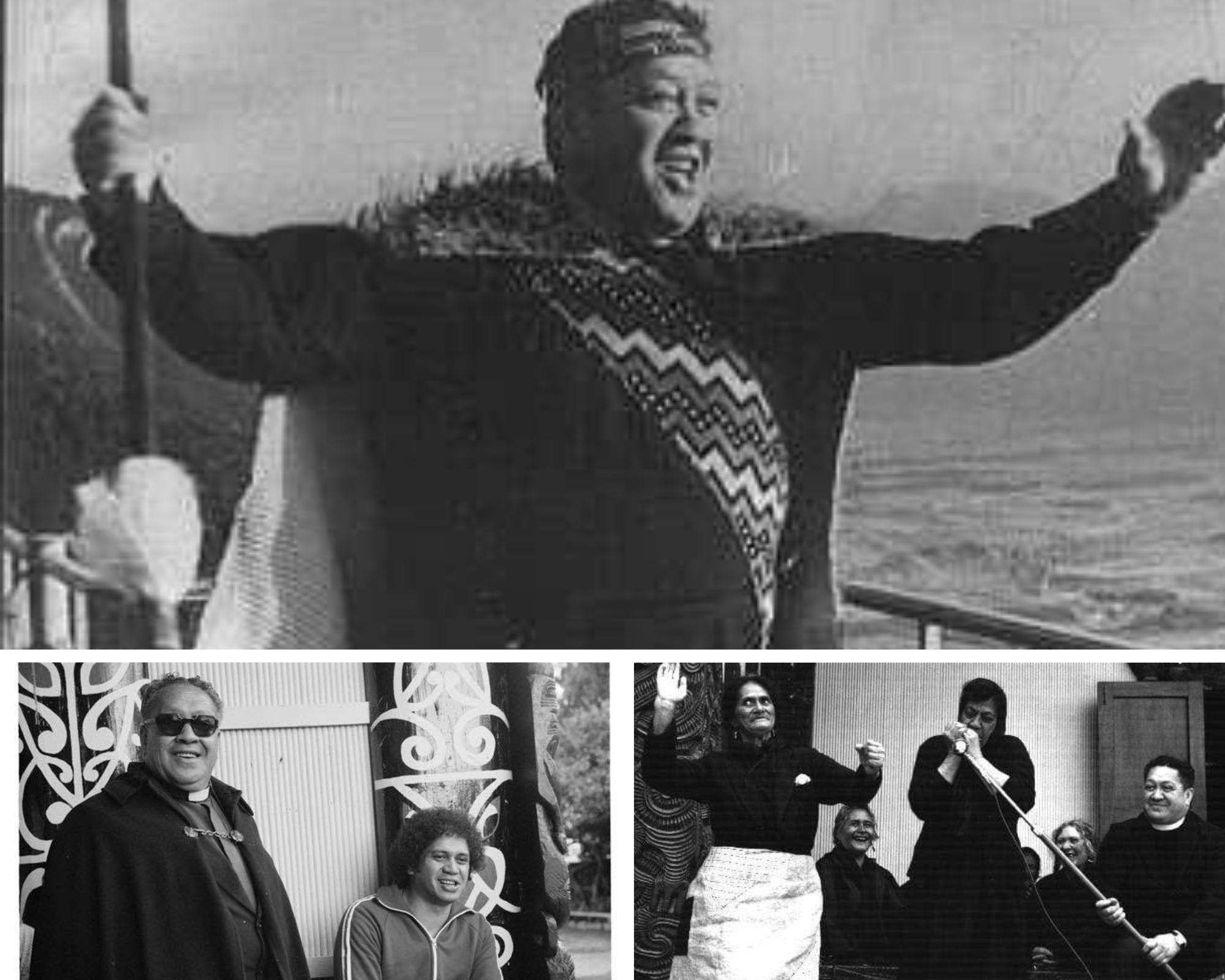
Te Rau Aroha said the transfer ceremony for Hine and Tyson, and their wearing of the headdresses, represented the ancestors they carried with them from Kahungunu ki Wairoa in Aotearoa and the Tsuut’ina Nation near Calgary, Canada.
She said the ceremony brought those ancestral connections together, recognising the leadership, cultural responsibilities and teachings passed down through both sides of Hine’s family.
Hine’s maternal grandfather, Canon Wī Te Tau Huata, was the third in a succession of Anglican Māori ministers from the Huata family and served as a chaplain with the 28th New Zealand Māori Battalion during the Second World War, receiving the Military Cross in 1945.
He later became an Anglican canon, worked to revitalise the church among Māori, supported Māori arts and economic development, served on the councils of Māori monarchs Korokī and Te Ātairangikaahu, and contributed to the kōhanga reo movement.
Chief Lee said Canon Huata had a strong influence on him and his understanding of leadership, while the Huata family’s service to Māoridom formed another leadership tradition passed down to Hine.
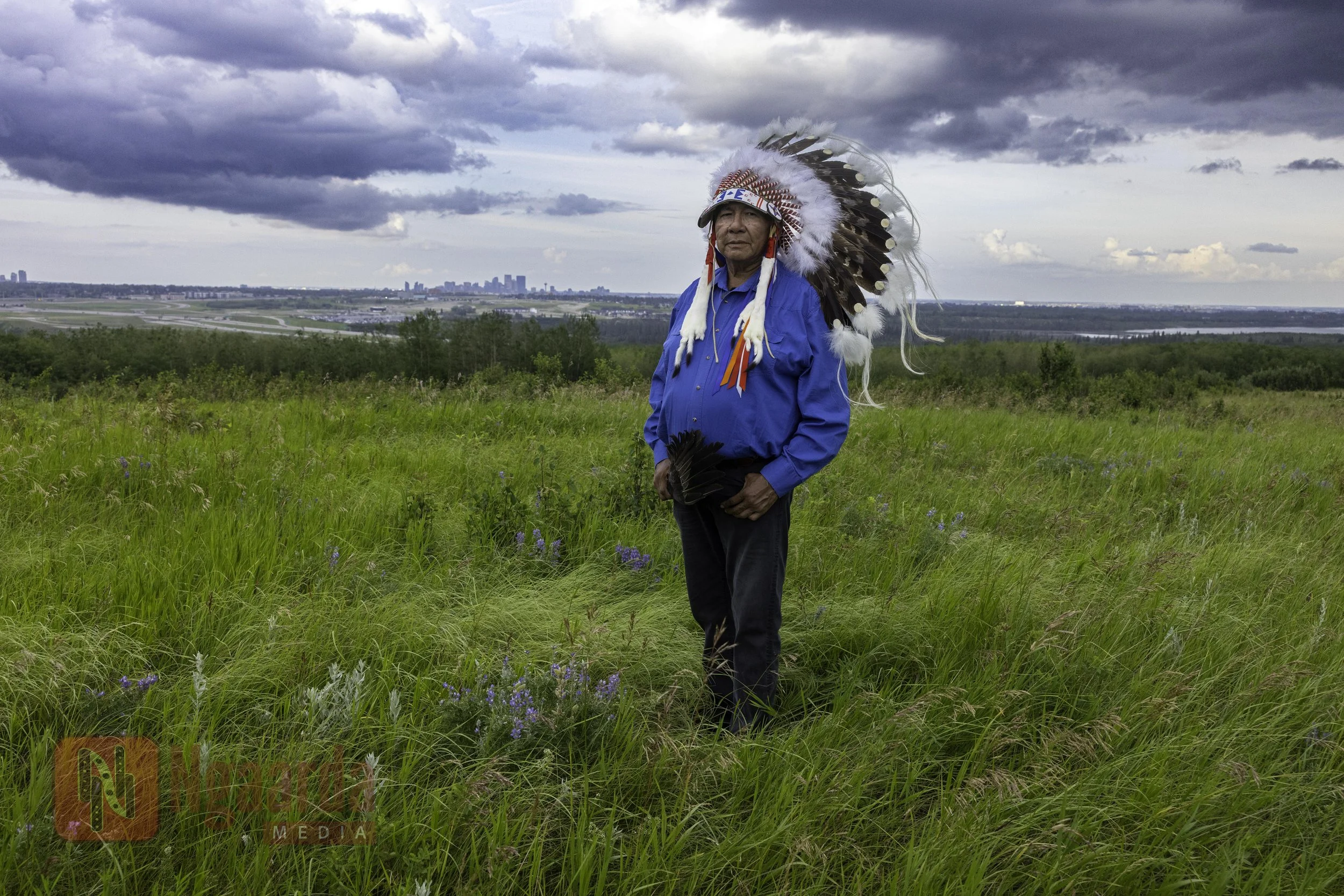
Chief Lee Crowchild with the city Calgary in the background
Chief Lee received his rights at 10 years old
Chief Lee said he understood the weight of the ceremony because he had received his own headdress rights when he was a child.
“I was 10 years old when I was given my headdress,” he said.
“I was also given a tipi transfer, so the design of that tipi was given to me.
“I was just 10 years old. What do you know when you’re 10?”
The tipi transfer gave him the right to carry and use its design, while the headdress transfer gave him the cultural right to wear the headdress.
He said he did not fully understand the responsibility at that age, but the Elders were identifying the path they believed he would later follow.
“What the old people were saying was, ‘You’re going to be a leader one day,’” he said.
“That is why it is important.”
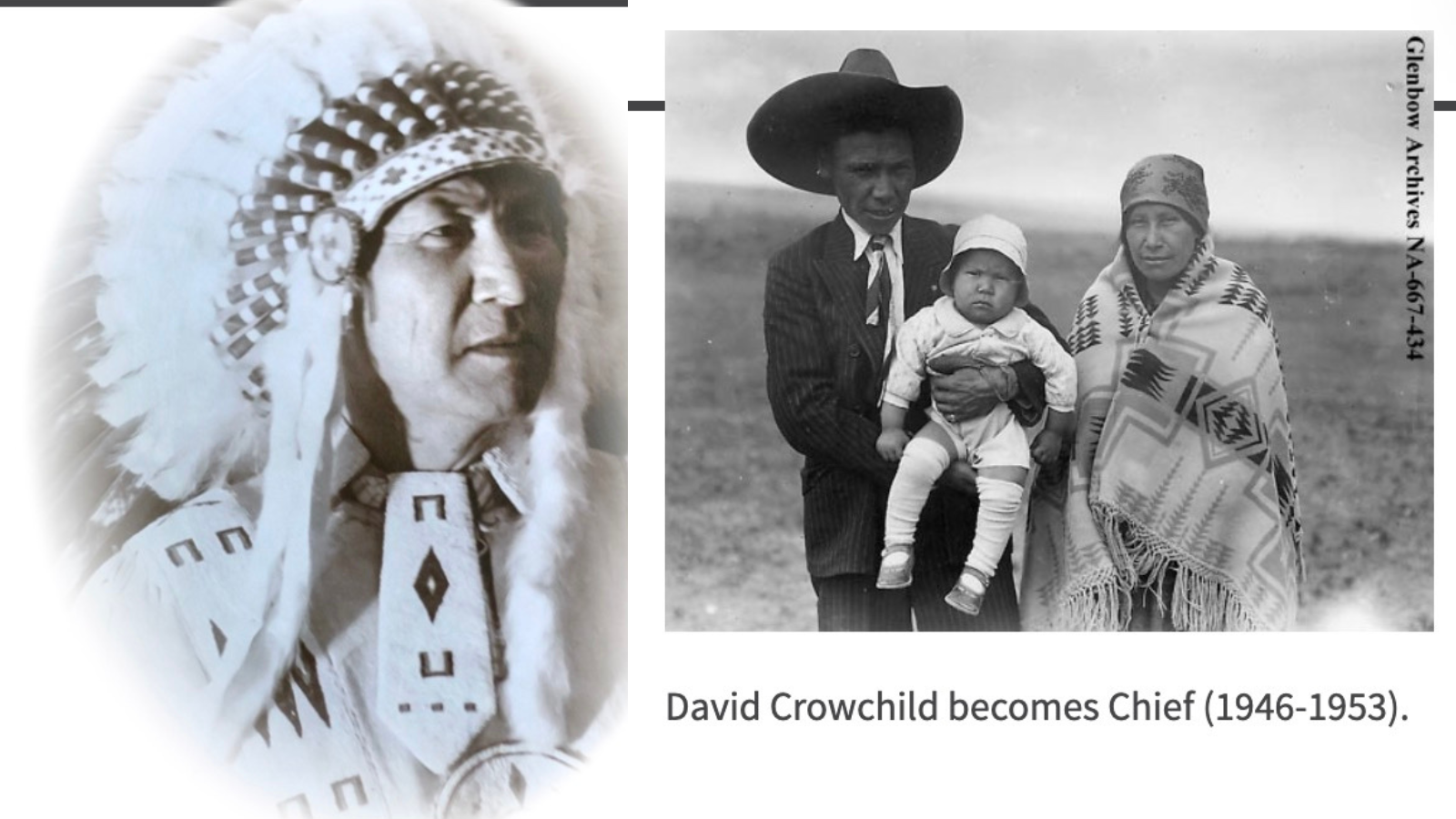
Gordon Crowchild becomes Chief (1970-1976)
Crowchild leadership continues across generations
Hine’s election continues a long history of Crowchild leadership within the Tsuut’ina Nation.
Chief Lee served as Chief, as did his father, Gordon David Crowchild, his grandfather and his great-grandfather.
He said his father was a strong-willed leader who listened to the different families and voices represented on council before making difficult decisions.
“His leadership was not about defeating another person in an argument, but about identifying the right path for the Nation.
There are times when you have to make the final decision, even if it’s not what everybody wants. That’s why Xakiji means the one who stands in front of everybody.”
Chief Lee said his father refused early proposals for a major road across Tsuut’ina land despite incentives offered by provincial representatives.
The agreement that eventually led to Tsuut’ina Trail and nearby commercial development was reached decades later.
The Crowchild name is also carried by Calgary’s Crowchild Trail.
Chief Lee said the road recognised his grandfather’s work as a bridge-builder between Indigenous and non-Indigenous people.
The name was also connected to his great-grandfather, who would travel from the reserve boundary into Calgary to attend church, sometimes staying overnight with firefighters at the city’s Number One Fire Hall.
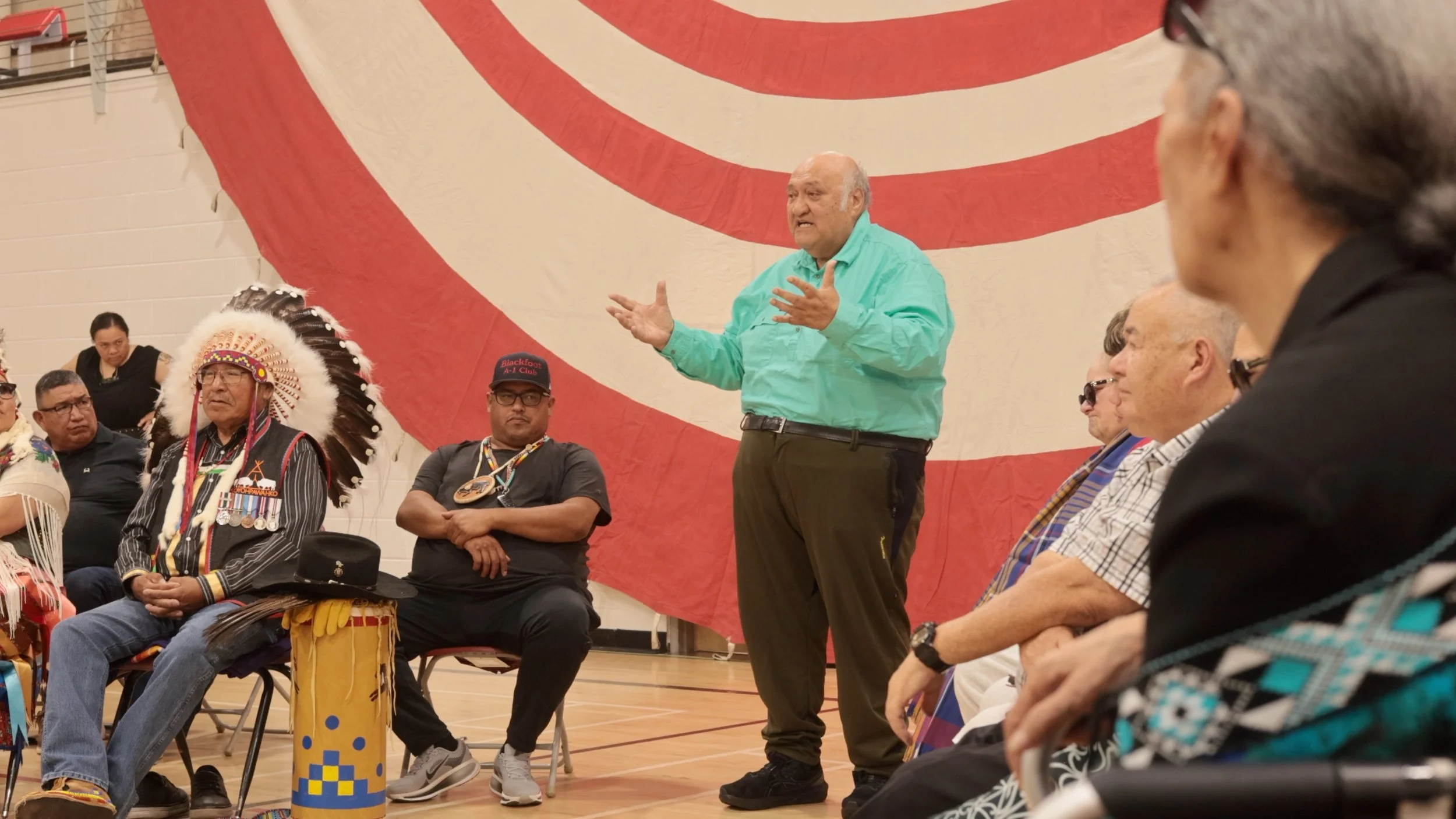
Uncle Te Rangi Huata, son of the late Canon Wi Te Tau Huata
Huata whānau returns from Aotearoa
Hine’s uncle, Te Rangi Huata, said members of the Huata family had travelled from Aotearoa to witness a ceremony they might never experience again in their lifetimes.
“We will take home beautiful, beautiful memories of this occasion,” he said.
Te Rangi said the gathering carried added meaning because of the genealogy, kinship and relationships connecting the Huata family with the Treaty 7 nations.
Those relationships were strengthened in 1977, when 67 Treaty 7 Chiefs and councillors travelled to New Zealand following an invitation from the Māori Queen to mark the centenary of Treaty 7.
Chief Lee was part of that delegation and later married Te Rangi’s sister, Te Rau Aroha.
“What makes this occasion especially meaningful for us is the family connection, the genealogy and the links that have brought us here today,” Te Rangi said.
“Those connections are what bring us here from New Zealand to honour you both.”
Hine Ti Tama Crowchild - Ayoungman
‘We are stronger in numbers’
In her closing remarks, Hine said the gathering demonstrated the unity she hoped to strengthen between the nations.
“For the generations coming after us, we should want even greater unity and more opportunities to work together,” she said.
Hine said she had recently travelled to Ottawa and felt pride in seeing Indigenous peoples standing together, even when they did not agree on every issue.
“We were all there and we were all fighting the same fight,” she said.
“It is about coming together and working together.
“In Canada, we are stronger in numbers. We are not stronger when we are fighting with each other.”
Hine thanked the Elders who conducted the transfer, the people involved in the ceremonial capture and those who witnessed the occasion.
She said she would carry the teachings shared during the ceremony into her work on council.
“I heard our leaders speak. I heard the people speak,” she said.
“I will take those words with me and move forward with them.”
The Huata Whaanau sharing love through Karanga and Koha for Hine and Tyson.
Ceremony ‘sits right here in my heart’
Tyson Heavenfire, who is serving his second term on council, described the transfer as a powerful and deeply spiritual experience.
“Just listening to the people around us and feeling the energy has been powerful,” he said.
“I am very honoured to have received this transfer.”
Tyson said seeing representatives of different nations gathered in the same place carried particular meaning for him.
“The fact that we can gather together in this room means something,” he said.
“I will hold that close to me.
“Things will come together. We will unite.”
He paid tribute to his wife, Nidaan, and to the women who had supported his family and leadership.
Tyson described women as the centre poles of families and communities, keeping people grounded, honest and on the right path.
He also thanked his two sons, who he said helped lift the weight of difficult days in leadership when he returned home.
“I do not usually become very emotional, but this ceremony sits right here in my heart,” Tyson said.
Chief Lee told Hine and Tyson that they would not be able to solve every problem, but they could prepare the way for the generations that followed: “You’re not going to fix everybody. What you’re going to do is usher in the next era of leaders. You’re going to be the holder of that knowledge, and you’re going to pass it down.” Te Rangi offered them the teaching passed down by Canon Wī Te Tau Huata: “The best leader is not the smartest person. The best leader is not the wealthiest person. The best leader is the best person. The best way to describe leadership is love in action. To Hine Ti Tama: love in action. To Tyson Heavenfire: love in action.”